Abstract
In the l950s, under the legacy of traditional agriculture, Ascaris lumbricoides, spread epidemically in the war-bitten society of Korea. Consensus on the parasite control was drafted in the Parasite Disease Prevention Act, which passed a parliamentary agreement in 1966, and established safe disposal of feces and mass chemotherapy as control strategies. Biannual stool examinations and treating infected schoolchildren were basic scheme of the control activity through which revenue could be secured for organized business. In the 27 years following 1969, a maximum of 16 million stool examinations had been done every year. Cellophane thick smear enabled the task. The infection declined remarkably in the 1970s when industrialization and green revolution proceeded. A population study of A. lumbricoides in the late 1970s helped us better understand its epidemiology. The data also settled down the understandable protest of teachers against the repeated stool examinations. In the 9 years following 1987, the target population was gradually reduced when the egg positive rate was below 0.1%. An article in the Korean Law, stipulating obligatory stool examinations, was made optional. Although the long-term Korean effort of Ascaris control was a success, the effect of mass chemotherapy was not as succinct in terms of lowering reinfection. In the period of control, Korean agricultural technology changed, and the economy grew and supplied sanitary facilities by which the vicious cycle was disconnected. Reduction of morbidity was a benefit of mass chemotherapy, which is the only control method feasible in economically difficult countries. The most important hurdle of parasite control in the 1960s was poverty of general population and limited financial resources in Korea but the society formed a consensus on the priority of intestinal helminthiasis control during the ordeal period. The national consensus in the 1960s was the critical milestone for Ascaris control in Korea. Under the social agreement, application of timely technical and research advancements in parasitology achieved the success of ascariasis elimination. The successful experience of ascariasis elimination in Korea can be a benchmark for countries where neglected tropical diseases are endemically recycled.
-
Key words: Ascaris lumbricoides, mass screening, mass chemotherapy, schoolchildren, elimination, Korea
Introduction
Korea was, as neighboring China and Japan, a traditional agricultural society. Agriculture in East Asian countries was not simply a source of food staples. Because over 80% of the population was engaged, agriculture was an almost exclusive industry as well as a dominating economy. Under the traditional industry, sedentary people in small farming communities maintained their lifestyles of diligence, strong family ties and collective behavior, passed from generation to generation. The East Asian civilization, including the deep-rooted social structure, politics, arts, and religion, had long been specialized to a direction which supported and stabilized lifestyles in the farming villages under the name of Confucian Civilization.
Arable lands in East Asia were home to the highest density of population in the world. Farm villages were densely scattered along ample riverside plains to narrow mountain valleys. To feed over-populated areas, Korean farmers, as those in neighbor countries, depended on intensive farming. They also had to overcome devastation caused by periodic flooding and drought. In the temperate monsoon country, flooding caused famine but also supplied huge alluvial soils, which maintained agronomic productivity and prevented soil decay for longer than 2,000 years. In addition to alluvial depositions, soil decay was avoided by using human manure as a fertilizer. Composting piles of human manure with grass and ash was one of the secrets in intensive farming and a main guardian of soil productivity. A function of traditional latrines of different shapes in Korea was, therefore, storing feces safely [
1]. Latrines called
jaekan (ash space) symbolized such a function that had been used until the late 1970s in remote Korean villages. Wealthy farmers visited village houses to purchase feces and transport it by vehicles. Animal manure was not sufficient because pastureland was limited.
In this context, fecal borne infections always have a potential of spreading widely. Human manure was disposed actively to farmlands. Promiscuous defecation, especially of children was either generously allowed or overlooked. Until introduced to major cities in Korea in the early twentieth century, clean water supply and sewage did not exist. People were accustomed to filthy environments, and they knew that a monsoon would eventually wipe out everything dirty and stinking. Lack of sanitation made farm villages vulnerable to water-borne and fecal-borne infections. Until the early twentieth century, the population on the Korean peninsula fluctuated between 5–10 million for centuries. Famines, typhoons, flooding, droughts and wars against China or Japan were followed by epidemics of typhoid fever, which almost decimated populations. The vicious cycles continued until it tapered off in the early 1970s.
Parasitic diseases were also highly prevalent in the traditional farm villages. Ubiquitous fecal contamination maintained the
Ascaris environment. Recent archeological excavation of a demolished house that was 2,000 years old revealed a human fecal sample, which contained fossilized eggs of
A. lumbricoides and
Trichuris trichiura. Weather was also favorable for eggs of
A. lumbricoides. Moist and hot summers provided good conditions for egg embryonation and survival. The eggs were protected from sun light admixed in small alluvial particles. Cold Korean winters were not unfavorable for their survival. Roaming dogs and poultry, which ingested human feces around houses, passed
Ascaris eggs without any effect on their viability [
1]. Eggs situated in inner parts of composting piles were destroyed by temperatures up to 50–70°C. However, those in the covers survived. Dry and hot weather kills the eggs. But such weather was either short or existed in limited areas. Soils in vegetable gardens were heavily contaminated with human manure with the eggs. Rainwater in the garden carried the eggs in many directions [
2]. Vegetables were contaminated.
Kimchi, a favorite pickled cabbage, was a very important vehicle spreading the infection not only to farmers themselves but also to urban people who purchased them. Really, one of the targets of
Ascaris control activities in Korea was ensuring that people could eat
kimchi without fear of the infection.
Parasites in the traditional Korean society
Ancient people in different regions of the world recognized the presence of creatures living within the human body. Three endoparasites, i.e.,
Ascaris lumbricoides,
Enterobius vermicularis and
Taenia were easily recognized because they were either large enough and/or moving when passed out from the body [
3,
4]. It is not clear, however, whether people all regarded these animals as pathogens. According to Hoeppli [
3], a classic of the traditional Chinese medicine, the
Neiching, listed 9 helminth parasites as pathogens. Based on the descriptions of each parasite,
A. lumbricoides,
E. vermicularis, and
Taenia are correctly identified to present scientific terms. The 3 traditional Chinese names are still in use as local scientific names of each parasite in China, Korea and Japan. However, the scientific names of currently known parasites can hardly be applied to the remaining 6 parasites in the
Neiching of which descriptions have been, therefore, regarded as those not based on real and collected samples. These imaginary parasites were common in ancient medicine.
In the
Neiching, symptoms due to
A. lumbricoides and their diagnostic signs were reasonably described [
3]. However, in view of modern medicine, much of the symptoms, described as due to
A. lumbricoides, were baseless. Because
A. lumbricoides was popular, it seems likely that in explaining the patient symptoms, the worm was widely acceptable to people as a cause of patient disease. For example, “
Ascaris is moving” was a traditional daily expression for either increased appetite or abdominal discomfort. Traditional Chinese medicine was introduced into Korea and Japan and became a classic of medicine there. Medical classics of China were accumulated and edited as
Tong-i-bo-kam (Treasury treatise of Eastern (=Korean) Medicine) in 1609 [
5].
Unlike the viewpoints of traditional medicine, grass-root people had another view of the roundworm. When they vomited them up or found the discharged worms in feces, people were inclined to regard them as a common daily happening which caused no harm, rather than as a pathogen. Due to their immediate innocuous nature and lack of effective treatment measures, it may have been wise to just disregard the worms. Humorously regarding them as a companion in life was the easygoing sentiment of millions of poor farmers at a time when only a few thousand traditional doctors were practiced throughout all of Korea. Western mission doctor, R.N. Allen [
6], described such attitude of Korean people in 1886. In his report to his missionary center in America, he described that Korean people disregarded
Ascaris and
Taenia and did not report them unless asked specifically for their presence. A sentence appeared in the “Manual of Parasite Control”, published by Ministry of Health and Social Affairs (MHSA) in 1968 [
7], reading that “Without
Ascaris, no appetite; without
Ascaris, one cannot live” were wrong concepts of ignorant people”. In short,
A. lumbricoides was a pathogen in traditional medicine and also considered a harmless companion of life until modern medicine was introduced in the 1880s.
Modern concepts on ascariasis
In 1910, Japanese occupied and began to rule Korea. Under the Chosen Colonial Government, traditional medicine was devalued and began to be replaced by modern medicine. In 1916, Dr. Harujiro Kobayashi was employed in Chosen Colonial Government Hospital, and later as a professor of parasitology in Keijo (=Seoul) Imperial University. His research interest was focused on paragonimiasis, clonorchiasis, and flies. However, he recognized the importance of soil-transmitted nematodes as written in his review articles [
8]. He also studied resistance of the helminth eggs in external environment [
9].
Table 1 shows the prevalence of
A. lumbricoides reported in Korea during 1914–1969 by local surveys. During the period of Japanese rule (1910–1945), excellent research on ascariasis was done by Mills (1926), who described epidemiological factors favoring the endemicity in Korea. Except for the prevalence surveys, in Korea, only a few studies were done. Ascariasis was one of the main research topics in contemporary Japan where the infection was also a very important public health problem [
10,
11]. Epidemiologic studies on the prevalence, degree of egg contamination in surroundings, biological difference between human and swine
Ascaris, search for anthelmintics which could replace imported santonin, screening of potential drugs, and control policy were main concerns in Japan. A scheme of biannual mass chemotherapeutic control in schoolchildren was formulated in Japan [
10]. The scheme was also practiced on the Korean peninsula in part. Native Korean students enrolled in elementary schools, comprising about 35% of the school aged children, drank seaweed soup for treating ascariasis because seaweed was known to contain anthelmintic principle (kainic acid). The experience of schoolchildren was helpful in establishing mass chemotherapeutic schemes in Korea later in the 1960s after they became leaders of the society.
As modern medicine became gradually popular, the ambivalent attitude of Korean people toward
A. lumbricoides began to change. Practicing surgeons began to demonstrate how a worm in the bile duct [
12] or a mass of
A. lumbricoides could cause intestinal obstruction in patients with abdominal pain [
13]. Stories about the patients, which survived the massive infections, were rumored quickly around people with some exaggeration. Prescriptions of santonin by physicians and immediate discharge of large numbers of the worms impressed people. Physicians also taught patients and their families about the nutrient deprivation cause by roundworm in a simplified format; explaining that the worms took away a part of bowl of rice they ate. The loss of nutrients shocked people who had long suffered from seasonal famine and malnutrition (
Boohwang; yellow edema). People began to regard
A. lumbricoides as their enemy. To Korean people, santonin became one of the earliest drugs accessible freely for treating undefined abdominal distress. The gradual attitude changes of people became later the bases of willing acceptance of the ascariasis control program in Korea.
Prevalence of Ascaris lumbricoides infections until 1969
The end of World War II in 1945 brought liberation of Korea from Japanese rule. The jubilation was short, however. The nation was divided into south and north. Extreme chaos followed. About one million people migrated to south of the 38th parallel latitude and became homeless in Seoul and other parts of southern Korea. In the political, economic and social chaos, a wave of cholera killed at least 4,000 people in the year of 1946 alone [
5]. In the turmoil of social unrest and chaos and in the midst of traditional poverty, though, a modern education system was introduced for all school age children. A class of at least 70 students was taught under one teacher in elementary schools, but the literacy rate of Korean people began to rise, anyway. Additionally, 2 medical colleges in Seoul began to teach parasitology again. Few surveys were done in 1945–1950 for parasitic infections because trained parasitologists did not exist. As a part of parasitological surveys in Asian countries, Hunter et al. in 1949 [
14], in the 406th Medical General Laboratory of U.S. Army stationed at Tokyo, Japan, reported the results of stool examination in Korea, done by newly developed, sensitive formalin-ether concentration technique. In the nationally collected 917 samples, egg positive rate of
A. lumbricoides was 80.5% nationwide.
During 3 years of the Korean War, at least 2 million civilians were killed either in barrage or by epidemics, among about 20 million population in Korea. Almost all standing structures were leveled. Most people lived in small
hakobang (box house), made of straw mats, cardboard paper and flattened tin of used cans. Of course, there were few latrines. Defecations were inevitably allowed around the house and in alleys. Epidemics of fecal-, water-, contact- and insect-borne infections abounded. Data of stool examination were few during and after the war. A report by the U.S. Army revealed an 81.3% of egg positive rate of
A. lumbricoides for 1,726 North Korean prisoners-of-war and 82.4% for 919 South Korean civilians [
15]. Considering the poor status of hygiene in both urban and rural communities, the rates had long been regarded as those representing the status of soil-transmitted infections in the 1950s. In school yard, roundworms vomited up by children, were discarded here and there. From time to time, government provided teachers santonin caramel. Teachers distributed the drug to schoolchildren without examination. The number of roundworms found in feces became a topic of the next day. The egg positive rate reported in 1956 by Lesser [
16] was, however, only 45.9% for
A. lumbricoides in army personnel of Seoul from which most people evacuated during the war.
Since the early 1960s, Korean workers began to report the results of stool examination mostly done by formalin-ether technique (
Table 1). The rates were in the range of 26.0–83.9% for
A. lumbricoides. The widely variable results may represent improved status of hygiene after cease-fire (1953), in some parts of Korea. The results with relatively low rates were obtained from outpatients of urban hospitals who could afford medical expenses in 1961 [
17]. Reports in rural people showed rates over 70% for
A. lumbricoides. In the traditional rural markets, held every 5 days, merchants sold people a panacea of ineffective drugs. Anthelmintics were one of a few effective items among the panacea.
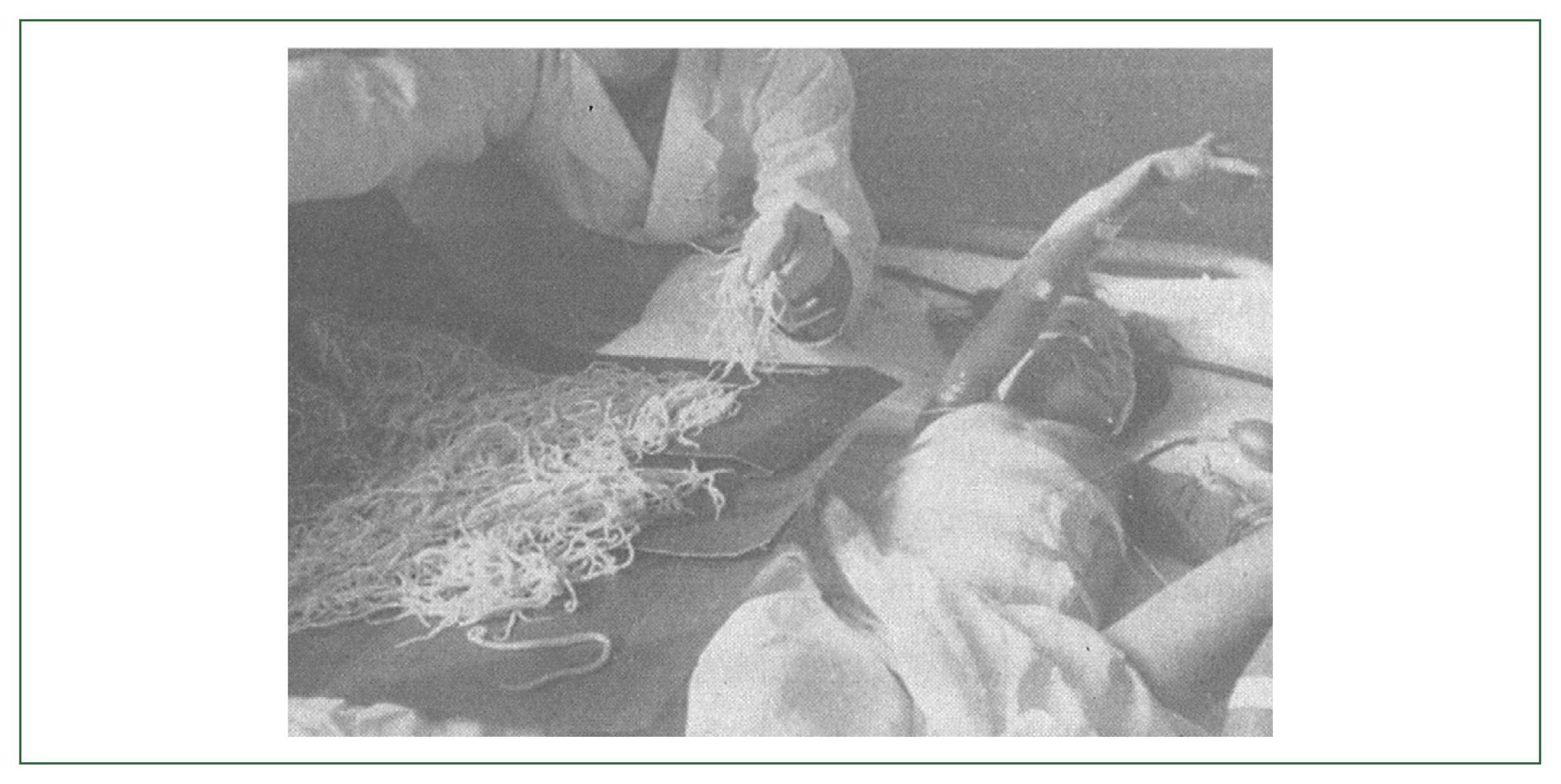
In 1963, Dr. Paul Crane, American missionary surgeon in Jeonju, Korea, operated on a 9-year-old girl with serious abdominal pain caused by intestinal obstruction and recovered 1,063
Ascaris worms which ultimately proved fatal [
18]. The wretched news was reported in a Korean newspaper which called for social concern on ascariasis (
Fig. 1). After that, there were several newspapers reporting on the seriousness of ascariasis and other intestinal parasites or advertising anthelmintics in Korea (
Supplementary Figs. 1,
2).
In 1967, MHSA of the Korean government asked the Korean Society for Parasitology for prevalence data of parasites of public health importance. In the first Spring Meeting of the Society, a symposium was arranged to answer the request. Professional parasitologists discussed the past prevalence data and reported to MHSA the discussion results. The data were published in a press release titled, “Official prevalence of parasitic diseases”. It showed:
A. lumbricoides 80%,
T. trichiura 80%,
Enterobius vermicularis 40%, hookworm 20%,
Trichostrongylus orientalis 20%,
Clonorchis sinensis 15%,
Paragonimus westermani 5%, filariasis 2%,
Entamoeba histolytica 10%, and malaria 1% [
7]. There were, however, parasitologists who thought the prevalence rate should be based on actual and recent examinations. The press-released data may have exaggerated the real status of infections. Using the first research money granted by the Korean government to a parasitologist (1967–1968), they examined 40,581 stools collected nationwide by cellophane thick smear, 8,585 cellotape anal swabs and 1,174 stools by dilution egg counting [
19]. The data revealed: 90.5% egg positive rates for any parasite, 58.2% for
A. lumbricoides, 74.5% for
T. trichiura, 17.6% for hookworm, 15.9% for
T. orientalis, 4.7% for
C. sinensis, 0.7% for
Taenia species, and 46.6% for
E. vermicularis. Mean eggs per gram of feces (EPG) of
A. lumbricoides was 9,723. These data were the first large-scale, national data on the status of helminthic infections undertaken in Korea. Even in the survey, however, a defect was found. Stool samples were collected mostly from schoolchildren; therefore, age distribution of the samples was skewed. Examination of the statistically representative samples was done first in 1971 as described below.
National parasite control activities
The Korea Association of Parasite Eradication and legalization of control activities
After the short-lived democratic government was kicked out by military coup in 1961, the Korean government, led by ex-generals, began to industrialize the traditional agricultural country in which annual per capita income was below US$80.00 equivalent. Many social sectors began to specialize. Members of the Korean Society for Parasitology began to solve the hidden problems of parasitic diseases. The necessity of controlling parasitic infections was relatively well understood by people especially among intellectuals. But policy priority and prospect of financial support were uncertain.
No one denies that the Korea Association of Parasite Eradication (KAPE) was at the center of parasite control activities in Korea since the 1960s. The history of KAPE, however, was not uneventful. As a penniless voluntary civilian organization, KAPE was inaugurated in April 20, 1964 [
20]. Two parties led the newborn organization. One party, a group of medical parasitologists, represented by Dr. Young Choon Lee (who became the first President of KAPE), Prof. Chin Thack Soh, Dr. Chong Hyun Hwang, etc., were ex-executives of the former Korea Association of Sanitary Animals. Another party, represented by Mr. Jong Ho Lee (who became the first Secretary General of KAPE), was a group of ex-officers of MHSA, who anticipated parasitic diseases becoming a national issue. The Korean government had recognized the importance of the issue and decided that civilian efficiency was better fitted in undertaking the business. As of 1964, MHSA had already established similar civilian organizations for tuberculosis and leprosy. In addition, the Korea Association of Voluntary Agencies (KAVA), an organization of foreign aids agencies, active in Korea at the time, helped found KAPE by explaining to high rank officers of the Korean government and law makers of the National Assembly the importance of parasitic diseases as public problems. They also provided anthelmintics, ovicidal chemicals and propaganda posters.
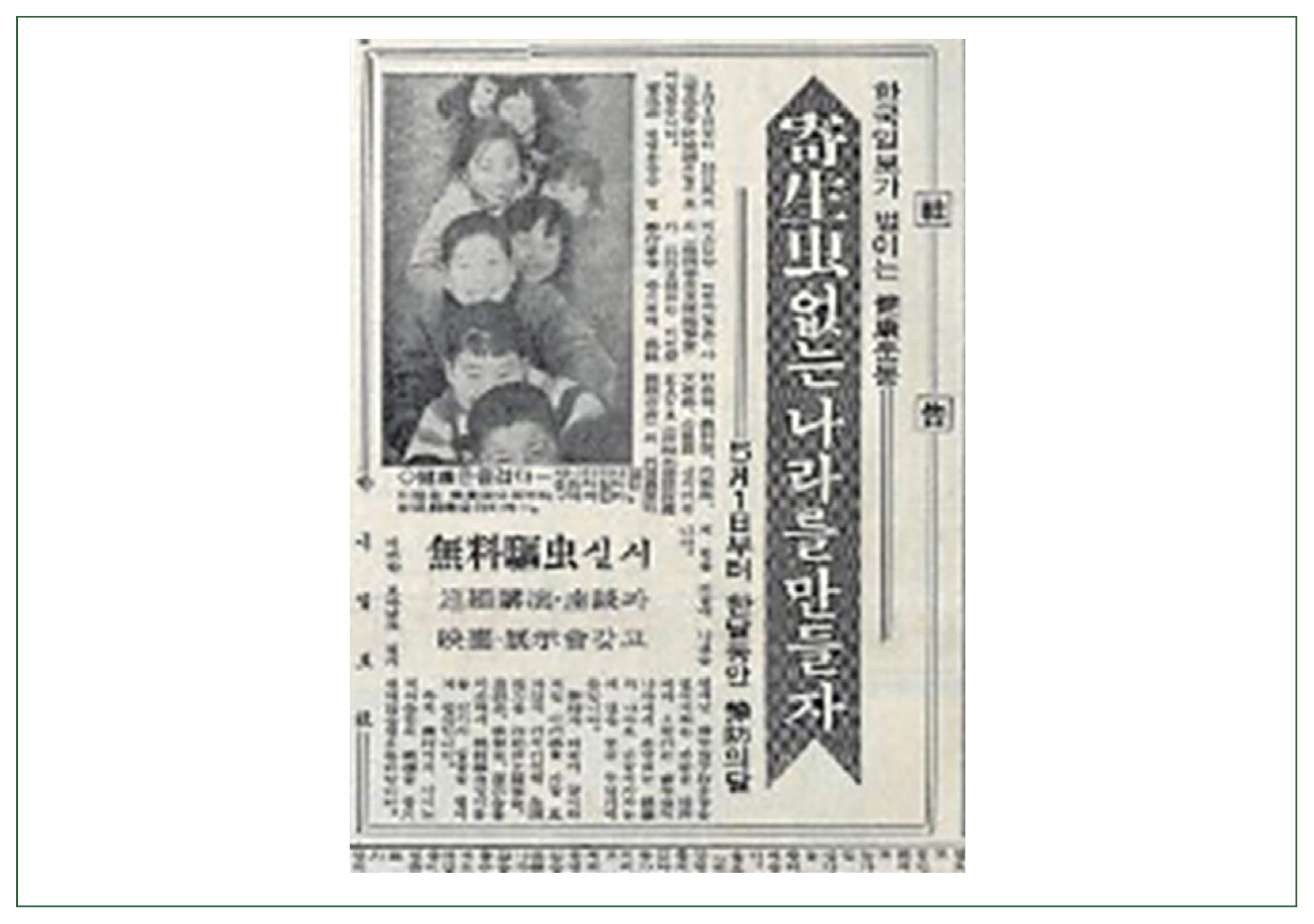
There was a difference in the concept of parasite control activity between the executives of KAPE. While the President emphasized public relations, enlightenment of farmers, and prevention of the parasitic infections, the Secretary General stressed the aspect of business in the control activity. Under the leadership of President, in 1965, a social movement, “the Parasite Free Movement” was proposed together with a national newspaper,
Hankuk Ilbo (Korea Daily News), targeting the complete eradication of parasites in 10 years (
Fig. 2). Radio talk shows, and articles in news media were arranged to educate about parasitic diseases. The executives also tried to seek Japanese assistance for the activity and invited 2 Japanese professors of parasitology in 1965. Prof. C.T. Soh and his coworkers evaluated efficacy of “Improved Latrines”, invented for separating urine and feces in Japan, the ovicidal effect of heat, sodium nitrite and thiabendazole and conditions favoring survival of
Ascaris eggs to reexamine Japanese reports [
21–
29].
In the meantime, by the strenuous endeavor of the Secretary General, KAPE created 2 achievements within 2 years after inauguration [
20]. The first achievement was establishing a national system of the organization. Minister of MHSA and Minister of Internal Affairs ordered mayors of 2 metropolitan cities and governors of 9 provinces to establish branch offices of KAPE and help with parasite control activities. Until September 1965, 10 branch offices of KAPE were established except one in Jeju Province. A channel was thus formed through which a policy of control activity could be conveyed from the center to periphery [
20]. This process of KAPE organization was different from that of Japan. A federation, the Japanese Association of Parasite Control (JAPC), was formed in 1955 by agreement of preexisting independent institutes active in each prefecture [
11].
The second and even more important achievement was the
Parasitic Disease Prevention Act, which passed parliamentary agreement on April 9, 1966 at the 56th extraordinary session of the National Assembly. Ten days later, the government as Law No. 1789 promulgated the act. The term, “parasitic diseases” in the
Act was defined as denoting ascariasis, hookworm disease, clonorchiasis, paragonimiasis, and taeniasis (Article 2). Article 3 of the
Act stipulated that school principals had an obligation of undertaking stool examinations at least twice a year for schoolchildren. Articles 4 and 5 prohibited uses of improperly treated human manure as fertilizer. Article 9 designated the civilian organization, KAPE as the organization responsible for parasite disease control. According to the Act, KAPE became a legal civilian organization for parasite control in Korea. Ministry of Education designated KAPE as an organization eligible for undertaking stool examination of the schoolchildren throughout Korea, for treating egg positive cases and other control activities [
30]. Newspaper reports of newspapers greatly supported legislation of parasite control activities (
Supplementary Figs. 1,
2).
Soon after the legalization, since October 1966, a feud occurred between the President and Secretary General of KAPE. The feud worsened in the following 6 months and finally became public. Public knowledge of the feud was a fatal blow because the only revenue at that time was voluntary contribution of membership dues by lay people. At the beginning of the feud, the balance sheet of KAPE showed red ink because of expenses of activities and loans for purchasing instruments. KAPE went into bankruptcy. Government intervention was inevitable and eventually followed. MHSA arranged the board of trustees to elect Dr. Chong Jin Lee as the second President, and Mr. Woo Bok Lee as the second Secretary General of KAPE in August 1967 [
20].
The first job of the new executives was clearing the debts. The second focus was seeking help again from Japan as the former executives tried. To secure professional advice, Prof. B. S. Seo was invited as Vice President. Professional advice was urgent because the first Secretary General, who was business oriented, did not know the specific requirements of microscopes necessary for stool examination. He purchased microscopes (Olympus MIC model) equipped with neither a fine adjustment knob nor a condenser. The purchase became one cause of the feud.
Technologies of mass control and Japanese help
The bitter experience of KAPE in 1964–1967 indicated that securing stable revenue was essential. KAPE also recognized the importance of professional advice and social credit for success of the business. Preventive activity, enlightenment of farmers and safe disposal of feces was of course important but began to be regarded as a second priority. The main reasons preventive activities failed were because of farmers’ poverty and conservatism. Despite the enlightenment, Korean farmers had neither available money nor intention of changing their latrines only for preventing roundworms. Instead, they preferred drugs, which remove the worms from their body. Conservative farmers thought that drugs were always beneficial for their health. Side effects of drugs were accepted without many complaints. For example, yellow vision caused by santonin was considered as evidence of full strength of the drug. Therefore, mass chemotherapy could be a central part of KAPE activity. Furthermore, the Act and order of Minister of MHSA guaranteed income of Korean 20 Won (US$0.10 equivalent) per examination including chemotherapy for the egg positive cases. If stool examination was possible to be undertaken in mass, KAPE could operate its control activity successfully with a small subsidy from government. Efforts were focused on funding and technology, such as determining how to examine stool in mass, place where the examinations should be done, how to transport stool specimens from schools to laboratory, what kind of drug should be selected, how to control expenses frugally, etc.
The barrier of mass stool examination technique was solved first. Direct smear was inadequate as a technique of mass examination because of its low sensitivity and high cost. Vinyl envelope thick smear method was thus invented for not using cover glasses [
31]. Fecal sample in a vinyl envelope, 7×4 cm was placed on a slide glass, and pressed with a thumb, as possible, and examined under a microscope. The diagnostic sensitivity of this simple and economic technique was not high. In 1967, its inventor, Dr. K. Kato, Japan, introduced cellophane thick smear technique (CTS) to Korea. This simple and economic technique, suitable for mass examination [
32], was evaluated in comparison with formalin-ether technique using 1,843 stoo1 samples [
33]. For eggs of
A. lumbricoides, CTS showed higher sensitivity than that of formalin-ether technique. Once adopted in mass examination, CTS enabled examination of a maximum of 16 million stool samples in Korea in a year.
Since the first contact with Japanese parasitologists in 1965, the interactions between the Japanese and Korean sides continued several times until new KAPE executives began to work in 1967. Recognizing the good legal and administrative infrastructure and enthusiastic call for help by the new executives, Secretary General of JAPC, Mr. J. Kunii arranged a Japanese governmental program for Korean parasite control. The cooperation program was successfully formulated through the Overseas Technical Cooperation Agency (OTCA; now JICA), that lead to the written agreement between the governments of Korea and Japan on July 5, 1968. According to the agreement, the program, evaluated as one of the most successful ventures of OTCA, began implementation. Items of total value of Japanese 75 million Yen were provided over 3 years (1968–1971). The items included 20 automobiles, 278 microscopes, 6.5 million tablets of koizumin (mixture of santonin and kainic acid) and other equipment necessary for examination, health education, and clerical services. More importantly, at least 20 Korean professionals per year were trained by visiting JAPC laboratories and offices. Trainees learned Japanese diligence and efficiency. Eminent Japanese parasitologists including Prof. K. Morishita, M. Yokogawa, D. Katamine, etc. visited Korea to look after the control activities in Korea. By the Japanese help through OTCA and JAPC, KAPE was equipped with basic instruments and know-how for the activities [
20]. In 1969, the first year of mass examination, KAPE examined a total of 6,551,926 samples from schoolchildren by CTS. About 4 million students were treated (
Table 2). KAPE regained social credit and cleared off all debts until 1969. Frugal controlling of expenses followed. To reduce personal expenses, part-time or full-time microscopists were employed under a condition of working 14 hours and examining 800 CTS smears a day with a salary of US$60.00 equivalent a month. If a staff member was found sipping a cup of coffee privately, he was requested to submit a written explanation to headquarter in Seoul. Coffee was only for clients. Later, excessive work burden became an issue as a cause of low sensitivity of the examinations (see below). In the meantime, securing laboratory space was a challenge for KAPE. No building owners wanted their tenants examining stool samples. The second Japanese help came by the arrangement of J. Kunii again, for constructing independent buildings for KAPE. One third of building expenses provided in 1973–1975 by the fund from the Commemorative Association of the Japan World Exposition (1970). Two thirds were from the reserved fund of KAPE [
20].
Since the latter half of the1960s, success in labor-intensive manufactures in Korea greatly expanded the size of the anthelmintics market. The mass chemotherapy for schoolchildren was health education in effect. In that time, “What is the best anthelmintics now?” was the most frequent question asked to parasitologists. Fortunately, replacing santonin-caramel, new anthelmintics such as bephenium hydroxynaphthoate, piperazine, levamisole, pyrantel pamoate, mebendazole [
34] and albendazole began to appear in Korea since the early 1960s and competed with each other to increase market shares. More than 60 large and small Korean pharmaceutical companies produced different packages of anthelmintics. Instigated by media advertisement, the voluntary and periodic administrations of anthelmintics became a habit of average urban families in the 1970s and 1980s. Japanese supply of santonin-kainic acid mixture was consumed by KAPE in 1969–1975. Alternative anthelmintic such as piperazine was used in 1970–1977. Levamisole was added in the list of anthelmintics in 1972–1976. Pyrantel pamoate, evaluated also in Korea by Rim and Lim in 1972 [
35], was found also to be effective at a quarter dose (2.5 mg/kg body weight) [
36]. The result resolved the problem of high cost when used in mass chemotherapy. Pyrantel was used by KAPE in 1973–1987. Mebendazole, which was also effective in a reduced dose [
37], began to replace gradually pyrantel since 1981 and used until end of the control program in 1995. Albendazole was used in 1987–1995. By selecting safe, effective drugs with the lowest possible price, KAPE could frugally control the expenses.
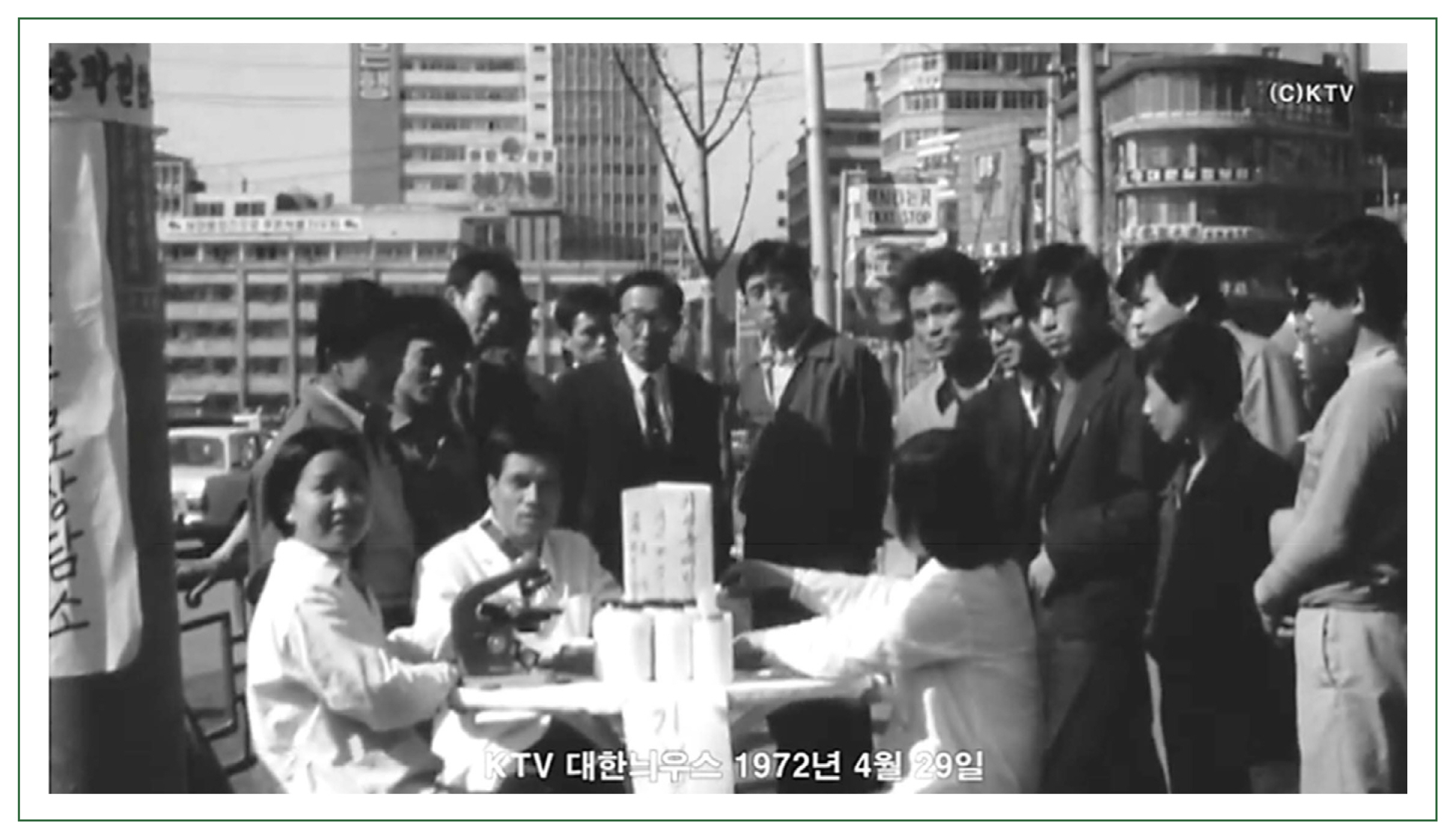
In addition to the stool examination and mass chemotherapy, KAPE undertook health education programs with modern technology; a monthly magazine was published and distributed to 20,000 schools and offices; Japanese films on ascariasis and hookworm diseases were projected to groups of people. Vegetables sold in markets were regularly examined to determine the degree of egg contamination. Street campaign for prevention of parasitic diseases was undertaken twice a year (
Fig. 3). Data of mass stool examination were filed in a form of “Activity Report” every year.
Research on Ascaris lumbricoides
Population studies
As the mass control program proceeded successfully, parasitologists and lay people began to ask questions not always easy to answer without fully understanding reinfection, infection intensity and population biology of
A. lumbricoides. Why should we repeat the mass chemotherapy? Why do you not give people drugs without examination? Which month is the best timing for treatment in Korea? Why do we undertake treatment 2 times in a year? Why should we do the control activity at a national scale? Will the infection rate go down? What is the actual benefit of the mass control? Why are most people infected with
Ascaris symptomless? These questions were partly answered by the research of Komiya [
38] and Komiya & Kobayashi [
39]. In 1970, Kim et al. [
40] began researching of the outcomes of repeated biannual mass chemotherapy in 6 target villages by observing the changes of egg positive rates, which continued for eight years.
In addition to answering the above questions, detailed information on reinfection and infection intensity in
A. lumbricoides infection were necessary to make future policies. Theoretical models, summarized by Kobayashi [
41] and depicting the reinfection pattern after mass chemotherapy, made Korean parasitologists understand the infection dynamics. An estimate of monthly reinfection was calculated as 2.4% in the Republic of Korea Army soldiers [
42] with Komiya & Kobayashi’s concept of closed community [
32]. An interesting epidemiological finding, described in Japan by Komiya et al. [
43], was on U-rate, which is defined as the rate of unfertilized egg passers out of infected cases. As infection rates went down, U-rates went up, indicating the lowered worm burden per infected individual. The finding was, however, necessary to be confirmed by worm count.
Worm count is a basic technique for studying of infection intensity, its relations with diagnostic sensitivity [
44], population biology [
45] and pathogenesis/morbidities [
46,
47]. In relation with infection intensity, Crofton [
48] described that the mathematical model of negative binomial distribution was fitting to the numerical distribution of host numbers infected with a certain number of helminth parasites. The paper drew attention of parasitologists in Seoul National University. They tested its applicability in the distribution pattern of
Paragonimus ohirai (formerly named
Paragonimus iloktsuenensis) metacercariae in population of their crab host,
Sesarma dehaani [
49]. Because the number of
A. lumbricoides per human was known for a long time to distribute in a negatively skewed pattern [
50,
51], the theoretical negative binomial distribution maybe fitted to it. In testing the fitness, the number of worms in all the people should be counted without prior knowledge of infection, because the number of non-infected people should be secured.
Until the 1960s, counting the number of infected
Ascaris was difficult [
52]. The worm burden in an individual or in a community could be estimated by egg counting. But egg counting provides only an estimation of worm numbers. The worms can be counted when collected at autopsy, or after anthelmintic treatment. Of them, counting at autopsy was impossible in Korea because of prohibitory customs. Few anthelmintics were suitable for the purpose either because of low efficacy (piperazine, santonin-kainic acid mixture) or because of delayed expulsion (mebendazole, albendazole). Pyrantel pamoate solved the problems. In the evaluation research on efficacy of pyrantel pamoate against
A. lumbricoides, Rim et al. [
53] was requested to examine not only the rates of egg reduction and negative conversion but also the number of expelled worms. With difficulty, the numbers of expelled worms were counted, but the data had not been published. Pyrantel pamoate was found quick in action and expelled over 95% of the worms within 2 consecutive passes of whole feces [
54,
55]. Transportation of big masses of feces to the laboratory was another obstacle. Unlike Arfaa and Ghadirian [
54], who used plastic containers, we let people collect their 2-day feces individually on sheets of vinyl envelope, which were covered several times and labeled. The whole masses of collected feces were packed in a 15 m long vinyl tube with 80 cm flat width. The vinyl tube with packed feces inside was tied at both ends. The side of redundant tube was turned inside out; and was tied again. The process of turning inside out and making a tie was repeated for at least 10 times. By this processing, the relatively small package with air cushion could be transported by bus without worrying about leakage of foul odor. The feces were examined by CTS and by dilution egg counting. The feces were then transferred to coffee bottles (one pound) individually, fixed in 10% formalin, and sieved. The number of ivory-fixed
Ascaris were counted. Finally, the length and weight of individual worms were measured. The worm count survey was started in Hoengseong and Jinyang for enterobiasis research [
56], followed by those in Jangheung and Gangjin for metagonirniasis research [
57] in 1975–1976. A similar study was repeated in schoolchildren in Uijeongbu City, to determine whether a part of the collected worms could be regarded as those reinfected [
55]. The worms smaller than 13 cm long and less than 0.5 grams, termed “young worm”, were found in individuals infected in the past 2 months. The number of young worms could be used in calculating reinfection number.
In the summer of 1976, Prof. B.S. Seo attended the third meeting of Asian Parasite Control Organization (APCO), and was encouraged by his counterpart, Prof. M. Yokogawa, to submit a 3-year research project for parasite control. A research proposal on
A. lumbricoides epidemiology was prepared, submitted, accepted immediately, and implemented into practice on April 1977 [
58]. The purpose, schemes, and procedure (
Table 3), and method of evaluation were published in “Collected Papers on the Control of Soil-transmitted Helminthiasis” (1980), together with 2 research progress reports [
59,
60]. The study was designed to find transmission dynamics and population biology in endemic areas, using techniques of worm count, stool egg examination and morphometry of worms. The entire human population within a project area was treated periodically with different intervals using pyrantel pamoate. Two whole-day feces were collected. By analyzing the collected data longitudinally or in matrix, the Japanese theories on biology and epidemiology of
A. lumbricoides infection could be either confirmed or advanced [
32]. We called the research an experimental epidemiology on ascariasis. The research was also supported by grants from Ministry of Education, Korean government (1977–1978) and KAPE.
The first research product that emerged was seasonal fluctuations of infection, of which the data came from villages IV (
Table 3) [
61]. Because 6 villages were sequentially surveyed, the rate of reinfection may be affected by the prevalence of the villages before starting the mass chemotherapy. However, there appeared to be 2 evident seasonal peaks of young worm rates. The higher peak of reinfection appeared in winter and explained the higher egg positive rates of spring examination in accumulated data of KAPE. Similar seasonal variation was reported in Japan by Kobayashi [
62]. These data supported the rationale for 2 examinations and medications, in spring and fall, for schoolchildren by KAPE.
The second product was on the egg discharging patterns in low burden cases [
44]. The data came from the first treatment in the above project villages in Hwaseong. Data collected in the surveys for enterobiasis and metagonimiasis (1975–1976) were included. Sex combinations in
A. lumbricoides infections followed an equation of binomial distribution. Both the egg negative, but infected cases and the cases passing unfertilized eggs were infected with less than 5 worms. Half of the egg negative cases were infected with male worms.
The third product was on frequency distribution of the worms in human population [
63]. The same data used in the second product were reinterpreted. Theoretical frequency from negative binomial distribution was fitted to the observed frequencies. What this emphasized was the effect of changing endemicity to the frequency distribution of worm burden. As the endemicity lowered, frequency of high burden decreased first, while frequency of non-infected increased. As a result, the frequency of light burden remained stable and the U-rate of Komiya et al. [
42] increased. The viewpoint of Croll et al. [
64] was different to the same pattern of frequency distribution. The hosts infected with the highest 15% of burdens have 70% of
A. lumbricoides population in a community. This interpretation led to programs searching for immune factors affecting host susceptibility or resistance [
65,
66].
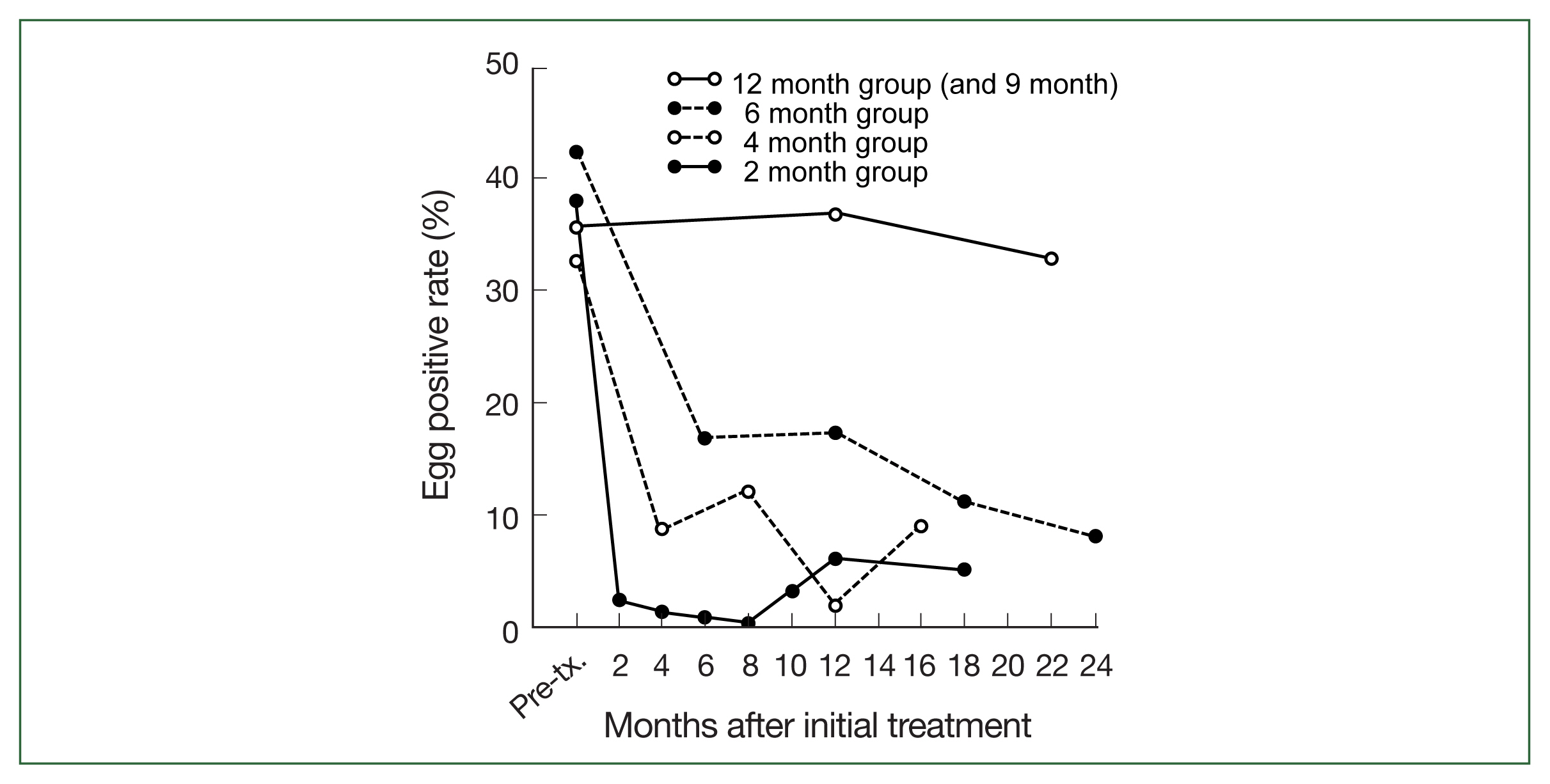
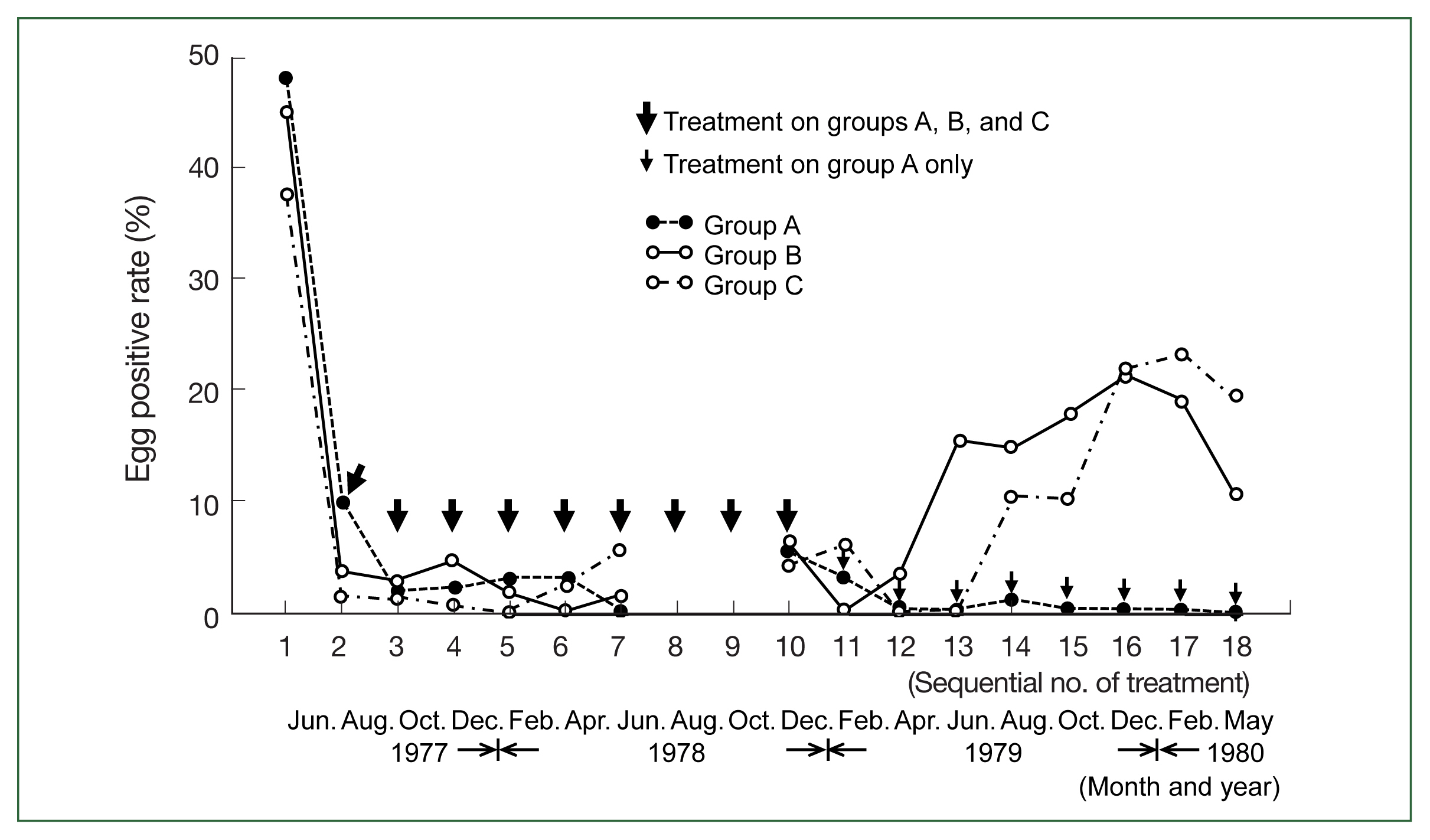
The fourth product was on the comparative efficacy of different interval chemotherapy (
Fig. 4) [
67]. The longitudinal data from Village I-III (2-month interval therapy), IV (6-month interval therapy) and V (12-month and 8-month intervals) were compared in their effects on egg positive rates and intensity of infection (
Table 3). After initiating the work, 4-month intervals of therapy were found necessary and treatment protocols were adjusted. The data confirmed the theoretical presumption on transmission dynamics [
32,
41].
The fifth product was on the effect of 2-month interval therapy to stop reinfection [
68]. The data came from Villages I-III (
Fig. 5). The purpose of the 2-month interval blinded mass therapy with pyrantel was removing
A. lumbricoides before young worms produced eggs and preventing egg contamination in the project areas. Doses of pyrantel did not affect incidence of reinfection. The period of the project was extended longer than that in the original design, because reinfection continued. In 28 months, the reinfection stopped. The effect of interrupting therapy was also observed. The sixth product was on the growth pattern in a defined time [
69]. Morphometric data from Village I-III, IV and V were dotted according to the months of interval after chemotherapy. Equations were deduced connecting the maximum measurements of length and weight. In heavily infected cases, this result could be used in determining the age of each worm and in differentiating repeated infections from a single massive infection. In the seventh product, morphometric data were compared with egg discharging pattern [
70]. Females that began to produce eggs and males that produce sperms were identified in terms of their length, weight and estimated age. In the eighth product, morphometric data were plotted against those of egg counting [
71]. In 25-cm-long females, EPG was the highest at 1,400, and declined thereafter. In the ninth product, Chai [
72] analyzed relations between prevalence and reinfection rates using the data used in the second product. Regression curve of Hayashi (1977) was applied. In the tenth report, reinfection was analyzed by age and by familial aggregation [
73]. Reinfection occurred more frequently in young schoolchildren, and a statistically significant familial aggregation pattern was recognized.
The population studies of A. lumbricoides helped us better understand the biology, transmission dynamics and impact of mass chemotherapy on its control. The study was designed, based on the theories, which were prepared by Japanese parasitologists. The study results proved that the hypotheses were largely correct. Japanese theories on A lumbricoides epidemiology were formulated after contemplating the field data.
The Korean studies on
Ascaris epidemiology theoretically and practically supported ascariasis control activities by KAPE, but have not been academically extended to generalized and predictive models to explain population biology of infectious diseases in general, like other studies [
74,
75]. However, apparently the population biology studies conducted by Korean parasitologists were later confirmed [
65,
66,
76]. Two consecutive monographs on ascariasis appeared and paved the road to global control of the great neglected disease [
77,
78].
KAPE data of annual egg positive rates, collected during 1969–1995 (
Table 2), showed the changing pattern of prevalence in Korean schoolchildren during the past 27 years. Influenced by the publicized scandal of KAPE in 1967, the acceptance rate of stool examination was 44.9% in the first year, 1969. The rates increased to the levels of 75% in the early l970s, 85% in the later 1970s, and over 90% in the 1980s and 1990s. In 1970–1988, over 10 million examinations, peaking in 1983 up to 16 million, were done. Over 6 million schoolchildren were treated in 1971 alone.
One of the problems of mass examination was diagnostic sensitivity. CTS has a defect in detecting eggs of hookworms and T. orientalis unless examined quickly after fecal smear. The egg positive rates for T. trichiura reported by KAPE were, however, found significantly lower than those from concurrent local surveys done by parasitologists. That was due to microscopists’ daily work burden. To finish examination of the required quantity in a day, they had to stop further screening whenever they found eggs. The issue was settled in a way that did not harm KAPE credibility. The egg positive rates of A. lumbricoides identified by KAPE were reliable. A. lumbricoides was actually the only target of the parasite control activities. Also, data of KAPE have a consistency and depicted correct trends.
Nationwide status surveys
Statistics regarding the nationwide status of intestinal helminth infection were necessary. One challenge was low credibility in part of the prevalence data reported by KAPE. Previous surveys had been undertaken in local or in large populations but with skewed samples [
19]. For correctly developing policy in a long-term project such as parasite control, MHSA needed data representing states of the whole nation. Quickly imitating the good example of the National Tuberculosis Survey in Korea, a prevalence survey for intestinal parasitic infection was designed and undertaken in 1971. The survey was subsequently repeated every 5 years for 6 times until 1997 and 2 more times later in 2004 and 2012 [
79–
81] (
Table 4).
The remarkable findings in the first national survey (1971) were as follows. 1) 84.3% of the representative samples were positive for eggs of any parasite. 2) Sum of rates for each parasite was 140.1%. Of it, the sum of rates for 4 soil-transmitted nematodes was 135.3%. 3) The rates in rural inhabitants were significantly higher than those in urban population, which were also high. 4) Rural adult females showed the highest egg positive rates of A. lumbricoides. 5) Egg positive rates for A. lumbricoides in 5–14 yearold children were 51–56%, which was relatively lower when compared to those of other age groups. The finding in children was considered as reflecting the effect of mass chemotherapy.
Declining infections
Since the initiation of the mass chemotherapeutic control, the egg positive rates of A. lumbricoides were lowered gradually and steadily from 55.4% in 1969. In 1979, 10 years after the control, the rate went down to 15.0%. The rate was below 1% in 1987 and below 0.1% in 1992. In 1973, of 48.1% infected schoolchildren, 9.4% passed unfertilized eggs and 38.8% passed fertilized eggs. In 1983, when 4.7% of schoolchildren were egg positive, the proportion was reversed. This data indicated indirectly the lowered worm burden in infected children.
KAPE control activity met a crisis in 1979. In 1978 and 1979, when egg positive rates were below 20% nationwide and below 10% in schools in metropolitan cities, teachers began to petition to the Minister of Education either for reducing the frequency of stool examinations to once a year or for stopping it. The Minister of Education listened to the explanation of the reason why chemotherapy should be done twice a year. In explaining the reason, the President of KAPE (Prof. B.S. Seo) used the data, obtained from epidemiologic research on
A. lumbricoides infections (
Fig. 4), which was supported also by a grant from the Ministry of Education. The Minister ultimately turned down the protests of teachers.
In 1986, when KAPE was amalgamated into Korea Association of Health (KAH), the Expert Committee of Parasitic Diseases advised the government and KAH to gradually reduce the target population in the near future. There were, however, no reasonable criteria for the decision. Basic reproductive rate of Anderson & May [
75] could be a criterion. The rate was 1.03 in a population with an egg positive rate of 3.3%, which indicated a potency of spreading [
82]. Basic reproductive rates have not been examined in a population with a prevalence lower than 1%. Therefore, the decision should depend on other circumstantial indices. An egg positive rate of 0.1% was tentatively set as a criterion when no yearly fluctuations were noted. States of sanitary facilities were also considered. Finally, the examinations were reduced to once a year in 1987–1991 in metropolitan cities, in 1988–1992 in provincial cities and in 1992–1995 in schools of the remaining rural communities. Since 1996, there have been no compulsory stool examinations of schoolchildren in Korea.
Article 5 of the Parasitic Disease Prevention Act stipulated that school principals have an obligation of undertaking stool examinations for schoolchildren twice in a year. In the changing situation, the Act required amendment, because Korean control activities were a legal action. MHSA prepared and emended Act, with Article 5 changing the obligatory examinations to optional. In March 8, 1991, the emended Act passed parliamentary agreement and promulgated. However, mass stool examination can be undertaken again whenever evidence of reemerging infections appears. Later, the government and National Assembly officially rescinded the Parasitic Disease Prevention Act on 29 December 2009. The amended act, the Infectious Disease Prevention and Control Act, included control activities on parasitic diseases instead.
What made the infection decline in Korea?
Ascaris lumbricoides infection is transmitted in low levels if social infrastructure is modernized. As shown in Germany in the 1950s, the epidemic infection disappeared when the crumbled society was rebuilt. However, in the traditional societies with scanty social infrastructure and resources, the ascariasis control by social modernization is only a dream. The only economically feasible method is mass chemotherapy. KAPE chose biannual mass chemotherapy of schoolchildren following the successful example of Japan [
38]. The strategy was supported legally. Only after the control activities were proceeded in the 1970s the rationale of biannual therapy was understood belatedly.
Evidently, the egg contamination in Korean soil was reduced by the mass chemotherapy done twice a year in schoolchildren. In addition, people, who were not subjected to the program, took anthelmintics voluntarily. The egg contamination in soil was further reduced, but the degree of reduction of soil contamination is hardly measurable. The contamination continued during the 1970s because there were many farming villages where the egg positive rates were higher than 70%. In the 1970s, the egg positive rate decreased by 4% every year in all of Korea. This dramatic change of situation raised a question: Without mass chemotherapy by KAPE, would A. lumbricoides infections have been controlled?
The question had appropriate evidences. The egg positive rates of
T. trichiura declined in the 1970s against which no effective drugs had been used. Furthermore, in the l970s drives of industrialization and green revolution were spectacular. As shown in
Table 5, almost all the social indices changed quickly. It is necessary to find by what kinds of social change the poverty-related soil-transmitted nematode infection declined. Unfortunately, no epidemiological studies analyzed the main factor involved using Korean data.
In the case of Japan, Kobayashi presumed that 3 measures, i.e., repeated mass chemotherapies, treatment of human manure using chemicals that kill eggs, and removal of eggs from vegetables with syndets were important in the remarkable decrease of
A. lumbricoides infection during 1949–1974 [
41]. Kobayashi mentioned parasitological aspects only, but during the period Japan changed dramatically after the World War II, from an agricultural society to an industrialized one. In the meantime, they made nationwide systematic parasite control and professional efforts for a priority during the changing society. The contributing factors for elimination of STHs look similar between Japan and Korea, both of parasitological approach and society change.
The social changes, which discouraged the Ascaris infection, happened in different forms. Soil contamination was reduced not only by mass chemotherapy but also by reduced use of human manure as a fertilizer. The reduced use of manure was mainly due to quick urbanization trends. Lack of labour force encouraged the use of chemical fertilizers in the traditional farming villages, which tripled in 1965–1975. Subsequent soil acidification became an issue later.
In the 27 years during which control against
A. lumbricoides infection had been undertaken, Korea had changed its shape greatly (
Table 5). The farming villages began to change in 1970 when the Korean government implemented the so-called “
Saemaul (New village) Movement”, which stressed self-help spirit for better environment and more income. Conditions of fanning houses and roads improved, although the speed of improvement was not the same. Electricity was supplied to most farm villages within some years. Piped water began to be supplied in fanning villages. The increased revenue and improved conditions accompanied behavioural changes of people that prevented the infection. The egg positive rates were lowered continuously throughout the 1980s and 1990s as the living conditions were improved. Although higher, the egg positive rates in rural populations decreased as much as those in urban populations.
Government policy of self-sufficient production of rice led to wide use of herbicides and insecticides. The entire farm land of Korea was almost poisoned. Extreme ecological damage occurred especially in rice paddies. Insecticides killed the third stage larvae of hookworms which decreased earliest in the 1970s. Until the late 1970s, remote villages lived in traditional way. General trend of changes in Korea were reflected in the gradual and steady decrease of soil-transmitted helminthiasis both in rural and urban population. In urban slums of the 1970s, infected migrants were living in shanty houses forming another endemic area of ascariasis of which environmental condition improved quickly due to increased family revenue after the migration [
83].
Confounding impacts of diverse social and economic factors gave effects to the decreased endemicity of
A. lumbricoides. Search for main factors causing the decrease can only be identified through elaborate statistical analyses. Whatever the main factors were, Korean children in the 1970s–1980s certainly experienced reduced chances of morbidity even if not calculating the disability-adjusted life years [
84].
Conclusion
Until the early 1970s in Korea, Ascaris prevailed in the whole country due to the vicious recycling of worms and eggs by traditional agriculture. The most important hurdle of the parasite control in the past was poverty of the general population in Korea but the society formed a consensus on the priority of intestinal helminthiasis control during the ordeal period. The national consensus in the 1960s by foundation of KAPE and the law ‘the Parasitic Diseases Prevention Act’ was the critical milestone for Ascaris control success in Korea. Japan supported KAPE to overcome the initial financial hurdles. Reduction of morbidity was a benefit of continuous mass chemotherapy, which was the only control method feasible in economically difficult countries. The reduction of morbidity was accelerated by social and environmental up-grades following economic growth. The successful experience of ascariasis elimination in Korea can be a benchmark for many countries where neglected tropical diseases are endemic.
Notes
-
Author contributions
Conceptualization: Cho SY, Hong ST
Data curation: Cho SY, Hong ST
Formal analysis: Cho SY, Hong ST
Validation: Hong ST
Writing – original draft: Cho SY,
Writing – review & editing: Hong ST
-
The authors declare no conflict of interest related to this study.
Supplementary Information
Fig. 1A deceased Korean girl with surgically removed
Ascaris worms (n=1,063), 1963. Cited from the History of Thirty Years of the Korea Association of Health Promotion, 1994 [
20] with permission.

Fig. 2

Fig. 3Street campaign on parasite examination and prevention by Korea Association of Parasite Eradication, 1972. Cited from the History of Thirty Years of the Korea Association of Health Promotion, 1994 [
20] with permission.

Fig. 4Efficacy of various interval mass chemotherapy by egg positive rate. Quoted from
Korean J Parasitol 1980;18(2):145–151 [
67] with permission.

Fig. 5Effects of 2-month medication. Quoted from
Korean J Parasitol 1980;18(2):153–163 [
68] with permission.

Table 1Egg positive rates of Ascaris lumbricoides reported in 1914–1969, before KAPE activity of mass chemotherapeutic control was implemented
Table 1
|
Authorsa
|
No. examined |
Positive rates (%) |
Subjects and locality |
|
Stryker (1914) |
206 |
85.0 |
Miners in Hwanghae-do |
|
Kobayashi and Kwon (1917) |
323 |
69.6 |
Out-patients in Seoul |
|
Kojima and Ko (1919) |
1,000 |
76.0 |
Inhabitants in Jinju, Gyeongsangnam-do |
|
Uchida (1923) |
998 |
46.2 |
Prisoners in Seoul |
|
Hara and Himeno (1924) |
1,619 |
93.0 |
Schoolchildren in Gyeongsangnam-do |
|
Choi (1926) |
4,000 |
44.2 |
Out-patients of Severance Hosp. In Seoul |
|
Mills (1926) |
7,000 |
53.2 |
Inhabitants in Gyeonggi-do |
|
Oh (1930) |
435 |
60.0 |
High school students in Chungchongnam-do |
|
Sekiguchi et al. (1937) |
831 |
95.0 |
Schoolchildren in Gyeongsangnam-do |
|
Hunter et al. (1949) |
917 |
80.5 |
Nationwide |
|
Kim (1951) |
1,405 |
69.3 |
Inhabitants in Jeollabuk-do |
|
Brooke et al. (1956) |
2,642 |
8I.7 |
Prisoners-of-war and civilians |
|
Lesser (1956) |
233 |
45.9 |
Any personnel’s in Seoul |
|
Soh et al. (1961) |
14,682 |
46.9 |
Out-patients of Severance Hosp.in Seoul |
|
Kim (1962) |
562 |
68.0 |
Children in Jeollabuk-do |
|
Rim (1962) |
1,963 |
47.6 |
ROK Army soldiers |
|
Lee (1963) |
541 |
49.6 |
ROK Navy soldiers |
|
Chung (1964) |
250 |
64.0 |
Out-patients of Namwon Hosp. Jeollabuk-do |
|
Kang et al. (1964) |
11,063 |
83.9 |
Schoolchildren in Jeju-do |
|
Kim (1964) |
63,924 |
26.0 |
Schoolchildren in Seoul |
|
Chyu (1965) |
1,478 |
63.5 |
Inhabitant in Inchon |
|
Lee (1966) |
5,288 |
40.9 |
Out-patients of Kyungpook Nat. Univ. Hosp. |
|
Ahn et al. (1966) |
527 |
65.7 |
Inhabitants in Gyeongsangnam-do |
|
Seo et al. (1969) |
40,481 |
58.2 |
Nationwide |
Table 2Egg positive rates of
Ascaris lumbricoides in students examined by KAPE in 1969–1995
a
Table 2
|
Year |
No. examined |
Total egg positive rate (%)b
|
Egg positive rate (%) for Ascaris lumbricoides for |
|
Unfertilized egg |
Fertilized egg |
Total |
|
1969 |
6,551,926 |
73.1 |
- |
- |
55.4 |
|
1970 |
10,871,280 |
74.5 |
- |
- |
55.6 |
|
1971 |
11,813,280 |
71.3 |
- |
- |
51.6 |
|
1972 |
11,243,033 |
63.9 |
- |
- |
45.8 |
|
1973 |
12,116,892 |
65.2 |
9.4 |
38.8 |
48.1 |
|
1974 |
11,901,236 |
53.4 |
7.5 |
30.7 |
38.2 |
|
1975 |
12,480,942 |
51.8 |
7.5 |
31.3 |
38.7 |
|
1976 |
13,243,193 |
46.1 |
7.4 |
26.7 |
34.1 |
|
1977 |
14,160,212 |
39.6 |
6.8 |
22.9 |
29.7 |
|
1978 |
15,030,061 |
27.9 |
4.6 |
14.8 |
19.4 |
|
1979 |
15,597,977 |
23.2 |
4.8 |
10.3 |
15.0 |
|
1980 |
15,495,361 |
19.7 |
4.6 |
7.5 |
12.2 |
|
1981 |
16,229,789 |
16.0 |
4.1 |
6.1 |
10.2 |
|
1982 |
16,216,136 |
12.0 |
3.1 |
3.8 |
6.9 |
|
1983 |
16,220,369 |
8.4 |
2.4 |
2.3 |
4.7 |
|
1984 |
16,091,005 |
5.5 |
1.6 |
1.5 |
3.1 |
|
1985 |
15,812,300 |
3.9 |
1.1 |
0.9 |
2.0 |
|
1986 |
14,861,006 |
2.7 |
0.8 |
0.6 |
1.3 |
|
1987 |
13,206,807 |
1.8 |
0.5 |
0.4 |
0.9 |
|
1988 |
12,703,799 |
1.2 |
0.3 |
0.2 |
0.6 |
|
1989 |
9,594,316 |
0.8 |
0.2 |
0.1 |
0.3 |
|
1990 |
9,146,913 |
0.6 |
0.1 |
0.1 |
0.2 |
|
1991 |
8,212,776 |
0.3 |
0.07 |
0.04 |
0.1 |
|
1992 |
4,295,294 |
0.2 |
0.04 |
0.03 |
0.07 |
|
1993 |
1,699,477 |
0.2 |
0.03 |
0.04 |
0.07 |
|
1994 |
1,531,706 |
0.2 |
0.02 |
0.02 |
0.04 |
|
1995 |
1,334,517 |
0.2 |
0.01 |
0.004 |
0.02 |
Table 3Scheme of study on Ascaris lumbricoides epidemiology in Whaseong-gun, Korea
Table 3
|
Area |
Year |
1977 |
1978 |
1979 |
|
|
|
|
|
Month |
4 |
5 |
6 |
7 |
8 |
9 |
10 |
11 |
12 |
1 |
2 |
3 |
4 |
5 |
6 |
7 |
8 |
9 |
4 |
5 |
|
Haengjeong 1-ri |
|
|
|
|
|
|
|
|
|
|
|
|
|
|
|
|
|
|
|
|
|
|
|
Village I (A) |
|
|
|
○ |
|
○ |
|
○ |
|
○ |
|
○ |
|
○ |
|
|
|
|
|
|
|
|
|
Village II (B) |
|
|
|
○ |
|
○ |
|
○ |
|
○ |
|
○ |
|
○ |
|
|
|
|
|
|
|
|
|
Village III(C) |
|
|
|
○ |
|
○ |
|
○ |
|
○ |
|
○ |
|
○ |
|
|
|
|
|
|
|
|
|
Haengjeong 2-ri, Sangsin 2, 3, 4-ri and Hagil l-ri |
|
|
|
|
|
|
|
|
|
|
|
|
|
|
|
|
|
|
|
|
|
|
Village IV (1) |
|
○ |
|
|
|
|
|
○ |
|
|
|
|
|
○ |
|
|
|
|
|
|
|
|
|
Village IV (2) |
|
|
○ |
|
|
|
|
|
○ |
|
|
|
|
|
○ |
|
|
|
|
|
|
|
|
Village IV (3) |
|
|
|
○ |
|
|
|
|
|
○ |
|
|
|
|
|
○ |
|
|
|
|
|
|
|
Village IV (4) |
|
|
|
|
○ |
|
|
|
|
|
○ |
|
|
|
|
|
○ |
|
|
|
|
|
|
Village IV (5) |
|
|
|
|
|
○ |
|
|
|
|
|
○ |
|
|
|
|
|
○ |
|
|
|
|
|
Village IV (6) |
|
|
|
|
|
|
○ |
|
|
|
|
|
○ |
|
|
|
|
|
○ |
|
|
|
|
Sangsin 4-ri and Gumun-cheon 4-ri |
|
|
|
|
|
|
|
|
|
|
|
|
|
|
|
|
|
|
|
|
|
|
Village V (1) |
|
○ |
|
|
|
|
|
|
|
|
|
|
|
○ |
|
|
|
|
|
○ |
|
|
|
Village V (2) |
|
|
○ |
|
|
|
|
|
|
|
|
|
|
|
○ |
|
|
|
|
|
○ |
Table 4Egg positive rates of
Ascaris lumbricoides in national prevalence survey for intestinal parasites
a
Table 4
|
Year |
No. examined |
Total egg positive rate (%)a
|
Egg positive rate (%) for Ascaris lumbricoides for |
|
Unfertilized egg |
Fertilized egg |
Total |
|
1971 |
24,887 |
20,970 (84.3) |
- |
- |
13,664 (54.9) |
|
1976 |
27,178 |
12,171 (63.2) |
4,124 (15.2) |
7,009 (25.8) |
11,133 (41.0) |
|
1981 |
35,018 |
14,381(41.1) |
2,520 (7.2) |
2,023 (5.8) |
4,543 (13.0) |
|
1986 |
43,590 |
5,630 (12.9) |
590 (1.4) |
334 (0.8) |
924 (2.1) |
|
1992 |
46,912 |
1,806 (3.8) |
92 (0.2) |
46 (0.1) |
138 (0.3) |
|
1997 |
45,832 |
1,098 (2.4) |
15 (0.03) |
13 (0.03) |
28 (0.06) |
|
2004 |
20,546 |
879 (3.7) |
6 (0.03) |
4 (0.02) |
10 (0.05) |
|
2012 |
23,956 |
645 (2.6) |
6 (0.03) |
0 |
6 (0.03) |
Table 5Social index and the egg positive rate of Ascaris lumbricoides in Korea during the 25 years
Table 5
|
Economic and social indexa
|
Year |
|
1970 |
1975 |
1980 |
1985 |
1990 |
1995 |
|
Per capita GNP (U$ equivalent) |
253 |
594 |
1,597 |
2,242 |
5,883 |
10,076 |
|
Food consumption/family income (%) |
46.5 |
48.9 |
43.0 |
37.7 |
32.5 |
28.8 |
|
Rate of paved road (%) |
9.6 |
22.3 |
33.2 |
49.6 |
71.5 |
76.0 |
|
Piped water supply (%) |
33.1 |
42.4 |
54.6 |
66.6 |
78.5 |
82.9 |
|
Rate of apartment among houses (%) |
4.3 |
5.8 |
7.2 |
13.6 |
20.1 |
35.9 |
|
Farming population/Total population (%) |
45.8 |
38.2 |
28.9 |
21.1 |
15.3 |
10.9 |
|
Consumption of chemical fertilizer (thousand tons) |
562 |
886 |
828 |
807 |
1103 |
954 |
|
Production of compost fertilizer (thousand tons) |
22,907 |
21,055 |
22,668 |
16,157 |
9,786 |
3,786 |
|
Egg positive rate of Ascaris lumbricoides (%)b
|
54.9 |
41.0 |
13.0 |
2.1 |
0.3 |
0.06 |
References
- 1. Mills RG. Parasites, chiefly metazoan, observed in 7,000 specimens of feces from Koreans with an attention to interpret the findings. Am J Hyg 1927;7(3):222-263.
- 2. Komiya Y, Izumi S, Ito S. Experimental studies on Ascaris eggs in soil of vegetables farm which are dispersed by rain and adhere onto the vegetables. Nishhin lgaku 1955;42:508-512. (in Japanese).
- 3. Hoeppli R. Parasites and parasitic infections in early medicine and science. Parasitol Today 1959;13:438-443.
- 4. Grove DI. A History of Human Helminthology. Chapter 19 Ascaris lumbricoides and ascariasis. C.A.B. International; Wallingford, Oxon. 1990. p. 469-497.
- 5. Kim DJ. History of Medicine in Korea. Tambudang; Seoul, Korea.. 1966. (a monograph in Korean).
- 6. Allen RN. Report to mission Center. History of College of Medicine, Seoul National University in 1885–1978. p. 5-6. Seoul National University Press; Seoul, Korea. (in Korean).
- 7. Ministry of Health and Social Affairs. 1968. Manual of parasite control. Seoul, Korea. (in Korean).
- 8. Kobayashi H. On the animal parasites in Korea. Jpn Med World 1925;5:9-16.
- 9. Kobayashi H. Resistance of eggs of helminths against various external conditions. Mitteilungen des Medizinische Hochschule im Keijo 1921;4:21-31.
- 10. Morishita K. Studies on epidemiological aspects of ascariasis in Japan and basic knowledge concerning its control. Progress of Medical Parasitology in Japan 1972;4:1-153.
- 11. Morishita K. Parasite control activity in Japan-A brief review. Collected papers on the control of soil-transmitted helminthiases 1980;1:223-231.
- 12. Kim CR. A case of Ascaris discharged from migrated lesion of liver abscess. J Chosen Med Assoc 1919;25.
- 13. Kim HD. Two cases of acute intestinal obstruction caused by Ascaris lumbricoides. J Chosen Med Assoc 1930;20:919-933. (in Japanese).
- 14. Hunter GW III, Ritchie LS, Chang IC, Rolph WD Jr, Mason HC, et al. Parasitological studies in the Far East. VII. An epidemiological survey in South Korea. J Parasitol 1949;36(Suppl):41.
- 15. Brooke MM, Swartzwelder C, Payne FJ, Weinstein P, Frye WW. Intestinal parasite survey of Korean prison-of-war camp. U.S. Armed Forces Med J 1956;7:708-714.
- 16. Lesser E. Parasitism in Korea. J Parasitol 1956;42:515.
- 17. Soh CT, Lee KT, Shin EW, Kang TC. Incidence of parasites in Seoul area based on an examination of the Severance Hospital out-patients. Yonsei Med J 1961;2:31-41.
- 18. Crane PS, Pak YH, Lee HK. Surgical complications of massive infestations with Ascaris lumbricoides. Ann Surg 1966;162:34-36. Parasitological studies in the Far East. VII. An epidemiological survey in South Korea.
- 19. Seo BS, Rim HJ, Loh IK, Lee SH, Cho SY, et al. Study on the status of helminthic infections in Koreans. Korean J Parasitol 1969;7(1):53-70. (in Korean). https://doi.org/10.3347/kjp.1969.7.1.53
- 20. Korea Association of Health Promotion. History of thirty years of the Korea Association of Health Promotion. Korea Association of Health Promotion; Seoul, Korea. 1994.
- 21. Kim CH, Soh CT. Seasonal fluctuation of survival period of Ascaris eggs in stool tank. Korean J Med 1964;7:607-609. (in Korean).
- 22. Kim CH, Soh CT. Ovicidal effect of sodium nitrite on Ascaris eggs in night soil. Korean J Med 1964;7:611-617. (in Korean).
- 23. Song TS, Ahn YK, Soh CT. Influence of sodium nitrite upon oxygen consumption of Ascaris eggs. Korean J Med 1964;7:685-690. (in Korean).
- 24. Soh CT, Kim SJ. Effects of sodium nitrite on the growth of vegetables. Korean J Med 1964;1:691-695. (in Korean).
- 25. Kim CH, Rhee GY, Song TS, Kong TH. Examination of parasites eggs and their survival rate in pig-manure heap in Cheju Province. J Korean Modern Med 1965;2:167-169. (in Korean).
- 26. Song TS. The effect of sodium nitrite on the respiration of Ascaris eggs. Korean Med J 1965;10:31-45. (in Korean).
- 27. Roh YH, Kim CH, Soh CT. Ovicidal effect of several chemicals on eggs of Ascaris lumbricoides. New Med J 1968;11:345-348. (in Korean).
- 28. Soh CT, Lee KT, Chung PR, Lee JH, Lee JH, et al. Trend of the prevalence of parasites infections in a village of Cheju-Do, where three compartment stool tank system was established. New Med J 1968;11:713-717. (in Korean).
- 29. Soh CT, Ro CH, Choi KC, Uom YS, Lee JH. Elimination of Ascaris and hookworm infection by mass treatment. Addendum: resistance of Ascaris and hookworm eggs in methane gas producing tank. New Med J 1968;11:235-242. (in Korean).
- 30. Seo BS. Control problem of parasitic infection in Korea. Collected Papers on the Control of Soil-transmitted Helminthiases 1980;1:73-81.
- 31. Hwang CH, Kim DC, Chung HS, Paik KH. A study of faecal examination using polyethylene envelope instead of cover-glass for helminth eggs for survey. Korean Central J Med 1965;8:395-402.
- 32. Komiya Y, Kobayashi A. Techniques applied in Japan for the control of Ascaris and hookworm infections--a review. Jpn J Med Sci Biol 1965;18:1-17.
- 33. Cho SY, Lee SH, Rim HJ, Seo BS. An evaluation of cellophane thick smear technique for mass stool examination. Korean J Parasitol 1969;7(1):48-52. http://doi.org/10.3347/kjp.1969.7.1.48
- 34. Soh CT, Lee BO, Min DY, Choi SJ, Lee JH. Clinical trial of Vermox (mebendazole), a new broad-spectrum anthelmintic. Yonsei Rep Trop Med 1974;5:148-152.
- 35. Rim HJ, Lim JK. Treatment of enterobiasis and ascariasis with combantrin (pyrantel pamoate). Trans Roy Soc Trop Med Hyg 1972;66:170-175. https://doi.org/10.1016/0035-9203(72)90066-1
- 36. Seo BS, Lee SH, Cho SY, Kang SY, Ryang YS, et al. Effectiveness of pyrantel pamoate (Combantrin) in the mass treatment of ascariasis with low dosage schedule. Korean Central J Med 1973;25:401-408. (in Korean).
- 37. Seo BS, Cho SY, Chai JY. Reduced single dose of mebendazole in treatment of Ascaris lumbricoides infection. Korean J Parasitol 1978;16(1):21-25. https://doi.org/10.3347/kjp.1978.16.1.21
- 38. Komiya Y. To eradicate roundworm. Its theory and practice 1962;1-50. (a monograph in Japanese).
- 39. Komiya Y, Kobayashi A. Evaluation of Kato’s thick smear technique with a cellophane cover for helminth eggs in feces. Jpn J Med Sci Biol 1966;19:59-64.
- 40. Kim DC, Lee OY, Sung WY, Kim TW, Han EJ, et al. Studies on the control of ascariasis and hookworm infections by periodic mass treatment - First year report. Report of NIH, Korea 1970;7:281-306. (in Korean).
- 41. Kobayashi A. Theory and practice applied in Japan for the eradication of Ascaris infection. Collected Papers on the Control of Soil-transmitted Helminthiases 1980;1:232-242.
- 42. Cho SY, Bae J, Park SC. An analytical approach to the dynamics of Ascaris lumbricoides infection in ROK Army. J Korean Med Assoc 1973;16:649-656. (in Korean).
- 43. Komiya Y, Kozai I, Suzuki R. The increase of the ratio of those expelling only unfertilized eggs of Ascaris as the rate of the positive for Ascaris eggs among the local social groups diminishes and the utilization of this fact to the eradication program of ascariasis in Japan. Jap J Parasitol 1962;11:45-52. (in Japanese).
- 44. Seo BS, Cho SY, Chai JY. Egg discharging pattern of Ascaris lumbricoides in low worm burden cases. Korean J Parasitol 1979;17(2):98-104. https://doi.org/10.3347/kjp.1979.17.2.98
- 45. Guyatt HL, Bundy DA, Medley GF, Grefel BT. The relationship between the frequency distribution of Ascaris lumbricoides and the prevalence and intensity of infection in human communities. Parasitology 1990;101(1):139-143. https://doi.org/10.1017/s0031182000079841
- 46. Chan MS, Guyatt HL, Bundy DA, Medley GF. The development and validation of an age-structure model for the evaluation of disease control strategies for intestinal helminths. Parasitology 1994;109(3):389-396. https://doi.org/10.1017/s0031182000078422
- 47. de Silva NR, Chan MS, Bundy DA. Morbidity and mortality due to ascariasis: re-estimation and sensitivity analysis of global numbers at risk. Trop Med Int Health 1997;2(6):519-528. https://doi.org/10.1046/j.1365-3156.1997.d01-320.x
- 48. Crofton HD. A quantitative approach to parasitism. Parasitology 1971;62(2):179-193. https://doi.org/10.1017/S0031182000071420
- 49. Kang SY, Cho SY, Seo BS. Studies on the lung fluke, Paragonimus iloktsuenensis IV. A mathematical analysis on metacercarial density of Paragonimus iloktsuenensis in crab host, Sesarma dehaani. Korean J Parasitol 1975;13(1):31-37. https://doi.org/10.3347/kjp.1975.13.1.31
- 50. Fushimi J. A consideration on the correlation between so-called the egg positive rate and the genuine infection rate, of the unisexual parasitism or the mean number of the infected worms in case of the ascarid infection (1) The examination of the fundamental materials for the construction of the theoretical model. Jap J Parasitol 1959;8(1):108-114. (in Japanese).
- 51. Fushimi J. A consideration on the correlation between so-called the egg positive rate and the genuine infection rate, of the unisexual parasitism or the mean number of the infected worms in case of the ascarid infection (2) The construction of the theoretical model. Jap J Parasitol 1959;8:166-173. (in Japanese).
- 52. World Health Organization. Control of ascariasis: report of WHO Expert Committee. WHO Technical Report Series No 379. 1967.
- 53. Rim HJ, Ha JH, Lee JS, Hyun I, Uh KB. Pyrantel embonate in mass treatment of ascariasis and in comparison with piperazine adipate and santonin kainic acid complex. Korean J Parasitol 1974;12(2):141-146. https://doi.org/10.3347/kjp.1974.12.2.141
- 54. Arfaa F, Ghadirian E. Epidemiology and mass-treatment of ascariasis in six rural communities in central Iran. Am J Trop Med Hyg 1977;26(5):866-871. https://doi.org/10.4269/ajtmh.1977.26.866
- 55. Cho SY. Study on the quantitative evaluation of reinfection of Ascaris lumbricoides. Korean J Parasitol 1977;15(1):17-29. https://doi.org/10.3347/kjp.1977.15.1.17
- 56. Cho SY, Kang SY. Significance of scotch-tape anal swab technique in diagnosis of Enterobius vermicularis infection. Korean J Parasitol 1975;13(2):102-114. https://doi.org/10.3347/kjp.1975.13.2.102
- 57. Chai JY, Cho SY, Seo BS. Study on Metagonimus yokogawai (Katsurada, 1912) in Korea IV. An epidemiological investigation along Tamjin River basin, South Cholla Do, Korea. Korean J Parasitol 1977;15(2):115-120. https://doi.org/10.3347/kjp.1977.15.2.115
- 58. Seo BS. The first report on research programme (1977) - an outline of research project with interim report. Collected Papers on the Control of Soil-transmitted Helminthiases 1980;1:129-136.
- 59. Seo BS. The second report on research programme (1978) - studies on the control problems on ascariasis in Korea. Collected Papers on the Control of Soil-transmitted Helminthiases 1980;1:169-177.
- 60. Seo BS. The third report on research programme (1979) - study on the control problems of ascariasis in Korea. Collected Papers on the Control of Soil-transmitted Helminthiases 1980;1:197-209.
- 61. Seo BS, Cho SY, Chai JY. Seasonal fluctuation of Ascaris reinfection incidences in a rural Korean population. Korean J Parasitol 1979;17(1):11-18. https://doi.org/10.3347/kjp.1979.17.1.11
- 62. Kobayashi A. On the mode of natural infection of Ascaris in Gunma Prefecture. (I) On seasonal change of Ascaris infection in Gunma Prefecture. Kitasato Lgaku 1954;3:194-199. (in Japanese).
- 63. Seo BS, Cho SY, Chai JY. Frequency distribution of Ascaris lumbricoides in rural Koreans with special reference on the effect of changing endemicity. Korean J Parasitol 1979;17(2):105-113. https://doi.org/10.3347/kjp.1979.17.2.105
- 64. Croll NA, Anderson RM, Gyarkos TW, Ghadirian E. The population biology and control of Ascaris lumbricoides in a rural community in Iran. Trans R Soc Trop Med Hyg 1982;76(2):187-197. https://doi.org/10.1016/0035-9203(82)90272-3
- 65. Elkins DB, Haswell-Elkins M, Anderson RM. The epidemiology and control of intestinal helminths in the Pulicat Lake region of Southern India. I. Study design and pre- and post-treatment observations on Ascaris lumbricoides infection. Trans R Soc Trop Med Hyg 1986;80(5):774-792. https://doi.org/10.1016/0035-9203(86)90384-6
- 66. Elkins DB, Haswell-Elkins M, Anderson RM. The importance of host age and sex to patterns of reinfection with Ascaris lumbricoides following mass anthelmintic treatment in a South Indian fishing community. Parasitology 1988;96(1):171-184. https://doi.org/10.1017/s0031182000081749
- 67. Seo BS, Cho SY, Chai JY, Hong ST. Comparative efficacy of various interval mass treatment on Ascaris lumbricoides infection in Korea. Korean J Parasitol 1980;18(2):145-151. https://doi.org/10.3347/kjp.1980.18.2.145
- 68. Seo BS, Chai JY. Effect of two month interval mass chemotherapy on the reinfection of Ascaris lumbricoides in Korea. Korean J Parasitol 1980;18(2):153-163. https://doi.org/10.3347/kjp.1980.18.2.153
- 69. Seo BS, Chai JY. Chronologic growth pattern of Ascaris lumbricoides. Korean J Parasitol 1980;18(2):164-170. https://doi.org/10.3347/kjp.1980.18.2.164
- 70. Seo BS. Ascariasis and its control problems in Korea. Seoul J Med 1981;22(3):323-341.
- 71. Chai JY, Hong ST, Lee SH, Seo BS. Fluctuation of the egg production amounts according to worm burden and length of Ascaris lumbricoides. Korean J Parasitol 1981;19(1):38-44. (in Korean). https://doi.org/10.3347/kjp.1981.19.1.38
- 72. Chai JY. Epidemiological studies on Ascaris lumbricoides reinfection in rural communities in Korea I. Relationship between prevalence and monthly reinfection. Korean J Parasitol 1983;21(2):135-141. https://doi.org/10.3347/kjp.1983.21.2.135
- 73. Chai JY, Seo BS, Lee SH, Cho SY. Epidemiological studies on Ascaris lumbricoides reinfection in rural communities in Korea II. Age specific reinfection rates and familial aggregation of the reinfected cases. Korean J Parasitol 1983;21(2):142-149. https://doi.org/10.3347/kjp.1983.21.2.142
- 74. Anderson RM, May RM. Infectious Diseases of Humans: Dynamics and Control. Oxford University Press; Oxford, UK. 1991.
- 75. Anderson RM, May RM. Population dynamics of human helminth infections: control by chemotherapy. Nature 1982;297(5867):557-563. https://doi.org/10.1038/297557a0
- 76. Thein-Hliang, Than-Saw, Htay-Htay-Aye, Myint-Lwin, Thein-Maung-Myint. Epidemiology and transmission dynamics of Ascaris lumbricoides in Okpo village, rural Burma. Trans R Soc Trop Med Hyg 1984;78(4):497-504. https://doi.org/10.1016/0035-9203(84)90071-3
- 77. Crompton DWT, Nesheim MC, Pawlowski ZS. Ascariasis and Its Public Health Significance. Taylor & Francis; London, UK. 1985.
- 78. Crompton DWT, Nesheim MC, Pawlowski ZS. Ascariasis and Its Prevention and Control. Taylor & Francis; London, UK. 1989.
- 79. Ministry of Health and Social Affairs and Korea Association of Health. Prevalence of intestinal parasitic infections in Korea-the sixth report. Ministry of Health and Social Affairs and Korea Association of Health; Seoul, Korea. 1997. (in Korean).
- 80. Korean Association of Health Promotion and Korean Center for Disease Control and Prevention. Prevalence of intestinal parasitic infections in Korea-the 7th report. Korean Center for Disease Control and Prevention; Seoul, Korea. 2004. (in Korean).
- 81. Korean Association of Health Promotion and Korean Center for Disease Control and Prevention. Prevalence of intestinal parasitic infections in Korea-the 8th report. Korean Center for Disease Control and Prevention; Seoul, Korea. 2012. (in Korean).
- 82. Chai JY, Kim KS, Hong ST, Lee SH, Seo BS. Prevalence, worm burden and other epidemiological parameters of Ascaris lumbricoides infection in rural communities in Korea. Korean J Parasitol 1985;23(2):241-246. https://doi.org/10.3347/kjp.1985.23.2.241
- 83. Yun CK, Cho SY, Seo BS. Status of Ascaris lumbricoides infection in a slum population in suburban Seoul. Korean J Ped Assoc 1979;22:30-36. (in Korean).
- 84. Chan MS. The global burden of intestinal nematode infections-Fifty years on. Parasitol Today 1997;13(11):438-443. https://doi.org/10.1016/s0169-4758(97)01144-7