Abstract
A cDNA of 1.1 kb comprising the gene encoding the peroxiredoxin of Toxoplasma gondii (TgPrx) has been cloned. The open reading frame of 591 bp was translated into a protein of 196 amino acids with a molecular mass of 25 kDa. Conserved 2 cysteine domains of Phe-Val-Cys-Pro and Glu-Val-Cys-Pro indicated TgPrx belonged to 2-Cys Prx families. TgPrx showed the highest homology with that of Arabidopsis thaliana by 53.9% followed by Entamoeba histolytica with 39.5% by the amino acid sequence alignment. Polyclonal antibody against recombinant TgPrx detected 25 kDa band in T. gondii without binding to host cell proteins. TgPrx was located in the cytoplasm of T. gondii extracellularly or intracellularly by immunofluorescence assay. The expression of TgPrx was increased as early as 30 min after the treatment with artemisinin in the intracellular stage, while no changes in those of host Prx I and TgSOD. This result implies that TgPrx may function as an antioxidant protecting the cell from the attack of reactive oxygen intermediates. It is also suggested that TgPrx is a possible target of chemotherapy.
-
Key words: Toxoplasma gondii, antioxidant, peroxiredoxin, RACE, 2-Cys, cytoplasmic, artemisinin
INTRODUCTION
Toxoplasma gondii is an obligatory intracellular parasite that causes severe disease after congenital infection and in immunocompromized patients such as AIDS. During infection, immune effector cells are able to kill or inhibit its intracellular growth. This antiprotozoan activity produces a number of toxic products such as reactive oxygen intermediates. And within the host cell, T. gondii itself produces oxidants as by-products of normal metabolism.
Reactive oxygen species (ROS) are potentially destructive, capable of oxidizing proteins or lipids and causing chemical modification to nucleic acids (
Halliwell and Gutteridge, 1991), even though some of these species also function as second messenger molecules (
Dalton, 1999). Superoxide dismutase (SOD), glutathione peroxidase (GPx), and catalase are the three major enzymes to be involved in the cellular anti-ROS system. Hydrogen peroxide, which is produced by SOD at the initial step of ROS detoxification, is subsequently eliminated by catalase and/or Gpx (Halliwell and Gutteridge, 1991). The presence of endogeneous SOD, GPx, and catalase have been demonstrated in
T. gondii (
Hughes et al., 1989;
Ding et al., 2000;
Odberg-Ferragut et al., 2000;
Kaasch and Joiner, 2000), which suggests to be related with protection from ROS attacks.
Peroxiredoxin (Prx) is a recently described family of antioxidants that are highly conserved in eukaryotes and prokaryotes (
McGonigle et al., 1998), which has been called as thioredoxin peroxidase (Tpx,) or thiolspecific antioxidant (TSA). Prx acts as an antioxidant enzyme by eliminating hydrogen peroxide and hydroxyl radicals. The catalytic mechanism of the enzyme involves the redoxactive cysteine, which is highly conserved in the vicinity of the 47th position of its amino acid sequence (
Chae et al., 1994). We report here the cDNA cloning, expression, and functional characterization of a Prx from
T. gondii (TgPrx).
MATERIALS AND METHODS
Parasite
The RH strain of
T. gondii was maintained by peritoneal passages in Balb/c mice. Tachyzoites were purified by centrifugation over 40% Percoll (Amersham Pharmacia Biotech, Uppsala, Sweden) in PBS solution (
Sohn and Nam, 1999).
Total RNA was purified from the RH extract with Tri Reagent (Sigma Chem. Co., St. Lous, MO) and used as template. RT-PCR was performed with the redundant primer set (forward primer, F1: 5'-AC(A/T/C) TT(C/T) GA(A/G) TG(T/C) CC(T/C) AC(A/G) GA-3' and reverse primer, R1: 5'- TT(G/T/A) GCC GG(A/G) CA(T/C/G) ACT TC(T/A) CC-3') designed near the two active cysteine residues of Prx in other organisms (
Yamamoto et al., 1989;
Ishii et al., 1993;
Chae et al., 1994a;
1994c). Amplified DNA fragment of appoximate 380 bp was cloned into pGEM-T vector (Promega, Madison, WI) and sequenced to design gene specific primers (GSP).
5'-RACE and 3'-RACE were performed according to the method in Frohman et al. (
1988) with primers designed as 5-CDS: 5'-CTA ATC GAC TCA CTA TAG GCA AGC GTG GTA CAA CGC AGA GT-3', 5-NEST: 5'-A AGC GTG GTA CAA CGC AGA GT-3', GSP1: 5'-CAC GTT TCT CCA GGC GTT GTG CAC-3', GSP2: 5'-CAC CGA TTG CAT GGC GAG TTC GAG-3', GSP3: 5'-GTG CAC AAC GCC TGG AGA AAC GTG-3', GSP4: 5'-AGA GCG TCC AAC ATG CGA AGG GCT-3', 3-CDS: 5'-AAC CAG TGG TAA CAA CGC AGA GTA CTT TTT TTT TTT TTT TTT TTT TTT TTT GC-3', and 3-NEST: 5'-AAC CAG TGG TAA CAA CGC AGA GT-3'. Sequences from 5'-RACE and 3'-RACE were combined to be a full-length sequence of TgPrx.
RT-PCR was performed to amplify the DNA fragments of open reading frame of TgPrx and superoxide dismutase (TgSOD) as a control. Primer sets used were as follows; for TgPrx, PRXF: 5'-ATG CCG GCC CCG ATG GTG TCT-3' and PRXR: 5'-TTA CTT GCT TCC GAG ATA CTC-3', and for TgSOD, SODF: 5'-ATG GTA TTC ACT TTG CCC CCG-3' and SODR: 5'-TCA TTT CAA GGC ATT CTC CAA-3' based on the gene in GenBank accession No. AF029915 (
Odberg-Ferragut et al., 2000). Amplified DNA fragments of TgPrx (591 bp) and TgSOD (606 bp) were cloned in pGEM-T Easy vector (Promega) to subclone in pGEX-4T vector (Amersham Pharmacia Biotech). TgPrx and TgSOD were expressed as GST fusion proteins in HB101 bacteria by the IPTG induction. Polyclonal antibodies against recombinant TgPrx and TgSOD were raised in rabbits immunized and boosted 2 times with glutathione-sepharose purified GST fused TgPrx and TgSOD, respectively. Sera were collected at the 6th week after initial immunization.
Vero cells (CRL 6318, American Type Culture Collection, Rockville, MD) were maintained in DMEM supplemented with 10% FBS (Gibco BRL). Vero cells and Vero infected with
T. gondii for 24 hr were incubated in 0.1% FBS/DMEM for 6 hr prior to treatment of 1 µg/ml artemisinin (
Berens et al., 1998). The whole extracts were assayed with antisera of TgPrx and TgSOD in addition to a mammalian Prx I (
Kang et al., 1998) as a control.
Tachyzoites from mouse peritoneal passage were attached to 18-mm coverslips by cytospin. Vero cells cultured on 18-mm coverslips in 24-well plates were infected with tachyzoites for 24 hr. IFA was done according to the procedure of Sinai et al. (
1997). Tachyzoites were fixed with methanol for 5 min and cells were fixed either with methanol or with 3% paraformaldehyde for 10 min and then permeabilized by 0.05% Triton X-100 for 5 min, separately. Polyclonal anti-TgPrx rabbit antiserum was diluted in 1:100 of 3% BSA/PBS, and mouse monoclonal antibody against dense granular protein (clone No. Tg378 in
Son and Nam, 2001) was used as a control for the PVM involvement. Rabbit antibody was detected with TRITC-conjugated goat anti-rabbit IgG antibody and mouse antibody with FITC-conjugated goat antimouse IgG antibody (both Sigma Chem. Co.) in 1:500 dilution. Fluorescence was observed under a fluorescence microscopy (Axiophot, Carl Zeiss Co., Oberkochen, Germany).
Western blot was performed by the method of Towbin et al. (
1979). The cell extracts were separated on 12% SDS-PAGE gels and transferred onto nitrocellulose sheets (NC, Schlleicher and Shuell, Keene, NH). NC papers blocked by 5% skim milk in PBS/0.05% Tween-20 were incubated with monoclonal antibody for SAG1 (clone No. Tg563 in
Son and Nam, 2001) and rabbit antiserum of 1:1,000 dilution, and then with 1:2,000 diluted HRP-conjugated goat anti-mouse and anti-rabbit IgG antibody (Cappel, Costa Mesa, CA). They were soaked in enhanced chemiluminescence (ECL) solution (Intron, Daejon, Korea) for 1 min and exposed to an X-ray film (Konica, Tokyo, Japan).
RESULTS
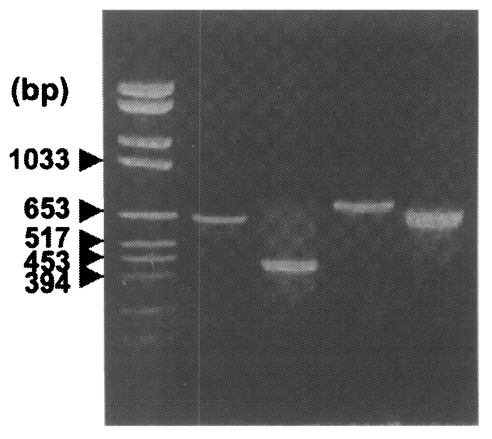
The DNA fragments of 634 bp (
Fig. 1, lane 1) and 744 bp (
Fig. 1, lane 3) were amplified by 5'-RACE and 3'-RACE on the cDNA of tachyzoites, respectively. Both the DNA fragments were confirmed to be specific to
T. gondii by nested PCR. Nested PCR with 5-NEST and GSP1 primers produced a 424 bp DNA fragment (
Fig. 1, lane 2) on the DNA fragment of lane 1 as the template, which made a shorter fragment of 210 bp as expected. And nested PCR with GSP2 and 3-NEST primers amplified a 675 bp DNA fragment (
Fig. 1, lane 4) with the DNA fragment of lane 3 as the template which resulted in 70 bp difference. A full-length cDNA sequence of TgPrx was obtained by combining the sequences of the DNA fragments of lane 2 and 4 of
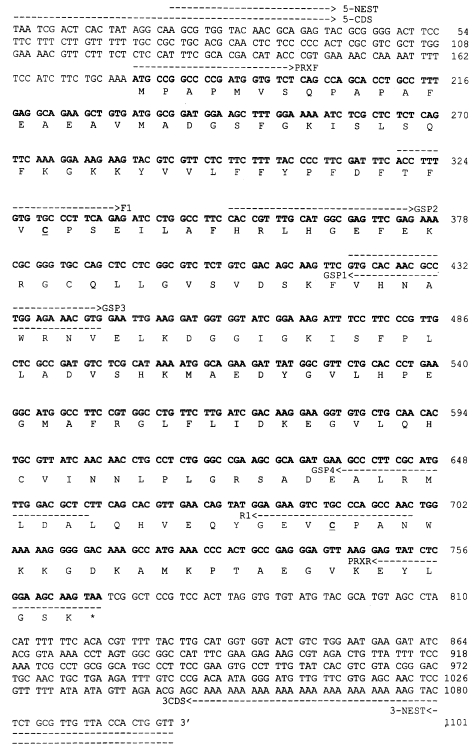
Fig. 1. It was 1,101 bp long including a predicted open reading frame of 591 bp. Conserved 2 cysteine domains were present as Phe-Val-Cys-Pro and Glu-Val-Cys-Pro in deduced 196 amino acid sequence (
Fig. 2), which indicated that TgPrx belonged to 2-Cys Prx families. The cysteine residue of the anterior domain localized at 51 amino acid (Cys-51) and that of posterior at 171 amino acid (Cys-171). A search of the
Toxoplasma database of expressed sequence tags (EST) identified a sequence of 197 bp (Ctoxqual2_665) with perfect match. This EST sequence is overlapped with the anterior cysteine (Cys-51) domain and used in the analysis of peroxidoxins by McGonigle et al. (
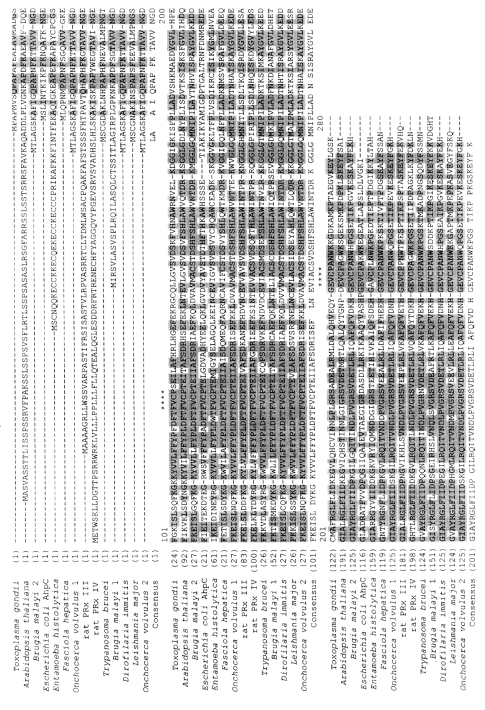
1998). Deduced amino acid sequence of TgPrx revealed significant sequence similarities with other 2-Cys Prx (
Fig. 3).
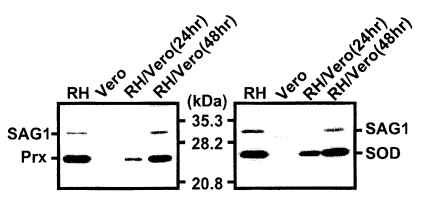
TgPrx and TgSOD were expressed as GST fusion proteins in HB101 bacteria by the IPTG induction with molecular mass of 51 kDa and 52 kDa, respectively (data not shown). Polyclonal antibodies against recombinant TgPrx and TgSOD detected those proteins of
T. gondii each other specifically without binding to host cells (
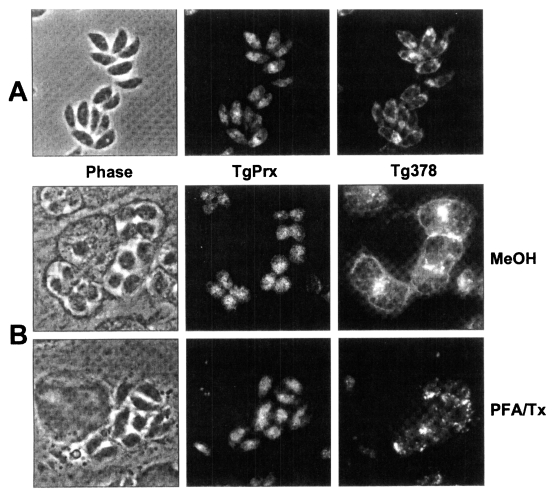
Fig. 4). TgPrx was detected as 25 kDa in extracellular and intracellular stages as traced by anti-SAG1 monoclonal antibody and TgSOD as 26 kDa with the same pattern. TgPrx was localized in the cytoplasm of tachyzoites as revealed by IFA images (
Fig. 5A) comparing with spot distribution of dense granular protein (Tg378). Its distribution was limited in the tachyzoites and was not secreted into PV or PVM whereas Tg378 was secreted into PVM during the intracellular stages (
Fig. 5B).
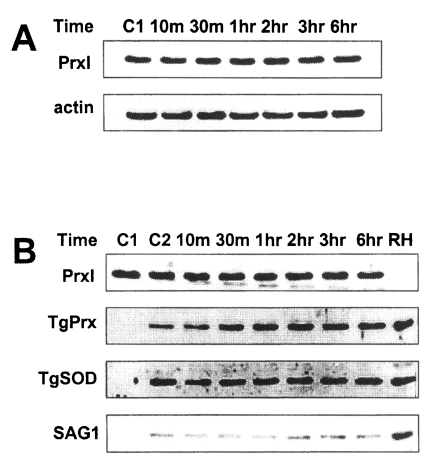
Artemisinin, a sesquiterpene endoperoxide, was treated to trace the changes in TgPrx after being exposed to the peroxide during the intracellular growing stage of tachyzoites. The concentration of LD
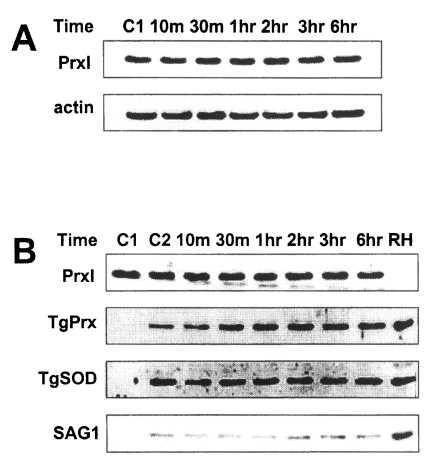
50 was 1 µg/ml in our culture system (data not shown). Artemisinin itself evoked little changes in host cell Prx as detected by anti-mammalian Prx I antibody (
Fig. 6A). However, the expression of TgPrx increased as early as 30 min and reached to the plateau in 1 hr by the treatment with artemisinin in the intracellular stage (
Fig. 6B), while there were little changes in those of host Prx I and TgSOD. Host cell Prx had approximately equal response to artemisinin regardless of infection by
T. gondii.
DISCUSSION
Two cysteine residues were positioned at 51 amino acid (Cys-51) and 171 amino acid (Cys-171) as compare to 47 (Cys 47) and 170 (Cys 170) in other Prx (
Chae et al., 1994a;
1994b). These site variations were also found in tryparedoxin peroxidase (
Alphey, 2000). All the sequences of anterior cysteine domains of Prx compared were the same as Phe-Val-Cys-Pro, and the posterior also as Glu-Val-Cys-Pro except for
Entamoeba histolytica of Ala at the first position. The amino acid sequence of TgPrx showed the highest homology with that of
Arabidopsis thaliana by 53.9%. Among Prx of parasitic organisms, Prx of
E. histolytica had the homologous sequence of 39.5%, which made this organism belong to a cluster in upper hierarchy with AhpC of
Escherichia coli (33.1%).
Prx are found in all organisms and their primary sequences are highly conserved. This ubiquity and high degree of conservation suggest a biological importance of this enzyme. Prx are critically involved in cellular defense, receptor signaling, protein phosphorylation transcriptional regulation, and apoptosis (
Zhang et al., 1997;
Jin and Jeang, 2000). TgPrx was also abundant in tachyzoites as in other eukaryotic cells of which the Prx covered 2 to 5% of total cellular proteins as a housekeeping protein (
Chae et al., 1994b). And TgPrx localized in the cytoplasm of tachyzoites and maintained in intracellular stage without secretion into PV nor PVM, which suggests its role in defense mechanism against ROS produced during the metabolism within tachyzoites, although the exact function of TgPrx is still unknown.
Artemisinin, active constituent of qinghaosu as an endoperoxide which has been effective as antimalarial drug (
Meshnick et al., 1996;
Cumming et al., 1997), inhibited also the intracellular growth of
T. gondii in vitro (
Berens et al., 1998) by imposing oxidative stress within the cells. It has been proposed that artemisinin activated by the intraparasitic metals catalyzes the cleavage of this drug to ROS (
Meshnick, 1998). In addition, ROS can also be cleaved from the drug in the cytoplasm of host cells, which then delivered across the PVM to reach the tachyzoites within the PVM. Resulting ROS might then damage the parasite by alkylating and poisoning one or more essential proteins. Inducible expression of Prx has been demonstrated for many mammalian cells. Inducers includes hydrogen peroxide (
Kim et al., 1997), heme/heavy metals (
Immenschuh et al., 1997), and others. Changes in TgPrx against artemisinin, in our results, may reduce the ROS by binding with its active thiol group. Therefore, since TgPrx is sensitive to artemisinin, it is suggested to be a good candidate for chemotherapy.
Notes
-
This work was supported by grant No. 1999-1-20200-002-2 from the Basic Research Program of the Korea Science & Engineering Foundation.
References
- 1. Alphey MS, Bond CS, Tetaud E, Fairlamb AH, Hunter WN. The structure of reduced tryparedoxin peroxidase reveals a decamer and insight into reactivity of 2Cys-peroxiredoxins. J Mol Biol 2000;300:903-916.
- 2. Berens RL, Krug EC, Nash PB, Curiel TJ. Selection and characterization of Toxoplasma gondii mutants resistant to artemisinin. J Infect Dis 1998;177:1128-1131.
- 3. Carey KL, Donahue CG, Ward GE. Identification and molecular characterization of GRA8, a novel, proline-rich, dense granule protein of Toxoplasma gondii. Mol Biochem Parasitol 2000;105:25-37.
- 4. Cesbron-Delauw MF, Guy B, Torpier G, et al. Molecular characterization of a 23-kilodalton major antigen secreted by Toxoplasma gondii. Proc Natl Acad Sci USA 1989;86:7537-7541.
- 5. Chae HZ, Chung SJ, Rhee SG. Thioredoxin-dependent peroxide reductase from yeast. J Biol Chem 1994a;269:27670-27678.
- 6. Chae HZ, Uhm TB, Rhee SG. Dimerization of thiol-specific antioxidant and the essential role of cysteine 47. Proc Natl Acad Sci USA 1994b;91:7022-7026.
- 7. Chae HZ, Robison K, Poole LB, Church G, Storz G, Rhee SG. Cloning and sequencing of thiol-specific antioxidant from mammalian brain: alkyl hydroperoxide reductase and thiol-specific antioxidant define a large family of antioxidant enzyme. Proc Natl Acad Sci USA 1994c;91:7017-7021.
- 8. Cumming JN, Ploypradith P, Posner GH. Antimalarial activity of artemisinin (qinghaosu) and related trioxanes: mechanism(s) of action. Adv Pharmacol 1997;37:253-297.
- 9. Dalton TP, Shertzer HG, Puga A. Regulation of gene expression by reactive oxygen. Annu Rev Pharmacol Toxicol 1999;39:67-101.
- 10. Ding M, Clayton C, Soldati D. Toxoplasma gondii catalase: are there peroxisomes in Toxoplasma? J Cell Sci 2000;113:2409-2419.
- 11. Frohman MA, Dush MK, Martin GR. Rapid production of full-length cDNAs from rare transcripts: amplification using a single gene-specific oligonucleotide primer. Proc Natl Acad Sci USA 1988;85:8998-9002.
- 12. Halliwell B, Gutteridge JMC. Antioxidant defenses. Free radicals in biology and medicine. 1999. New York, NY. Oxford University Press; p. 105-245.
- 13. Hughes HP, Boik RJ, Gerhardt SA, Speer CA. Susceptibility of Eimeria bovis and Toxoplasma gondii to oxygen intermediates and a new mathematical model for parasite killing. J Parasitol 1989;75:489-497.
- 14. Immenschuh S, Nell C, Iwahara S, Katz N, Muller-Eberhard U. Gene regulation of HBP 23 by metalloporphyrins and protoporphyrin IX in liver and hepatocyte cultures. Biochem Biophys Res Commun 1997;231:667-670.
- 15. Ishii T, Yamada M, Sato H, et al. Cloning and characterization of a 23-kDa stressinduced mouse peritoneal macrophage protein. J Biol Chem 1993;268:18633-18636.
- 16. Jin DY, Jeang KT. Peroxiredoxins in cell signaling and HIV infection. Antioxidant and redox regulation of genes. 2000. CA. Academic Press; p. 381-407.
- 17. Kaasch AJ, Joiner KA. Targeting and subcellular localization of Toxoplasma gondii catalase. Identification of peroxisomes in an apicomplexan parasite. J Biol Chem 2000;275:1112-1118.
- 18. Kang SW, Chae HZ, Seo MS, Kim K, Baines IC, Rhee SG. Mammalian peroxiredoxin isoforms can reduce hydrogen peroxide generated in response to growth factors and tumor necrosis factor-alpha. J Biol Chem 1998;273:6297-6302.
- 19. Kim AT, Sarafian TA, Shau H. Characterization of antioxidant properties of natural killer-enhancing factor-B and induction of its expression by hydrogen peroxide. Toxicol Appl Pharmacol 1997;147:135-142.
- 20. Lecordier L, Mercier C, Sibley LD, Cesbron-Delauw MF. Transmembrane insertion of the Toxoplasma gondii GRA5 protein occurs after soluble secretion into the host cells. Mol Biol Cell 1999;10:1277-1287.
- 21. McGonigle S, Dalton JP, James ER. Peroxidoxins: a new antioxidant family. Parasitol Today 1998;14:139-145.
- 22. Mercier C, Cesbron-Delauw MF, Sibley LD. The amphipathic alpha helices of the Toxoplasma protein GRA2 mediate post-secretory membrane association. J Cell Sci 1998;111:2171-2180.
- 23. Meshnick SR. Artemisinin antimalarials: mechanisms of action and resistance. Med Trop (Mars) 1998;58:13-17.
- 24. Meshnick SR, Taylor TE, Kamchonwongpaisan S. Artemisinin and the antimalarial endoperoxides: from herbal remedy to targeted chemotherapy. Microbiol Rev 1996;60:301-315.
- 25. Odberg-Ferragut C, Renault JP, Viscogliosi E, et al. Molecular cloning, expression analysis and iron metal cofactor characterization of a superoxide dismutase from Toxoplasma gondii. Mol Biochem Parasitol 2000;106:121-129.
- 26. Ossorio PN, Schwartzman JD, Boothroyd JC. Toxoplasma gondii rhoptry proteins associated with host cell penetration has unusual charge asymmetry. Mol Biochem Parasitol 1992;50:1-15.
- 27. Seeber F. Consensus sequence of translational initiation sites from Toxoplasma gondii genes. Parasitol Res 1997;83:309-311.
- 28. Sinai AP, Webster P, Joiner KA. Association of host cell endoplasmic reticulum and mitochondria with the Toxoplasma gondii parasitophorous vacuole membrane: a high affinity interaction. J Cell Sci 1997;110:2117-2128.
- 29. Sohn WM, Nam HW. Western blot analysis of stray cat sera against Toxoplasma gondii and the diagnostic availability of monoclonal antibodies in sandwich-ELISA. Korean J Parasitol 1999;37:249-256.
- 30. Son ES, Nam HW. Detection and characterization of excretory/secretory proteins from Toxoplasma gondii by monoclonal antibodies. Korean J Parasitol 2001;39:49-56.
- 31. Towbin H, Staehelin T, Gordon J. Electrophoretic transfer of proteins from polyacrylamide gels to nitrocellulose sheets: procedure and some applications. Proc Natl Acad Sci USA 1979;76:4350-4354.
- 32. Yamamoto T, Matsui Y, Natori S, Obinata M. Cloning of a housekeeping-type gene (MER5) preferentially expressed in murine erythroleukemia cells. Gene 1989;80:337-343.
- 33. Zhang P, Liu B, Kang SW, Seo MS, Rhee SG, Obeid LM. Thioredoxin peroxidase is a novel inhibitor of apoptosis with a mechanism distinct from that of Bcl-2. J Biol Chem 1997;272:30615-30618.
Fig. 1RACE and nested PCR products of peroxiredoxin from Toxoplasma gondii. The DNA fragments of lane 1 and 3 were amplified by 5'- and 3'-RACE, respectively. Lane 2 and 4 were nested PCR products amplified on the DNA of lane 1 and 3 as template, respectively.
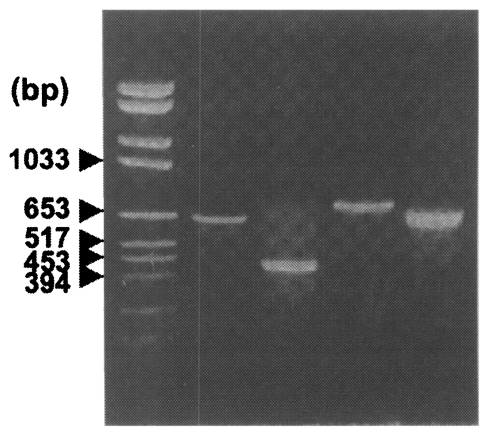
Fig. 2cDNA and deduced amino acid sequences of peroxiredoxin from Toxoplasma gondii. An open reading frame is written in bold. Primers used for 5'- and 3'-RACE and for recombinant fusion protein are indicated and labeled by arrows. Reactive cysteine residues are underlined at the position 51 and 171. Nucleotide sequence data are available in the GenBank™ under the accession number AF305718.
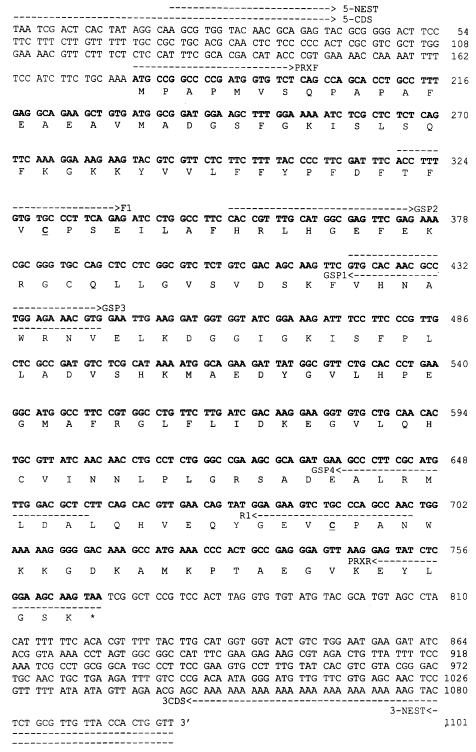
Fig. 3Alignment of the deduced amino acid sequence of Toxoplasma gondii peroxiredoxin with those of 2-Cys peroxiredoxins from other organisms. Two reactive cysteine domains are characterized by asterisks (*). GenBank accession numbers for other organisms are as follow: Arabidopsis thaliana, Y10478; Burgia malayi Prx2, U47100; Escherichia coli AhpC, D13187; Entamoeba histolytica, X70996; Fasciola hepatica, U88577; Onchocerca volvulus Prx1, U31052; Rat Prx III, U06099; Rat Prx IV, D30035; Trypanosoma brucei, U26666; Burgia malayi Prx1, U34251; Dirofilaria immitis Prx1, AF004167; Leishmania major, AF069386; and Onchocerca volvulus Prx2, AF029247.
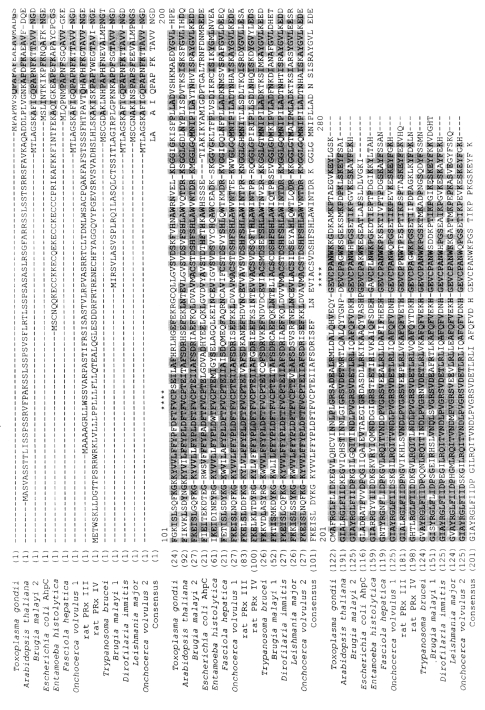
Fig. 4Western blots to confirm the specificities of anti-Prx and -SOD antibodies. Each antibody was reacted exclusively with extracellular Toxoplasma gondii (RH) and intracellular T. gondii which infected into Vero cells for 24 hr and 48 hr, not with Vero cells only.
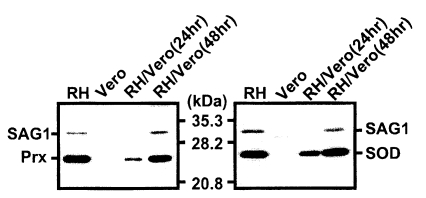
Fig. 5Localization of peroxiredoxin in Toxoplasma gondii tachyzoites (A) and those within Vero cells (B). Rabbit anti-TgPrx antiserum was counter-stained with mouse monoclonal anti-dense granule protein antibody (Tg378) as a control as PVM secretion.
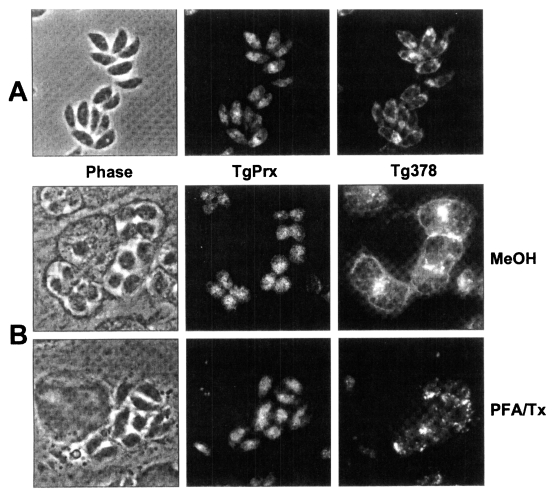
Fig. 6A. Effect of artemisinin on Vero cells. Vero cells were treated with 1 µg/ml artemisinin. C1, untreated Vero cells only. B. Effect of artemisinin on the intracellular Toxoplasma gondii. Vero cells infected with T. gondii were treated with 1 µg/ml artemisinin. C1, untreated, uninfected Vero cells; and C2, untreated, infected Vero cells.