Abstract
The Oriental stork (Ciconia boyciana Swinhoe, 1873) is an endangered species, with active restoration efforts ongoing in Korea. Despite the ecological importance of host-specific parasites, such as chewing lice (Phthiraptera), information on the chewing lice fauna associated with C. boyciana in Korea remains unclear. Previous records of 2 chewing louse species from the host have been questioned due to potential misidentification. To clarify the chewing lice fauna of the host, we conducted a survey of captive C. boyciana at Yesan Oriental Stork Park, Korea, in October 2022. Morphological identification of collected louse specimens revealed 3 species: Neophilopterus incompletes (Denny, 1842), Ardeicola ciconiae (Linnaeus, 1758) and Colpocephalum zebra Burmeister, 1838. These species are typical ectoparasites of Ciconiiform birds and represent the first verified louse records of chewing lice from C. boyciana in Korea. Unlike with a previous report, Cuclotogaster heterographus (Nitzsch, 1866) and Anaticola anseris (Linnaeus, 1758) were not detected. Our findings provide an updated checklist of chewing louse species for C. boyciana in Korea, contributing to a more accurate understanding of host-parasite associations and supporting future conservation efforts for both the host and its associated parasite fauna.
-
Key words: Bird lice, conservation, co-associated species, ectoparasites, Menoponidae, Philopteridae
Chewing lice (Phthiraptera: Ischnocera and Amblycera) are permanent ectoparasites that primarily feed on the feathers, dead skin, blood, and secretions of birds and mammals. These ectoparasite species interact with their hosts and exhibit high host specificity [
1-
3]. Due to these characteristics, lice living on endangered hosts may face a higher risk of extinction, sometimes even greater than that of their hosts [
2]. A notable example is the extinction of the endemic chewing louse species
Colpocephalum californici Price & Beer, 1963, due to antiparasitic treatment as part of the breeding program for the California condor,
Gymnogyps californianus (Shaw, 1797) [
2]. Thus, it is necessary to pay attention to not only the hosts but also their associated species, including ectoparasites living on endangered hosts, to prevent unintended extinctions.
In Korea, the breeding population of the Oriental stork,
Ciconia boyciana Swinhoe, 1873, was extirpated in the 1970s due to habitat destruction, overhunting, and food shortages. Consequently, the stork was designated as an "Endangered Species Level I" by the Korean Ministry of Environment [
4,
5]. Efforts to restore the breeding population of
C. boyciana in Korea began in 1996, with storks being imported from Germany, Russia, and Japan. In 2007, 2 storks were released on a trial basis, and continuous releases have been conducted since 2015 [
4].
Although the breeding of
C. boyciana has stabilized, various research fields need to be explored to effectively conserve the storks [
4,
6]. However, most studies published in international journals on storks in Korea are almost related to genetics, implying that research in other fields is limited [
6]. Despite the fact that ectoparasites such as chewing lice can interact with their hosts and influence each other, only 2 articles on the ectoparasites of
C. boyciana in Korea exist [
7,
8], with only one article specifically addressing chewing lice [
7].
In Korea, the 2 chewing louse species of
C. boyciana were first studied in 1984 from a moribund migrant captured in Jeju-do [
7]. However, because this study predated the reintroduction of
C. boyciana in Korea, and given the host specificity of the 2 louse species identified, it remains uncertain whether these same species actually occur on
C. boyciana. Therefore, we aimed to clarify the chewing lice fauna of
C. boyciana in Korea and to discuss the conservation of co-associated species, such as chewing lice, in relation to their endangered host
In October 2022, we conducted a survey on 3 captive
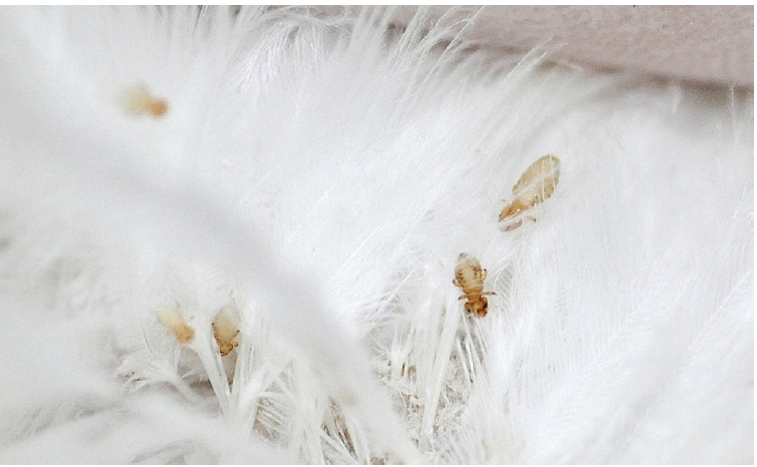
C. boyciana at the Yesan Oriental Stork Park in Korea. Chewing lice were collected using a tweezer from the body, crissum, head, and wings of the storks (
Fig. 1) and preserved in a 95% ethanol solution. To minimize stress on the storks during the survey, the storks were blindfolded and immobilized by keepers, and the survey was conducted with permission from the Korea Heritage Service (B0030104016624) [
8]. Some of the collected lice were cleared in 10% potassium hydroxide, mounted on slides using polyvinyl alcohol mounting medium, and examined using a Olympus DP28 camera and a Olympus BX53 microscope. The identification of chewing lice was performed using morphological keys provided in previous studies [
9,
10].
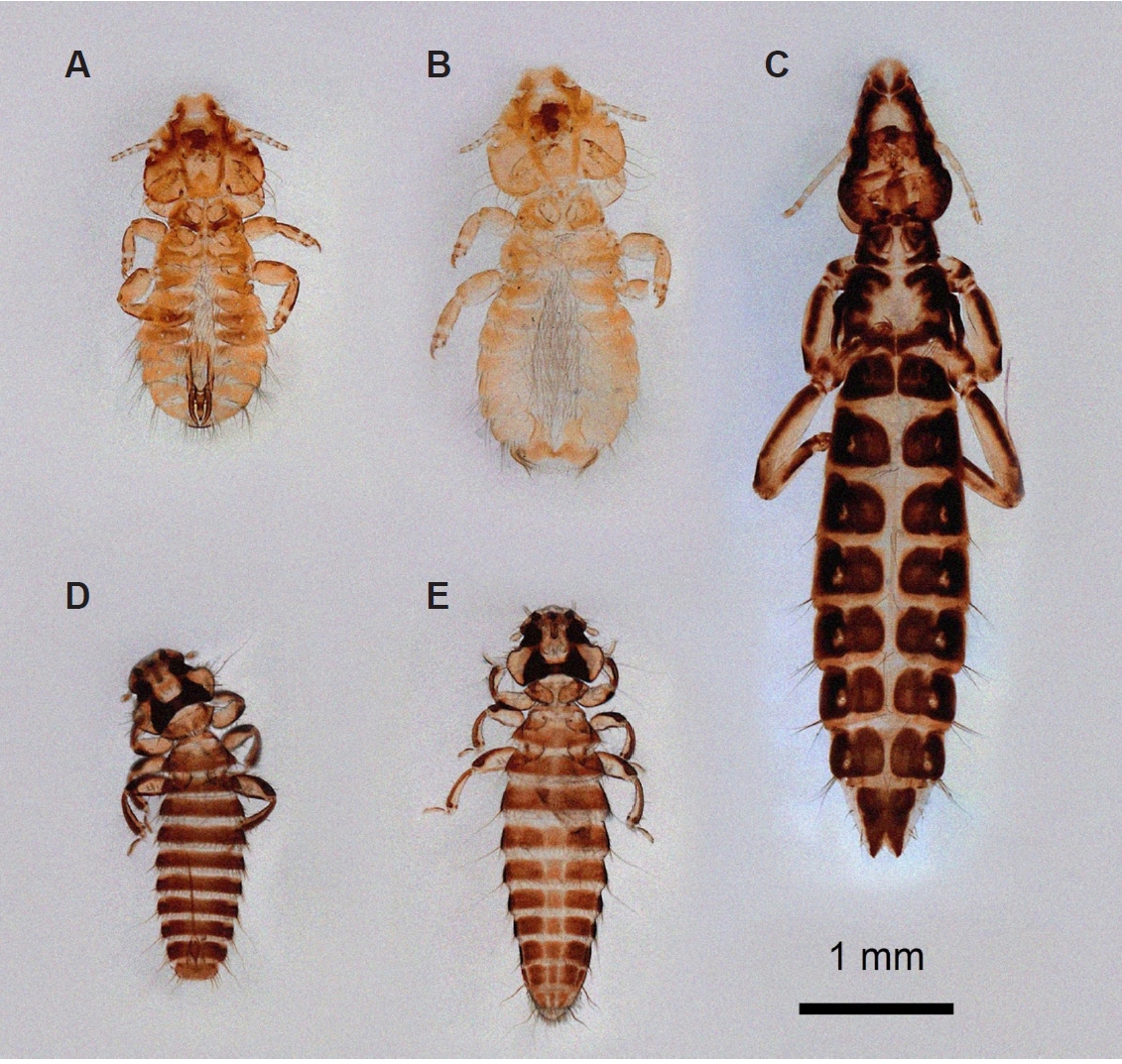
Three chewing louse species were collected from 3 captive
C. boyciana at the Yesan Oriental Stork Park and identified as
Neophilopterus incompletus (Denny, 1842),
Ardeicola ciconiae (Linnaeus, 1758), and
Colpocephalum zebra Burmeister, 1838 (
Fig. 2).
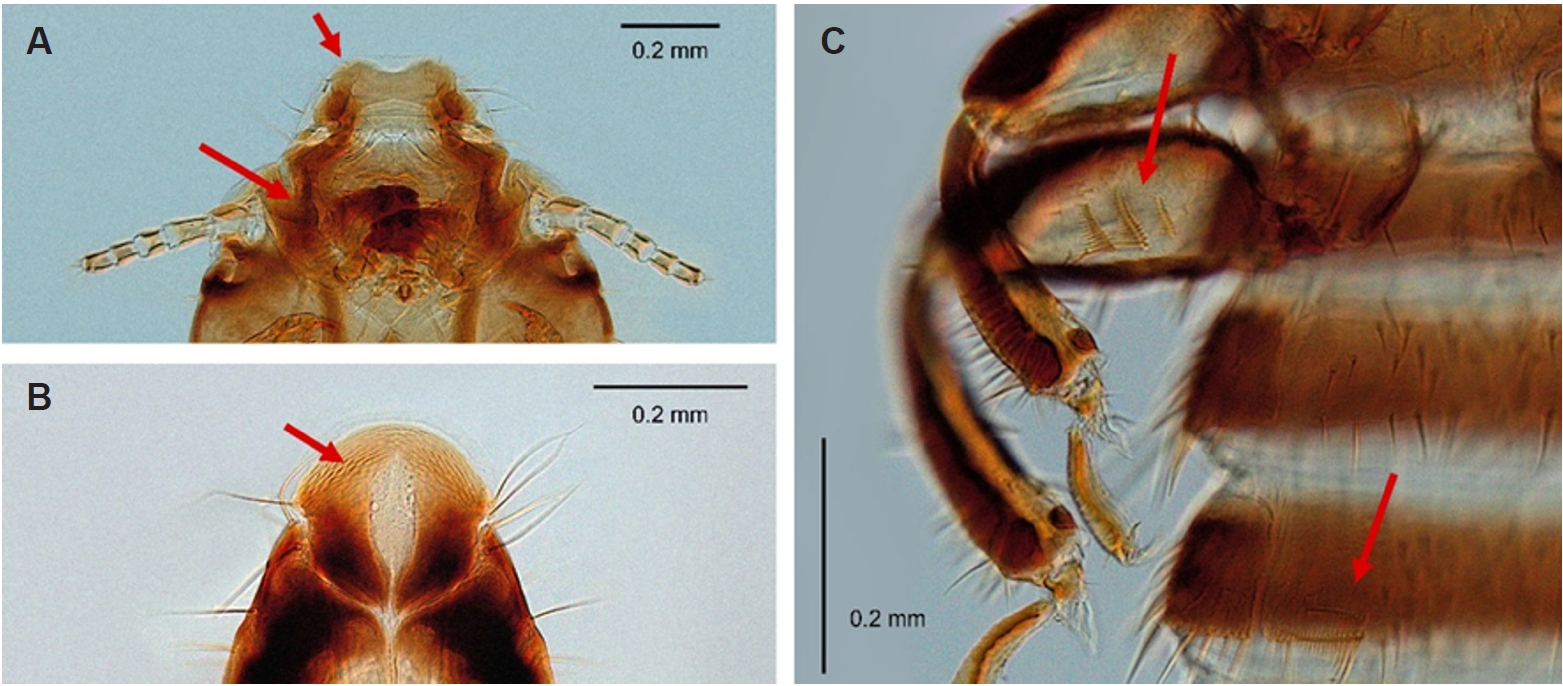
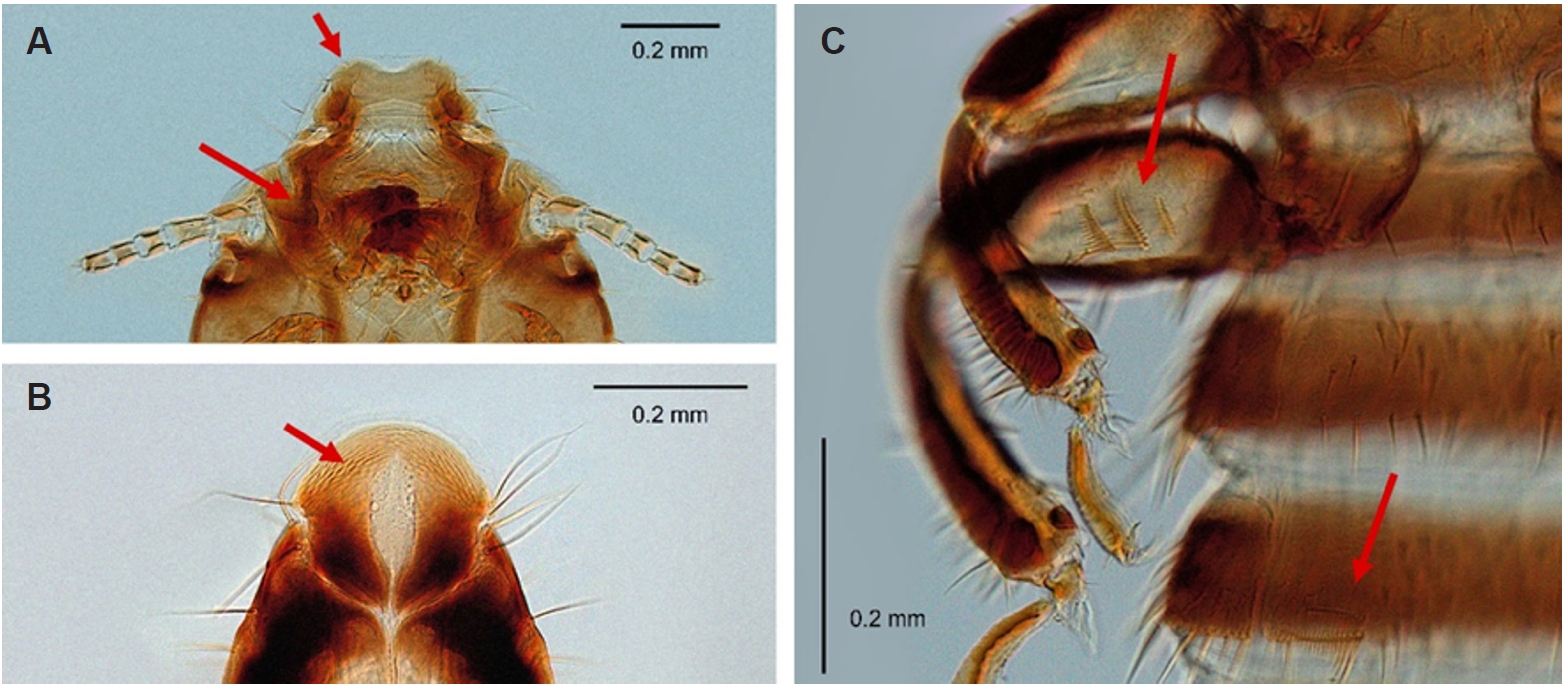
N. incompletus (Ischnocera: Philopteridae) was identified by morphological features such as a triangular head with a rounded anterior end, a distinct nodus on the marginal carina anterior to the dorsal preantennal suture, a dorsal anterior plate with sublateral triangular extensions, and a short elliptical abdomen with highly sclerotized lateral tergal plates (
Figs. 2A,
B,
3A) [
9,
10], and was collected from the body and head of
C. boyciana.
A. ciconiae (Ischnocera: Philopteridae) was identified by morphological features such as an elongated and conical head, a largely brown dorsal anterior plate with short striations ornamentation, and an elongated abdomen with thickened tergal plates (
Figs. 2C,
3B) [
9,
10], and was collected from the wings.
C. zebra (Amblycera: Menoponidae) was identified by morphological features such as a large head, slightly rounded anterior margin, elongated abdomen, and sternal plates Ⅲ with 2 ctenidia (
Figs. 2D-
E,
3C) [
9,
10], and was collected from the crissum.
This study discovered
N. incompletus,
A. ciconiae, and
C. zebra on captive
C. boyciana in Korea. These 3 chewing louse species were previously reported in 1977 from
C. boyciana in Japan [
9] and are also known to be found on the white stork,
Ciconia ciconia (Linnaeus, 1758) [
9,
10]. In Korea, this is the first record of these 3 species. While the presence of these 3 ectoparasites on
C. boyciana released into the wild in Korea has not yet been officially confirmed, storks exposed to chewing lice at the Yesan Oriental Stork Park are continually being released. Therefore, we believe that these co-associated species may also inhabit
C. boyciana released into the wild in Korea.
In 1984, 2 chewing louse species,
Cuclotogaster heterographus (Nitzsch, 1866) and
Anaticola anseris (Linnaeus, 1758), were reported to have been found on
C. boyciana in Korea [
7]. But among the lice collected from
C. boyciana in the present study, we did not find any individuals related to these 2 species. In fact, considering that
C. heterographus and
A. anseris are primarily associated with the families Phasianidae and Anatidae, respectively [
1], the possibility of misidentification cannot be excluded for the records previously discovered in Korea [
7].
While conducted with a small number of samples, our study is significant as it provides the first insight into the relationship between chewing lice and C. boyciana in captivity in Korea, promising to guide future management strategies for these storks. However, this study only identified the species composition of chewing lice parasitizing C. boyciana and did not evaluate their impact on the storks, which represents a limitation. Therefore, future research should focus on studying the impact of the chewing lice identified in this study on C. boyciana.
Finally, we would like to discuss the conservation issues of the 3 chewing louse species found on captive
C. boyciana in Korea. These co-associated species have the potential to cause various adverse effects on their hosts [
1,
3], but they also constitute a significant part of biodiversity, play important ecological roles, serve as indicators of ecosystem quality, and have unique evolutionary value [
11]. Therefore, despite being considered pests, they need to be conserved [
11]. In Spain, efforts have been made to assess the extinction risk status of lice based on the extinction risk of Spanish birds and mammals to conserve endangered lice species [
12]. Although the 3 chewing louse species we found are not exclusive to the
C. boyciana and are also found on
C. ciconia [
9,
10], making their global extinction risk low, the absence of the
C. ciconia in Korea means that these lice could unintentionally disappear from Korea during the reintroduction process of
C. boyciana, similar to the case of
C. californici in
G. californianus [
2]. Considering the ecological importance of these chewing louse species, efforts to conserve them alongside their host,
C. boyciana, should be taken into account to enhance Korea’s biodiversity and support ecosystem health. The present study provides a basis for further investigations into lice and other co-associated species associated with endangered bird species in Korea, for example, the crested ibis,
Nipponia nippon (Temminck, 1835) and the black-faced spoonbill,
Platalea minor Temminck & Schlegel, 1850, both of which are under similar conservation concerns.
Notes
-
Author contributions
Data curation: Shim JH. Formal analysis: Shim JH, Choe S. Funding acquisition: Kim S, Ha D, Eo SH. Investigation: Shim JH, Kim S, Ha D, Eo SH. Methodology: Shim JH, Choe S. Project administration: Shim JH, Kim S, Ha D, Eo SH. Resources: Kim S, Ha D, Eo SH. Supervision: Eo SH. Validation: Choe S, Kim S, Ha D, Eo SH. Visualization: Shim JH, Eo SH. Writing – original draft: Shim JH. Writing – review & editing: Choe S, Kim S, Ha D, Eo SH.
-
Conflict of interest
The authors have no conflicts of interest to declare.
-
Funding
This research was supported by the reintroduction project of Oriental stork funded by the Cultural Heritage Administration and Yesan county, Republic of Korea, in 2025 (grant No. 20250326000003378354).
Fig. 1.Chewing lice on Ciconia boyciana. The photo shows Neophilopterus incompletus.
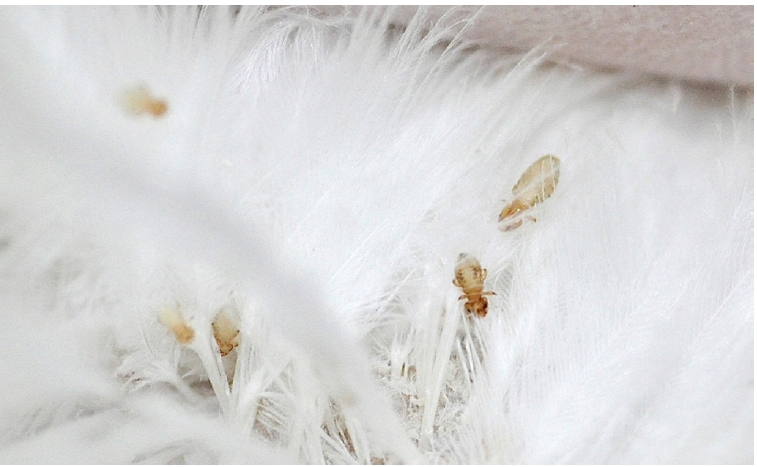
Fig. 2.Dorsal view of 3 chewing lice species from captive Ciconia boyciana in Korea. (A) Male Neophilopterus incompletus. (B) Female Neophilopterus incompletus. (C) Female Ardeicola ciconiae. (D) Male Colpocephalum zebra. (E) Female Colpocephalum zebra.
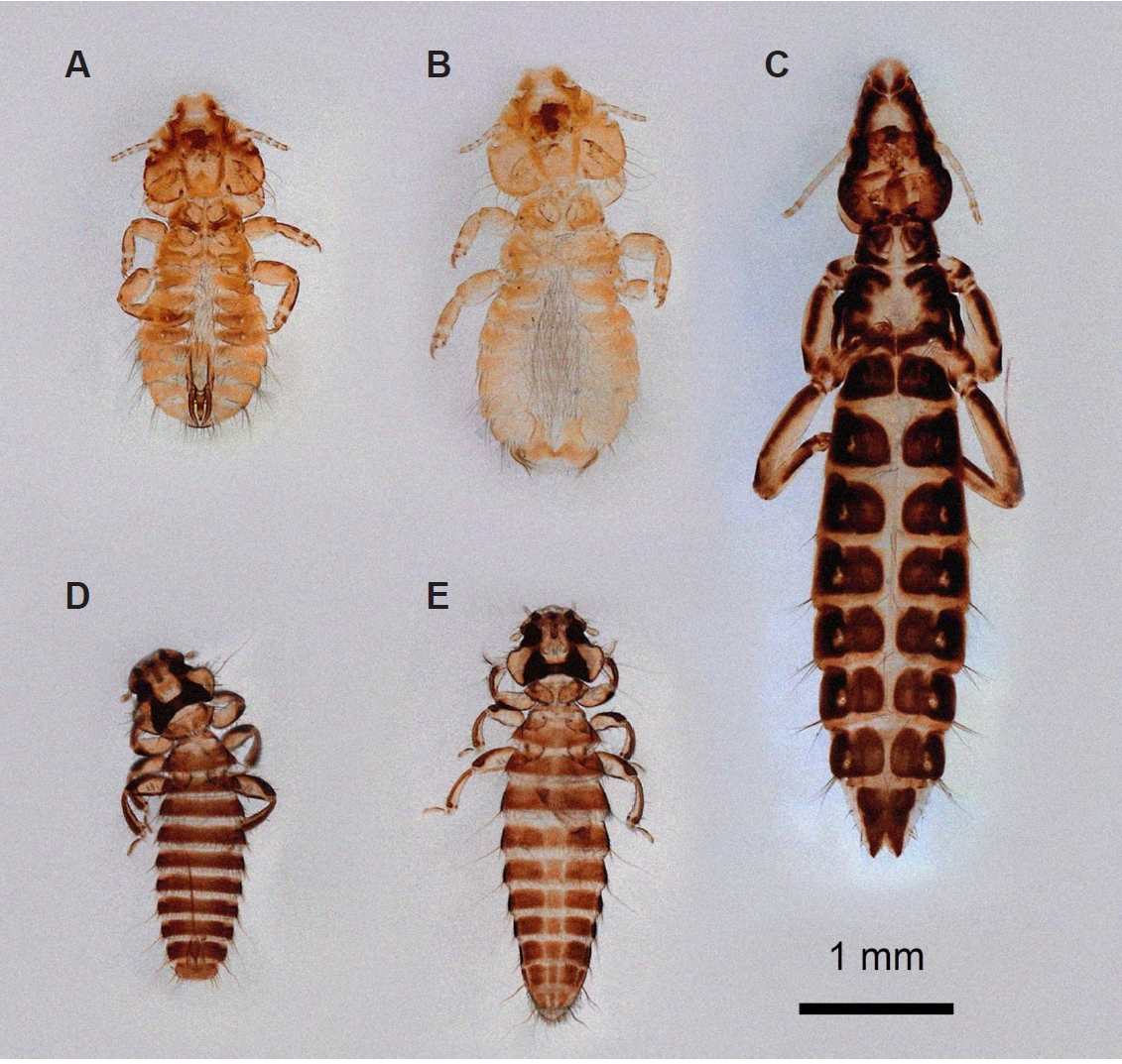
Fig. 3.Identification keys of 3 chewing lice species. (A) Dorsal view of nodus and dorsal anterior plate of Neophilopterus incompletus. (B) Dorsal view of dorsal anterior plate of Ardeicola ciconiae. (C) Ventral view of ctenidia of Colpocephalum zebra.
References
- 1. Price RD, Hellenthal RA, Palma RL, Johnson KP, Clayton DH. The chewing lice: world checklist and biological overview. Illinois Natural History Survey; 2003.
- 2. Pizzi R. Veterinarians and taxonomic chauvinism: the dilemma of parasite conservation. J Exot Pet Med 2009;18:279-82. https://doi.org/10.1053/j.jepm.2009.09.005
- 3. Clayton DH, Adams RJ, Bush SE. Phthiraptera, the chewing lice. In: Atkinson CT, Thomas NJ, Hunter DB, editors. Parasitic diseases of wild birds. John Wiley & Sons; 2008. p. 513-26.
- 4. History of Oriental Stork Restoration. History of the Oriental stork restoration [Internet]. [cited 2025 Mar 24]. Available from: https://www.stork.or.kr/index.php?pg_idx=58
- 5. Sung HC, Cheong SW, Kim JH, Kim SK, Park SR. A case study of foraging time budget and habitat selection of oriental white storks (Ciconia boyciana) in natural state. Korean J Environ Biol 2008;26:121-7.
- 6. Shim JH, Eo SH. Research trends of the genus Ciconia (Aves, Ciconiidae) using text-mining and co-occurrence word analysis: focus on the Oriental Stork conservation. Korean J Ornithol 2024;31:77-84. https://doi.org/10.30980/kjo.2024.12.31.2.77
- 7. Kang YB, Byun SY. Cuclotogaster heterographus and Anaticola anseris (Mallophagh; Ischnocera): collection from Ciconia boyciana, description and observation with scanning electron microscopy. Korean J Vet Res 1984;24:227-36.
- 8. Shim JH, Han YD, Kim S, et al. A new feather mite species of the genus Mycterialges Gaud & Atyeo, 1981 (Acari, Xolalgidae) from the Oriental Stork, Ciconiaboyciana (Ciconiiformes, Ciconiidae) in Korea. ZooKeys 2024;1192:179-96. https://doi.org/10.3897/zookeys.1192.115749
- 9. Kaneko K, Kadosaka T. Notes on three species of biting lice (Mallophaga) found on Japanese White Stork Ciconia ciconia boyciana in Japan. J Yamashina Inst Ornithol 1977;9:259-63.
- 10. Gustafsson DR, Diblasi E, Olsson U, et al. Checklist and key to the lice (Insecta: Phthiraptera) of Sweden. Entomol Tidskr 2018;139:205-394.
- 11. Pérez JM. How many threatened lice are there? An approximation to the red list of the Spanish Phthiraptera. Int J Parasitol Parasites Wildl 2023;23:100903. https://doi.org/10.1016/j.ijppaw.2023.100903
- 12. Rózsa L, Vas Z. Co-extinct and critically co-endangered species of parasitic lice, and conservation-induced extinction: should lice be reintroduced to their hosts? Oryx 2015;49:107-10. https://doi.org/10.1017/S0030605313000628