Abstract
This study provides an overview of the current status of clonorchiasis and cholangiocarcinoma (CCA), and their relationship in Korea during 2012–2020. Data were obtained from the Health Insurance Review & Assessment Service of Korea. Cluster, trend, and correlation analyses were performed. Gyeongsangnam-do and Seoul had the highest average number of cases (1,026 and 4,208) and adjusted rate (306 and 424) for clonorchiasis and CCA, respectively. The most likely clusters (MLC) for clonorchiasis and CCA were Busan/Gyeongsangnam-do/Ulsan/Daegu/Gyeongsangbuk-do (Relative Risk; RR=4.55, Likelihood Ratio; LLR=9,131.115) joint cluster and Seoul (RR=2.29, LLR=7,602.472), respectively. The MLC for clonorchiasis was in the southeastern part of Korea, while that for CCA was in the southern part. Clonorchiasis showed a decreasing trend in the southeastern districts, while increased in the southwestern districts. Cities in the central region had a decreasing trend, while the western districts had an increasing trend. In most adults (30–59), infection rate of clonorchiasis showed a significant decrease until 2018, while thereafter increased, although not significant. CCA showed a sharply decreasing tendency. The incidence of clonorchiasis and CCA were positively correlated. In general, the correlation was weak (r=0.39, P<0.001), but it was strongly positive around the 4 river basins (r=0.74, P<0.001). This study might provide an analytic basis for developing an effective system against clonorchiasis and CCA.
-
Key words: Clonorchiasis, cholangiocarcinoma, HIRA, spatiotemporal analysis, cluster, SaTScan
INTRODUCTION
Parasitic diseases are a global public health problem. In Korea, soil-transmitted intestinal nematodes were highly prevalent in the past, but they had been controlled successfully thanks to nationwide programs and health initiatives [
1,
2]. However, infections caused by fish-borne trematodes remain relatively high [
3]. Clonorchiasis caused by
Clonorchis sinensis is ranked as one of the most important parasitic diseases in humans due to its social, economic, and public health impacts in Korea [
1].
C. sinensis is widely distributed in East Asia, and is endemic in some regions [
4,
5]. In Korea, clonorchiasis is endemic in most of the major river basins, especially around the 5 major rivers of Nakdong, Seomjin, Geum, Yeongsan, and Han [
1,
6]. Although most of the infected individuals have minimal symptoms, clonorchiasis is a major and current health concern in most endemic areas [
5,
7].
C. sinensis contributed to development of various biliary diseases, including cholangiocarcinoma (CCA), and has been classified as one of group 1 biocarcinogens by the International Agency for Research on Cancer [
8].
CCA is one of the main histological types of malignant tumors of the biliary tract epithelia and the second most common primary hepatic cancer [
9]. Its incidence is exceptionally high in some parts of Asia, including Korea, where infection with the liver fluke
C. sinensis is widespread [
5,
10]. Previous studies have shown that clonorchiasis is associated with CCA, however, there have been few observational studies evaluating the trends and spatial analyses of clonorchiasis and CCA in Korea [
11–
13]. In this study, we assess the spatial clusters and trend for clonorchiasis and CCA from 2012 to 2020, using clinical data that represents the whole Korean population from the Healthcare Bigdata Hub [
14], as well as their relationship. We provide an analytic overview of these diseases so that it might provide a basis for control strategies against them.
MATERIALS AND METHODS
Ethics statement
This study was performed under the regulation of the IRB Committee of The Catholic University of Korea (No. MIRB-20201127-002). This research adheres to the tenets of the Declaration of Helsinki.
Data source and definition
The nationwide clonorchiasis and CCA cases for 9 years (2012–2020) from the 17 administrative districts in Korea and age-period cohorts (5, 10-year interval) according to sex were obtained from the HIRA of Korea (
https://opendata.hira.or.kr/home.do [cited 2020 October]). The HIRA collects all relevant information from the records of all the patients in almost all hospitals and clinics in Korea. The accuracy and reliability of its data have been systemically validated [
14].
The population data of the 17 administrative divisions was obtained from the KOrean Statistical Information Service (
https://kosis.kr/index/index.do [cited 2021 October]). The geographical locations of the cases were set to the latitude and longitude of administrative center as the search point since the case data were compiled according to administrative district unit. Average population of the districts was calculated for the full period to evaluate overall disease status. Case numbers were adjusted for the district’s population (cases/1,000,000) in the corresponding year to facilitate comparison between the different districts (
Supplementary Table S1).
SaTScan (v10.0) [
15] was used to detect clusters and to evaluate their significance through a simulation. The discrete Poisson model was used since the case data were linked to their background population at risk. Spatial scan analysis detects clusters with maximum likelihood ratio by creating a circular window on a map and scanning the study area by varying the window size.
The window size determines a percentage of the population at risk within its boundaries [
16]. Spatial scan statistic works the best for detecting spatial clusters and may be effective in the study of small-numbered cases, such as novel or infrequent outbreaks [
17,
18]. It is important to find an appropriate set value of cluster size because a large value could hide the effect of small core clusters, while a small value could overlook the regional pattern of clusters [
19]. Various studies have been performed to address this issue, and SaTScan has been progressively updated to address these results and implemented them on the new versions [
20,
21]. Therefore, 50% window size for statistical analyses as per the users’ guide in the present study was selected. Clonorchiasis and CCA were evaluated individually, and multivariate analysis was also performed to consider the 2 diseases simultaneously.
General disease trend, according to administrative districts, was determined through spatial variation in temporal trend analysis by scanning for clusters with either increasing or decreasing rates. In this analysis, a window size of 50% was used to facilitate detection of the significant core clusters.
Statistical significance of the clusters was calculated, using the Monte Carlo simulations with an inference of 9,999 [
22] and expressed as
P-value. A significance level of α<0.05 was used as a standard. QGIS v3.16 was used to visualize cluster patterns on a map. The clusters and trends are shown in order of log likelihood ratio. The study analyzed data from 2012 to 2020.
Disease trend, according to sex and age, was determined using Joinpoint Regression Program from the National Cancer Institute website (v4.9.0.0) (
https://surveillance.cancer.gov/joinpoint/) [
23,
24]. The present study used crude rates, computed by the Joinpoint software, whereby the number of new cases, occurring in a specified population per year, is expressed as the number of cases per 100,000 population at risk.
A maximum number of 1 joinpoint was used, making it possible to see whether the incidence is better explained by a single trend or by the existence of multiple trend segments during the study period. Briefly, joinpoint regression identifies the best-fitting breakpoints (years), in which there was a significant change in the incidence rate (crude rates) [
25]. The results were summarized as annual percentage changes (APC) with the best model fit for each trend segment. Statistical significance was calculated with an inference of 9,999 and expressed as
P-value. A significance level of α<0.05 was used as a standard.
The results were also output in graphs by the software, where annual crude rates are displayed. The final selected model from statistically significant age groups according to sex was output into a single graph to view multiple models simultaneously. This graph was then recreated for enhanced legibility using the output data.
Relationship between clonorchiasis and CCA
Correlation between the 2 diseases was tested using Microsoft Excel Version 2016 (Microsoft, Redmond, Washington, USA) [
26]. Sample size, needed to detect a relevant correlation with specified significance level (α=0.05) and power (80%, β=0.20), was calculated [
27,
28]. The test was performed for all cases in Korea as a whole and also for the areas around the 4 major rivers of Nakdong, Seomjin, Geum, and Yeongsan [
1]. Although previous studies have been performed on the 5 major river basins including the Han River, we limited our study to the 4 rivers that are known to be endemic for clonorchiasis. The districts thus selected included Gyeongsangbuk-do, Gyeongsangnam-do, Jeollanam-do, and Chungcheongnam-do (
Supplementary Fig. S1).
RESULTS
General characteristics
A total of 32,859 and 107,070 cases with an average of 3,651 and 111,897 cases per year of clonorchiasis and CCA, respectively, were reported during the study period from 2012 to 2020. Gyeongsangnam-do had the highest average number of cases (1,026) of clonorchiasis. This was also true after adjusting for the population (306 cases/1,000,000). The same was noted in Seoul with the highest average number of cases (4,208) and adjusted rate (424) for CCA (
Supplementary Table S1).
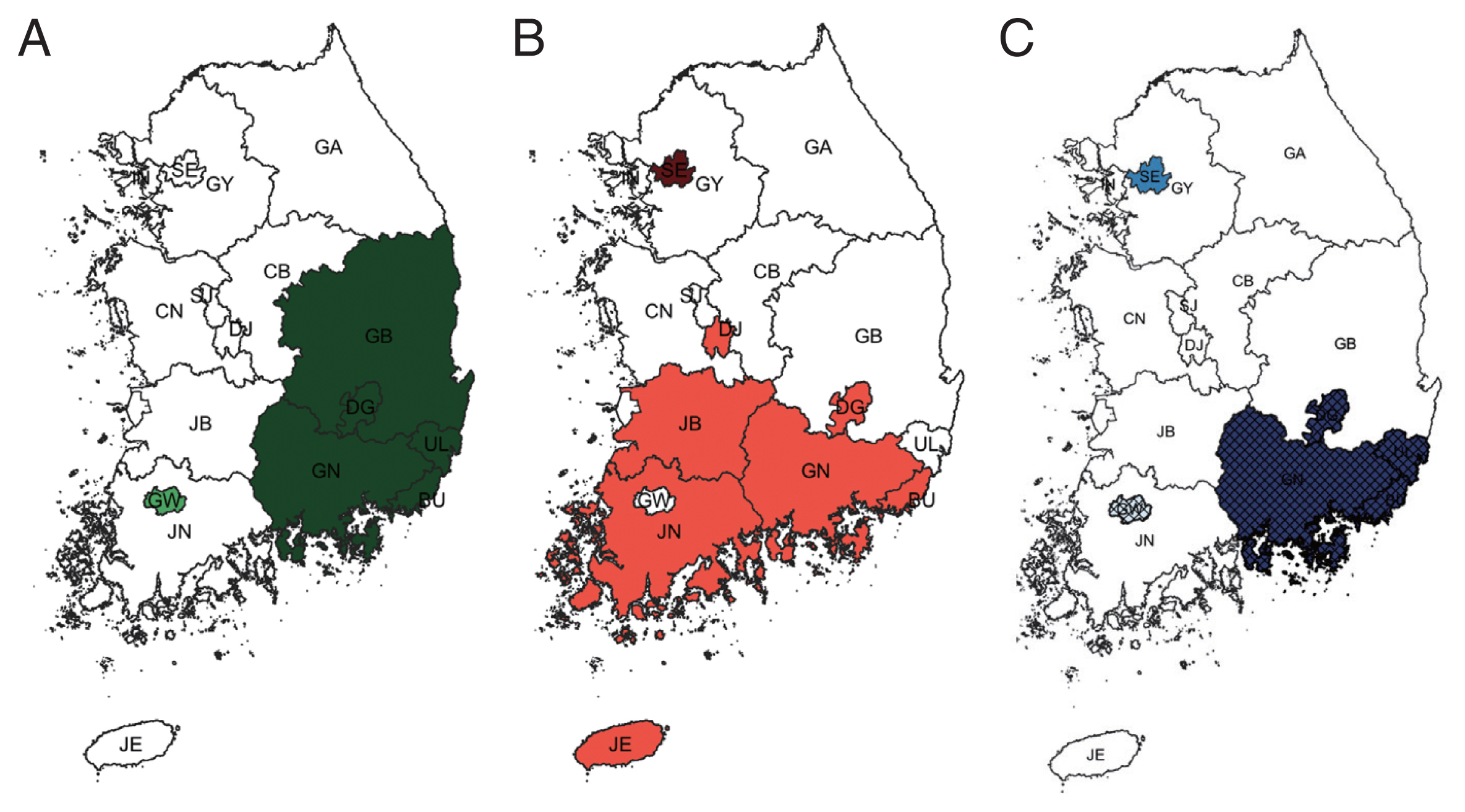
When cluster analysis was performed for individual diseases, the most likely cluster (MLC) for clonorchiasis was the joint cluster of Busan/Gyeongsangnam-do/Ulsan/Daegu/Gyeongsangbuk-do with relative risk (RR) and log likelihood ratio (LLR) of 4.55 and 9,131.115, followed by Gwangju (RR=1.59, LLR=132.804). The MLC for CCA was Seoul (RR=2.29, LLR=7,602.472), followed by the Jeju-do/Jeollanam-do/Jeollabuk-do/Gyeongsangnam-do/Busan joint cluster (RR=1.25, LLR=605.972) (
Table 1). The MLC for clonorchiasis was situated in the southeastern regions of Korea (
Fig. 1A), while for CCA, it was in the southern regions (
Fig. 1B).
Multivariate analysis of the 2 diseases simultaneously showed that the Busan/Gyeongsangnam-do/Ulsan/Daegu was the MLC (LLR=8,707.185) for both clonorchiasis (RR=4.36) and CCA (RR=1.21). Seoul was the next likely cluster for CCA (RR=2.29, LLR=7,602.472) only, followed by Gwangju (LLR=332.674) for both clonorchiasis (RR=1.59) and CCA (RR=1.39) (
Table 1). Like clonorchiasis, the MLC for CCA was situated in the southern districts (
Fig. 1C).
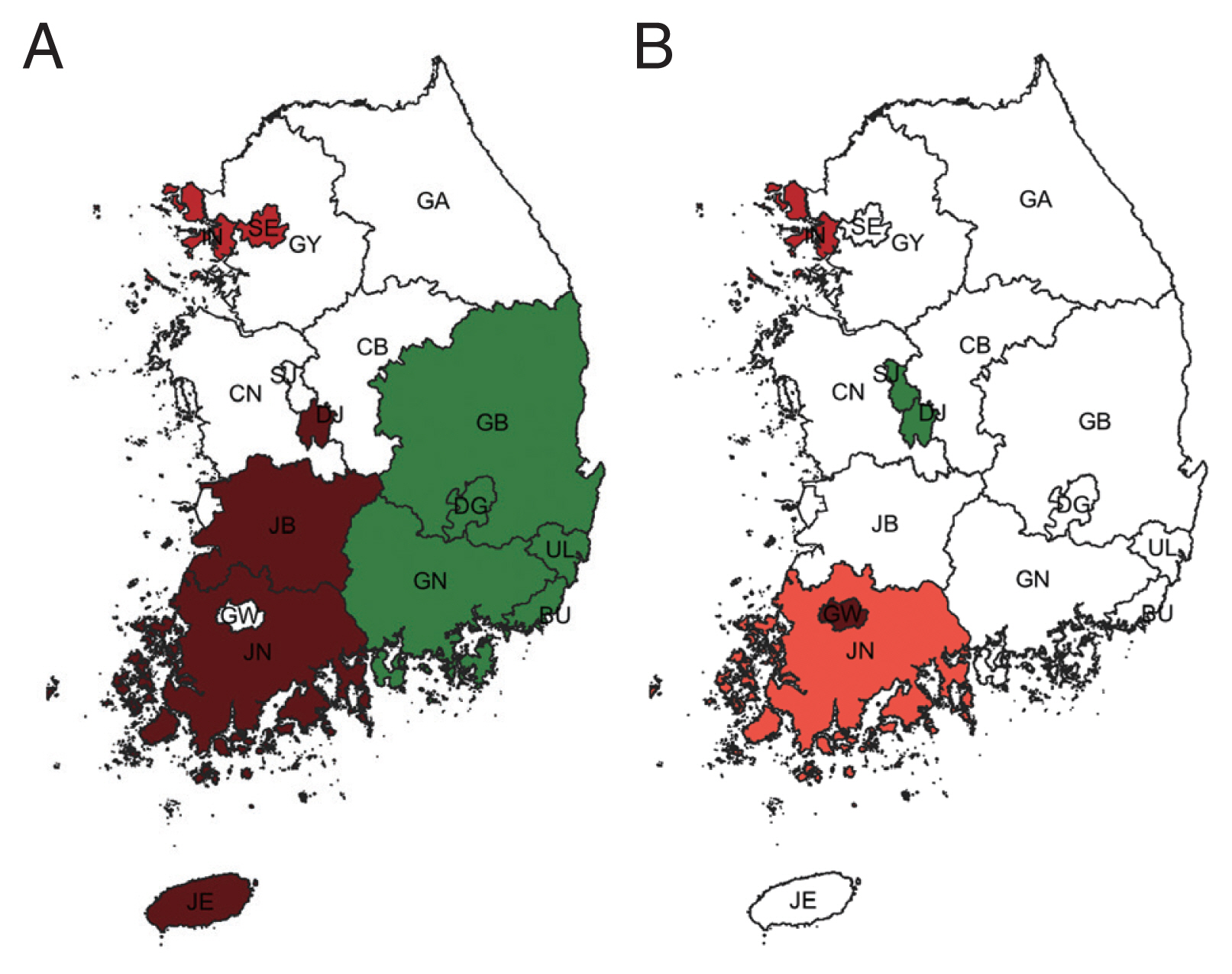
Temporal trends analysis showed that clonorchiasis cases were decreasing in the southeastern districts, in comparison to the southwestern districts where they showed increase (
Fig. 2A). The Busan/Gyeongsangnam-do/Ulsan/Daegu/Gyeongsangbuk-do joint cluster showed a decreasing trend (−6.34%, LLR 139.652). Conversely, Jeollanam-do/Jeollabuk-do/Jeju-do/Daejeon (6.99%, LLR=126.897) and Incheon/Seoul (1.06, LLR=42.708) joint clusters showed an increase (
Table 2).
In the case of CCA, cities in the central region showed a decreasing trend, while the western districts showed an increasing trend (
Fig. 2B). The Daejeon/Sejong joint cluster showed a decreasing trend (−2.39%, LLR 20.879). On the other hand, Gwangju (6.47%, LLR=25.208), Incheon (6.49%, LLR= 18.455), and Jeollanam-do (4.87%, LLR=13.482) showed an increasing trend of CCA (
Table 2).
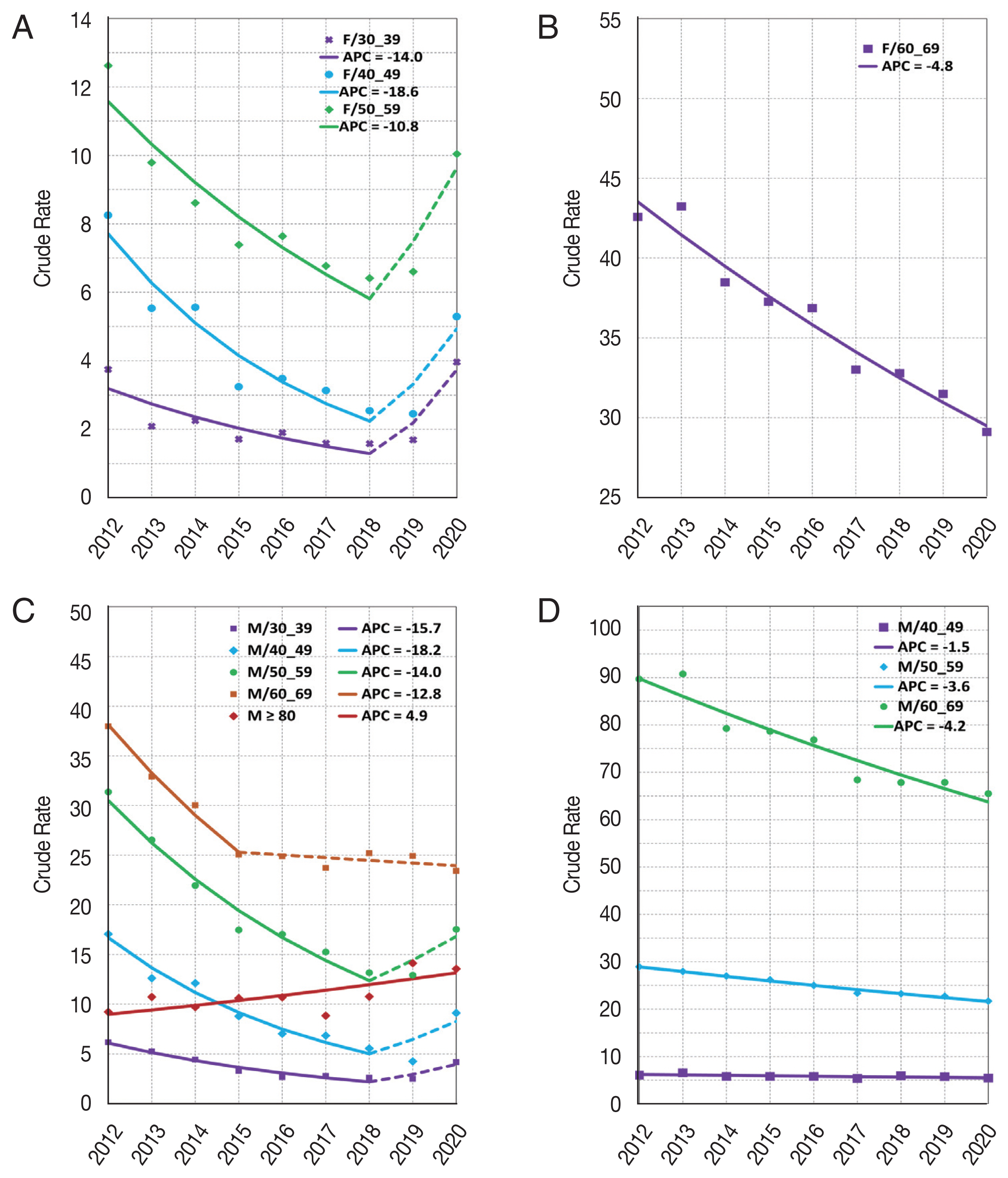
Changes in crude rate of clonorchiasis/CCA are shown in
Fig. 3. In women, the 30–59 age groups showed a significant sharp decrease until 2018 (trend 1) for clonorchiasis. After 2018, an increasing trend was noted, although not significant (
Fig. 3A). For CCA, the 60–69 age group in women showed a significant decrease (
Fig. 3B). Clonorchiasis showed a significant decrease in the male 30–59 age groups until 2018 (trend 1), and then increased, although not significant. The 60–69 age group in men also showed an initial sharp decrease until 2015 (trend 1), and then gradually declined. In contrast, the male group over 80 years of age showed a significant increase in clonorchiasis (
Fig. 3C). CCA in the male group aged 40–69 showed a significant decrease throughout the study period (
Fig. 3D).
A joinpoint for clonorchiasis was observed in the female 30–59 age groups. Annual Percentage Changes (APC) for the 30–39, 40–49, and 50–59 age groups were −14.0 (
P=0.03), −18.6 (
P<0.01), and −10.8 (
P=0.01), respectively, until 2018 (trend 1). After 2018, an increasing trend was noted, although not significant (trend 2). No joinpoint was observed for CCA, but the 60–69 age group in women showed a significant decreasing rate (APC −4.8,
P<0.01). Likewise, a joinpoint for clonorchiasis was observed in the male 30–69 age groups. APC for the 30–39, 40–49, and 50–59 age groups were −15.7, −18.2, and −14.0, respectively (all
P<0.01), until 2018 (trend 1). After 2018, an increasing trend was noted, although not significant (trend 2). The 60–69 age group in men also showed a significant sharp decrease until 2015 (trend 1, APC −12.8,
P<0.01), but continued on a gradual decline (trend 2). However, the male 80 and over age group showed a significant increasing rate (APC 4.9,
P=0.02) throughout the study period. No joinpoint was observed for CCA and the 40–69 age groups in men showed a significant decreasing rate throughout the study period. APC for the 40–49, 50–59, and 60–69 age groups were −1.5 (
P=0.047), −3.6 (
P<0.01), and −4.2 (
P<0.01), respectively (
Table 3).
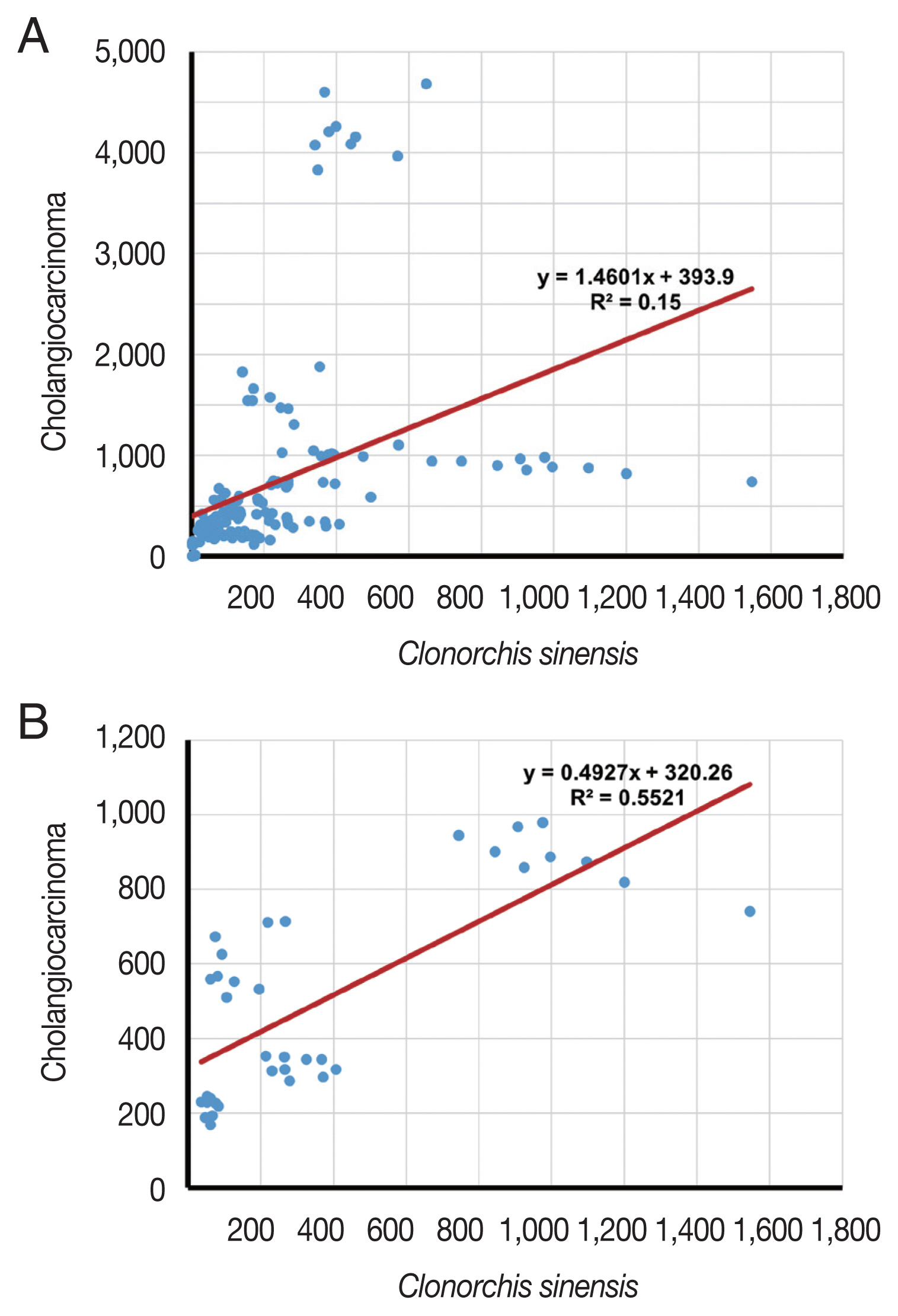
Clonorchiasis and CCA were positively correlated, but weak when all the districts of Korea were taken as a whole (r=0.39,
P<0.001) (
Fig. 4A). However, a strong positive correlation was observed in the regions around the 4 major river basins of Nakdong, Seomjin, Geum, and Yeongsan, comprised of Gyeongsangbuk-do, Gyeongsangnam-do, Jeollanam-do and Chungcheongnam-do (r=0.74,
P<0.001) (
Fig. 4B).
DISCUSSION
The relationship between clonorchiasis and CCA has been established by many studies, and they have provided a rationale for our study that evaluated the most recent data in regard to clonorchiasis and CCA. Overall, significant clusters for both of them are located in the southern parts of Korea (
Fig. 1). They show an increasing trend in the southwestern parts, while the southeastern parts showed a decreasing trend of clonorchiasis during the last 10 years. In most adults (30–59), clonorchiasis showed a significant decrease until 2018, and thereafter increased, although not significant. CCA showed a significant linear decrease. A positive correlation was observed between clonorchiasis and CCA around the regions around the 4 major rivers of Nakdong, Seomjin, Geum, and Yeongsan, comprised of Gyeongsangbuk-do, Gyeongsangnam-do, Jeollanam-do and Chungcheongnam-do.
Gyeongsangnam-do had the highest average number of clonorchiasis cases. Although it has a relatively large population, its cases far surpassed that of Seoul and Gyeonggi-do, the most populous city and province by 2 and 5 times, respectively. This area encompasses the Nakdong River, which had the highest prevalence of clonorchiasis [
1]. This river also flows through Gyeongsangbuk-do, which also had a high number of clonorchiasis cases. This was confirmed after adjusting for population, as all major cities and provinces surrounding this river (the Gyeongsang region) showed high infection rates of
C. sinensis. Areas around the 4 major rivers of Korea (Nakdong, Seomjin, Geum, and Yeongsan) tended to have higher infection rates of clonorchiasis. In comparison, Gyeonggi-do, which has the highest average population, had a relatively low rate of infection. Even though the Han River flows through this province, Gyeonggi-do is presumed to be highly industrialized and urbanized relative to the other provinces.
CCA showed the highest rate in metropolitan Seoul, followed by Gyeonggi-do. Both areas have high populations. After adjusting for population, Seoul remained high, while Gyeonggi-do had a very low rate. This could be explained by its proximity to Seoul, where most major tertiary hospitals are located, and cancer patients might have been referred to Seoul. In addition, adjusted CCA rate was also high in the districts around the 4 major rivers, reflecting that clonorchiasis is one of the major risks for CCA. Surprisingly, Jeju-do also had a high rate of CCA. The area is a province, but being a semi-tropical island in the southern part of Korea, where a favorite travelling destination because of its agreeable weather, including medical tourism. A large influx of patients, seeking comfort or recuperation, might have played a role in the high rate of CCA.
Cluster analysis mostly confirmed these results. However, an interesting finding was noted for CCA. Seoul was the MLC for CCA as expected, but the next following cluster was a joint one that included all the southern regions. Besides being the warmer parts of Korea, 4 major rivers flow through this region. Multivariate analysis showed that the Gyeongsang region and its major cities constitute a joint cluster and was the MLC for both diseases. Gwangju, one of the main cities of Jeolla region where 2 major rivers, the Yeongsan and Seomjin Rivers flow, was also a cluster. It might have functioned as the main medical hub for the surrounding areas, therefore all of the complicated cases would have ended up here.
In the correlation study between clonorchiasis and CCA for 2012–2020, the diseases were positively correlated, but weak when all districts of Korea were taken as a whole. However, a strong correlation between them was observed when the regions (Gyeongsangbuk-do, Gyeongsangnam-do, Jeollanam-do, Chungcheongnam-do) around the 4 major rivers were analyzed.
Although the Gyeongsang region in the southeastern part of Korea had a high rate of clonorchiasis, it showed a decreasing trend. This is similar to the results of a recent study that investigated the status of
C. sinensis infection around the 5 major river basins [
29]. The dramatic decrease of infection rates of
C. sinensis was observed around the 5 river basins of Nakdong, Seomjin, Geum, Yeongsan, and Han River from 2011 to 2020, but it was still relatively high around the Seomjin River [
29]. The Korea Centers for Disease Control (KCDC) have been implementing efforts to reduce intestinal helminthiases and clonorchiasis nationwide, especially in endemic regions since 2005 [
30]. KCDC tests about 50,000 people annually, and makes it possible for test-positive people to receive treatment, thus contributing to a 3 fold lower egg positive rate of
C. sinensis in endemic areas [
29]. Control measures of the responsible health authorities and increasing public awareness might have played a positive role in preventing the infection.
Unlike the southeastern, the southwestern Jeolla region showed an increasing trend. Compared to the Gyeongsang area, this area is more rural and less industrialized, largely depending on agriculture. Interestingly, like the spatial cluster analysis, CCA also showed an increasing trend in Jeollanam-do and Gwangju. Incheon is a major metropolitan city, but the fact that the areas located in the lower reaches of the Han River are relatively rural, and together with its large population might have contributed to its increase of both clonorchiasis and CCA. The Daejeon/Sejong joint cluster also had a decreasing trend for CCA. Sejong, inaugurated in 2012, is a fairly new and specialized city with mainly public and administrative organizations. Besides its small population, the population composition tends to be different from other districts, so these factors have possibly skewed the data. Overall, cluster analysis revealed various regional trends of the 2 diseases that overlapped in the southern regions of Korea.
Clonorchiasis occurs mainly in people who eat raw or undercooked fish that are infected with the metacercaria(e) [
31]. Korean men tend to eat more raw freshwater fish than Korean women, but contrary to expectations, clonorchiasis showed a significant decrease in both men and women until 2018. The trend was significant in middle-aged adults. However, an increasing trend was observed after 2018, although not significant. The recent interest in trekking, hiking, wildlife experiences, and related outdoor life with inadvertent consumption of improperly prepared fish that was believed to be safe might have played a role. Elderly men, 80-year-old and over, also showed a significant increasing trend. Lower awareness or poor access to health facilities might have been responsible. The health authorities’ attention and health control measures for this age group seem necessary. Although its incidence is high in endemic regions, clonorchiasis has also been increasingly observed in non-endemic regions as well. The cause of this phenomenon can be deduced from some literatures and a case report of adult worm isolation from a patient without any known risk factor [
32–
34]. In a recent survey, women had a higher rate of indirect infection than men both in endemic and non-endemic areas, and also over 4% of patients with
C. sinensis infection in this survey had no known risk factor [
34]. Therefore, it should be emphasized that
C. sinensis infection in non-endemic areas may be caused by poor personal hygiene, contaminated hands, and/or utensils.
The causes of CCA vary, but the strongest risk factor was choledocholithiasis, followed by cholelithiasis, according to a recent prospective cohort study in Korean adults [
35]. CCA appears to be decreasing in this study, but the risk of cancer development due to prolonged choledocholithiasis associated with liver fluke still remains. Regular monitoring and laboratory tests of high-risk patients are required [
36,
37].
Initially when evaluating the relationship between clonorchiasis and CCA, all the districts of Korea were selected to observe whether a correlation existed. This preliminary study showed a positive correlation, but it was weak (r=0.39,
P<0.001). However, strong positive correlation was observed when the areas were limited to the areas (Gyeongsangbuk-do, Gyeongsangnam-do, Jeollanam-do, and Chungcheongnam-do) around the 4 major rivers (r=0.74,
P<0.001) (
Fig. 4B). Taken altogether, the present study shows that clonorchiasis and CCA are associated with one another. Correlation does not imply causation, but various studies have suggested that clonorchiasis is a known risk factor for CCA [
5,
7,
8,
10–
13,
31]. Our study confirms the results of such prior studies and also reveals an interesting finding that might contribute to the general understanding of the relationship between these 2 diseases.
Besides
C. sinensis, a species in the
Opisthorchiidae family,
Opisthorchis viverrini in SouthEast Asia and
Opisthorchis felineus in rural Western Siberia are also known to be related to the development of CCA [
38,
39].
C. sinensis is also endemic to North Korea, which is adjacent to China and Russia, but unfortunately, there are few data available on CCA development related to clonorchiasis, except for a small sample size study that showed high serological finding of clonorchiasis [
40]. It would be helpful in the estimation and surveillance of the incidence rate of
C. sinensis in both South and North Korea, including global trends.
HIRA data are useful in studies with large scale data where randomized control trial is not possible, which exclude specific populations such as minorities and specific disease population [
41,
42]. Although this study was conducted using HIRA data that has a large sample size representing the entire population of Korea, the present data lack some information such as disease severity, laboratory, and health behaviors including locality, where information on residence may not be reliable because it is collected based on the location of providers. A patient may have received healthcare service in an area different from where the patient actually lives. This has an important implication in that the data might be biased. The administrative districts according to the Korean government can be roughly divided into major cities and provinces, which are mostly rural. A patient with a significant disease such as CCA living in one of these provinces might well visit a nearby major city with tertiary medical health system, thus skewing the data. This problem is even more pronounced with Seoul, the capital of Korea, where most healthcare systems are concentrated. However, an advantage of our study is that assessments are done through a cluster that determines a percentage of the population at risk within its boundaries. In this respect, we determined regional and temporal patterns of clonorchiasis in the key regions around the 4 major river basins using representative clinical data from all of Korea.
In conclusion, the management for clonorchiasis as a national project had been progressing during the last decade, and its incidence and prevalence are decreasing thanks to these efforts. However, the southern regions of Korea still had a high and increasing infection rate, and the elderly male were high-risk group. The relationship between clonorchiasis and CCA has been established by many studies, and we have further shown the correlation between them, including areas where clonorchiasis in not known to be endemic. Although CCA is significantly higher in areas where C. sinensis infestation is endemic, non-endemic rural areas should also be investigated.
Notes
-
The authors declare no conflict of interest related to this study.
Supplementary Information
ACKNOWLEDGMENT
This study was supported by a research grant from the Korean Association of Health Promotion (No. 2015-01), Republic of Korea.
Fig. 1Regional clusters detected for clonorchiasis (A) and CCA (B). Light to dark gradient represents increasing order of log likelihood ratio. (C). Blue depicts clusters detected with multivariate analysis. Lattice patterns represent most likely cluster (MLC) for both diseases. SE is a significant cluster for clonorchiasis only. Area codes represent administrative districts of the Korean government. SE, Seoul; BU, Busan; IN, Incheon; DG, Daegu; GW, Gwangju; DJ, Daejeon; UL, Ulsan; GY,Gyeonggi-do; GA, Gangwon-do; CB, Chungcheongbuk-do; CN, Chungcheongnam-do; JB, Jeollabuk-do; JN, Jeollanam-do; GB, Gyeongsangbuk-do; GN, Gyeongsangnam-do; JE, Jeju-do; SJ, Sejong.
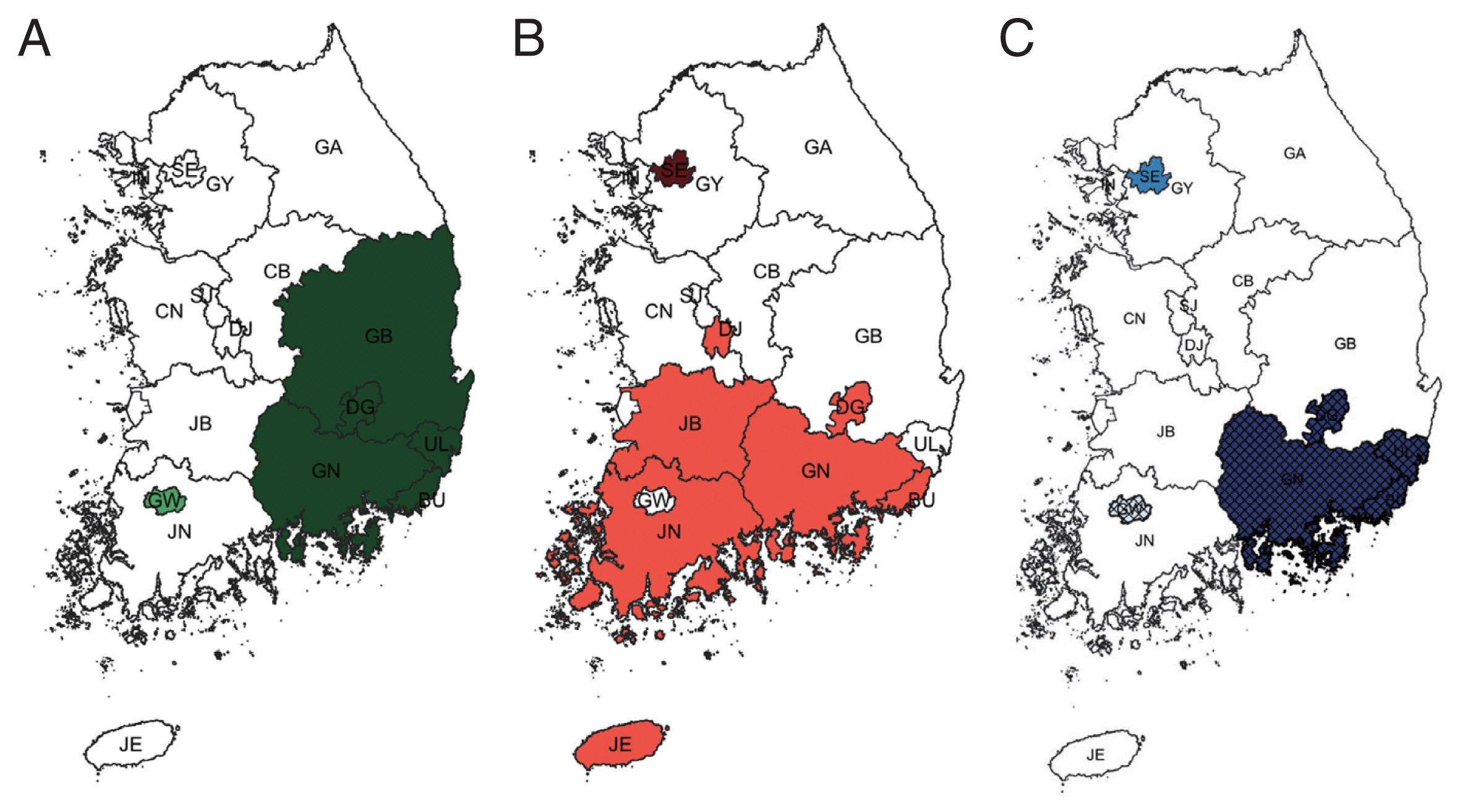
Fig. 2Spatiotemporal trend analysis of clonorchiasis (A) and CCA (B) for 2012–2020. Green and red indicate decreasing and increasing rate of disease within the cluster, respectively. Light to dark gradient represents increasing order of log likelihood ratio. Area codes represent administrative districts of the Korean government. SE, Seoul; BU, Busan; IN, Incheon; DG, Daegu; GW, Gwangju; DJ, Daejeon; UL, Ulsan; GY, Gyeonggi-do; GA, Gangwon-do; CB, Chungcheongbuk-do; CN, Chungcheongnam-do; JB, Jeollabuk-do; JN, Jeollanam-do; GB, Gyeongsangbuk-do; GN, Gyeongsangnam-do; JE, Jeju-do; SJ, Sejong.
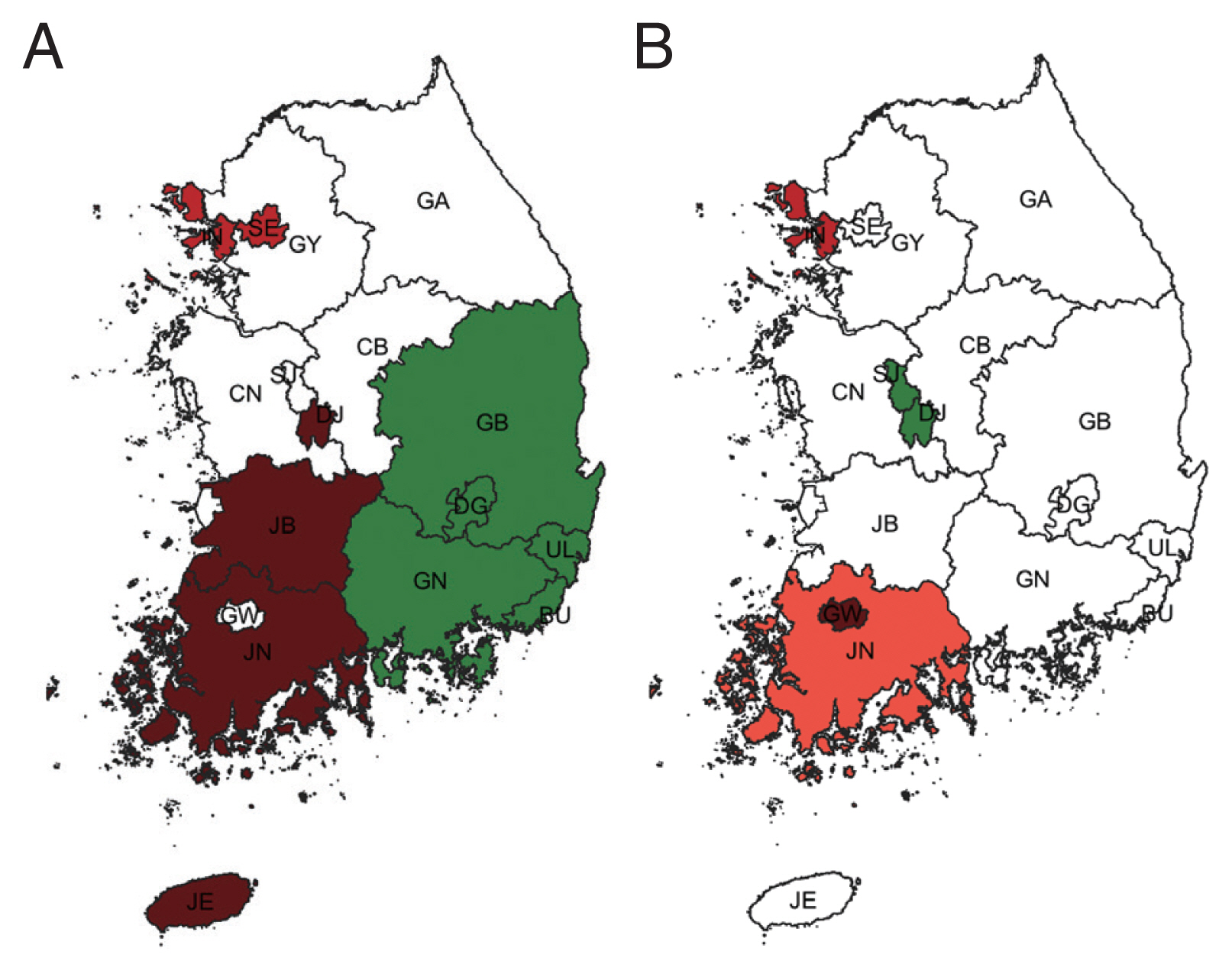
Fig. 3Trend analysis for clonorchiasis and CCA according to age and sex. (A) In women, the 30–59 age groups show a significant sharp decrease clonorchiasis until 2018 (trend 1). Annual Percentage Changes (APC) for the 30–39, 40–49, and 50–59 age groups are −14.0, −18.6, and −10.8, respectively. After 2018, an increasing trend is noted, although not significant. (B) The 60–69 age group in women shows a significant decreasing rate (APC −4.8) for CCA. (C) In men, the 30–59 age groups show significant decrease of clonorchiasis until 2018 (trend 1), and then increases, although not significant. APC in trend 1 for the 30–39, 40–49, and 50–59 age groups are −15.7, −18.2, and −14.0, respectively. The 60–69 age group also shows a significant sharp decrease until 2015 (trend 1, APC −12.76), then continues on a gradual decline. In contrast, the male 80 and over age group shows significant increasing rate (APC 4.9). (D) The 40–69 age groups in men show significant decreasing rates throughout the study period for CCA. APC for the 40–49, 50–59, and 60–69 age groups are −1.5, −3.6, and −4.2, respectively. Only age groups with significant trends are shown. Dashed lines represent trends that are not significant. Crude rates (adjusted cases per 100,000 population at risk) are calculated by mid-year in Joinpoint.
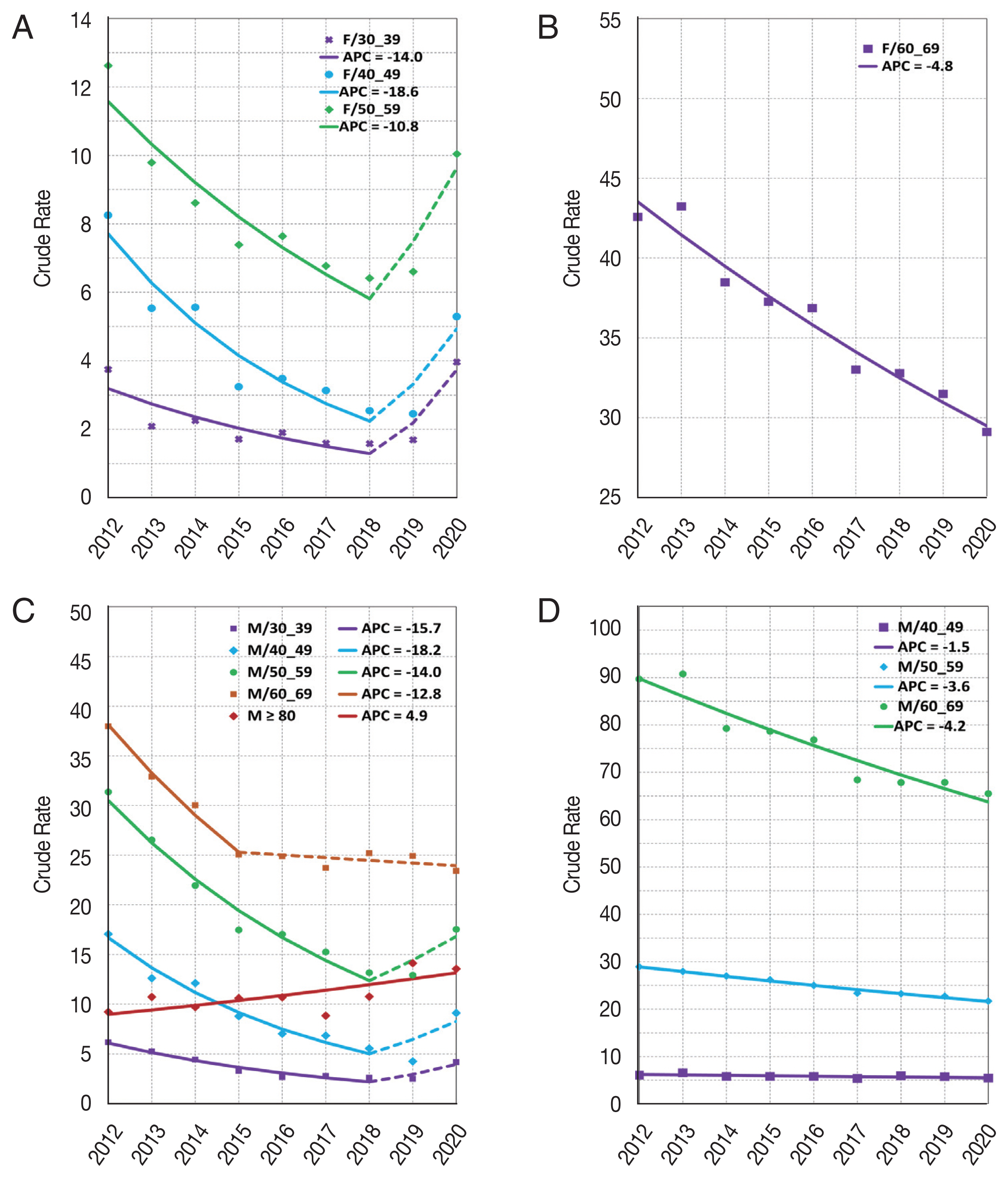
Fig. 4Correlation between clonorchiasis and CCA for 2012–2020. (A) The diseases are positively correlated, but weak when all districts of Korea are taken as a whole. r(148)=0.39, P<0.001. (B) Strong positive correlation is observed in the study areas (Gyeongsangbuk-do, Gyeongsangnam-do, Jeollanam-do, Chungcheongnam-do) around the 4 major rivers (Nakdong, Seomjin, Geum, Yeongsan). r(34)=0.74, P<0.001.
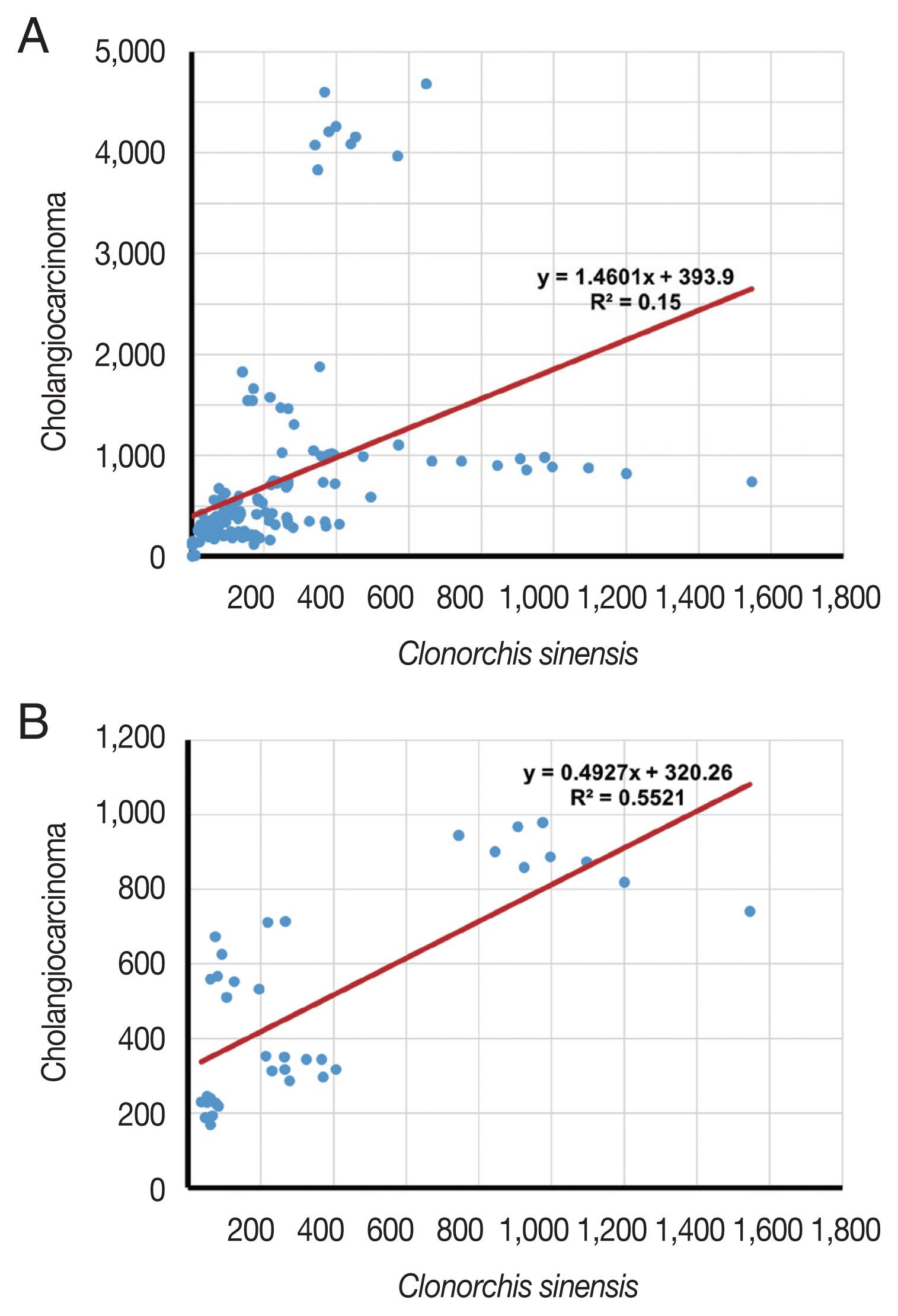
Table 1Regional clusters detected for clonorchiasis and CCA from 2012 to 2020
Table 1
|
District |
Cases |
Expected |
Relative risk |
Log likelihood ratioa
|
P-value |
|
Clonorchiasis |
|
Busan/Gyeongsangnam-do/Ulsan/Daegu/Gyeongsangbuk-do |
20,013 |
8,384 |
4.55 |
9,131.115 |
<0.001 |
|
Gwangju |
1,465 |
934 |
1.59 |
132.804 |
<0.001 |
|
|
CCA |
|
Seoul |
37,869 |
20,636 |
2.29 |
7,602.472 |
<0.001 |
|
Jeju-do/Jeollanam-do/Jeollabuk-do/Gyeongsangnam-do/Busan |
36,833 |
31,562 |
1.25 |
605.972 |
<0.001 |
|
|
Combinedb
|
|
Busan/Gyeongsangnam-do/Ulsan/Daegu |
17,286c
|
6,672 |
4.36 |
8,707.185 |
<0.001 |
|
25,264d
|
21,741 |
1.21 |
|
|
|
Seould
|
37,869 |
20,636 |
2.29 |
7,602.472 |
<0.001 |
|
Gwangju |
1,465c
|
934 |
1.59 |
332.674 |
<0.001 |
|
4,192d
|
3,044 |
1.39 |
|
|
Table 2Spatiotemporal trends analysis according to administrative districts (2012–2020)
Table 2
|
Districts |
Cases |
Expected |
Trend inside clustera
|
Trend outside clustera
|
Relative risk |
Log likelihood ratiob
|
P-value |
|
Clonorchiasis |
|
Busan/Gyeongsangnam-do/Ulsan/Daegu/Gyeongsangbuk-do |
20,013 |
8,384 |
−6.34 |
0.78 |
4.55 |
139.652 |
<0.001 |
|
Jeollanam-do/Jeollabuk-do/Jeju-do/Daejeon |
3,072 |
3,752 |
6.99 |
−4.87 |
0.8 |
126.897 |
<0.001 |
|
Incheon/Seoul |
4,373 |
8,196 |
1.06 |
−4.65 |
0.46 |
42.708 |
<0.001 |
|
|
CCA |
|
Gwangju |
4,192 |
3,044 |
6.47 |
1.94 |
1.39 |
25.208 |
<0.001 |
|
Daejeon/Sejong |
3,017 |
3,621 |
−2.39 |
2.25 |
0.83 |
20.879 |
<0.001 |
|
Incheon |
3,097 |
6,069 |
6.49 |
1.98 |
0.50 |
18.455 |
<0.001 |
|
Jeollanam-do |
5,450 |
3,931 |
4.87 |
1.97 |
1.41 |
13.482 |
<0.001 |
Table 3Clonorchiasis/CCA trends according to sex and age
a
Table 3
|
Age group |
Trend 1 |
Trend 2 |
|
|
|
Period |
APCb
|
95% CI |
P-value |
Period |
APCb
|
95% CI |
P-value |
|
Clonorchiasis |
|
Female |
0–19 |
2012–2015 |
−30.2 |
−60.9–24.6 |
0.16 |
2015–2020 |
22.0 |
−8.5–62.8 |
0.13 |
|
20–29 |
2012–2016 |
−21.6 |
−45.6–13 |
0.14 |
2016–2020 |
21.2 |
−15.3–73.6 |
0.21 |
|
30–39 |
2012–2018 |
−14.0 |
−24.2–−2.5 |
0.03 |
2018–2020 |
70.4 |
−21.5–269.9 |
0.13 |
|
40–49 |
2012–2018 |
−18.6 |
−26.3–−10.2 |
<0.01 |
2018–2020 |
48.5 |
−27.6–204.4 |
0.20 |
|
50–59 |
2012–2018 |
−10.8 |
−15.7–−5.7 |
0.01 |
2018–2020 |
28.8 |
−8.6–81.3 |
0.11 |
|
60–69 |
2012–2016 |
−10.6 |
−23–3.8 |
0.11 |
2016–2020 |
12.6 |
−0.7–27.6 |
0.06 |
|
70–79 |
2012–2020 |
4.5 |
−1.4–10.7 |
0.12 |
|
|
|
|
|
≥80 |
2012–2020 |
11.6 |
−2.6–27.9 |
0.10 |
|
|
|
|
|
Male |
0–19 |
2012–2020 |
0.6 |
−9.5–11.8 |
0.90 |
|
|
|
|
|
20–29 |
2012–2020 |
−0.9 |
−7.7–6.5 |
0.78 |
|
|
|
|
|
30–39 |
2012–2018 |
−15.7 |
−19.8–−11.4 |
<0.01 |
2018–2020 |
34.4 |
−4.6–89.5 |
0.08 |
|
40–49 |
2012–2018 |
−18.2 |
−22.6–−13.5 |
<0.01 |
2018–2020 |
28.4 |
−17.8–100.6 |
0.20 |
|
50–59 |
2012–2018 |
−14.0 |
−17.3–−10.5 |
<0.01 |
2018–2020 |
16.6 |
−11.3–53.3 |
0.19 |
|
60–69 |
2012–2015 |
−12.8 |
−18.1–−7.0 |
<0.01 |
2015–2020 |
−1.1 |
−3.9–1.8 |
0.35 |
|
70–79 |
2012–2015 |
−14.1 |
−27.9–2.5 |
0.08 |
2015–2020 |
6.3 |
−1.6–14.7 |
0.09 |
|
≥80 |
2012–2020 |
4.9 |
1.0–8.9 |
0.02 |
|
|
|
|
|
|
CCA |
|
Female |
20–29 |
2012–2020 |
1.5 |
−4.2–7.6 |
0.56 |
|
|
|
|
|
30–39 |
2012–2020 |
2.4 |
−0.4–5.2 |
0.09 |
|
|
|
|
|
40–49 |
2012–2020 |
−0.6 |
−2.4–1.2 |
0.43 |
|
|
|
|
|
50–59 |
2012–2020 |
−1.1 |
−2.3–0.1 |
0.08 |
|
|
|
|
|
60–69 |
2012–2020 |
−4.8 |
−5.6–−3.9 |
<0.01 |
|
|
|
|
|
70–79 |
2012–2020 |
−0.8 |
−2.3–0.7 |
0.26 |
|
|
|
|
|
≥80 |
2012–2020 |
0.1 |
−1.2–1.3 |
0.90 |
|
|
|
|
|
Male |
20–29 |
2012–2020 |
−6.6 |
−21.3–11.0 |
0.38 |
|
|
|
|
|
30–39 |
2012–2020 |
1.1 |
−2.8–5.0 |
0.54 |
|
|
|
|
|
40–49 |
2012–2020 |
−1.5 |
−2.9–0 |
0.05c
|
|
|
|
|
|
50–59 |
2012–2020 |
−3.6 |
−4.0–−3.2 |
<0.01 |
|
|
|
|
|
60–69 |
2012–2020 |
−4.2 |
−5.3–−3.1 |
<0.01 |
|
|
|
|
|
70–79 |
2012–2020 |
−1.2 |
−2.3–0 |
0.05 |
|
|
|
|
|
≥80 |
2012–2020 |
−0.5 |
−1.4–0.3 |
0.19 |
|
|
|
|
References
- 1. Jeong YI, Shin HE, Lee SE, Cheun HI, Ju JW, Kim JY, Park MY, Cho SH. Prevalence of Clonorchis sinensis Infection among Residents along 5 Major Rivers in the Republic of Korea. Korean J Parasitol 2016;54:215-219. https://doi.org/10.3347/kjp.2016.54.2.215
- 2. Hong ST, Chai JY, Choi MH, Huh S, Rim HJ, Lee SH. A successful experience of soil-transmitted helminth control in the Republic of Korea. Korean J Parasitol 2006;44:177-185. https://doi.org/10.3347/kjp.2006.44.3.177
- 3. Shin EH, Guk SM, Kim HJ, Lee SH, Chai JY. Trends in parasitic diseases in the Republic of Korea. Trends Parasitol 2008;24:143-150. https://doi.org/10.1016/j.pt.2007.12.003
- 4. Rim HJ. Clonorchiasis: an update. J Helminthol 2005;79:269-281. https://doi.org/10.1079/joh2005300
- 5. Brindley PJ, Bachini M, Ilyas SI, Khan SA, Loukas A, Sirica AE, Teh BT, Wongkham S, Gores GJ. Cholangiocarcinoma. Nat Rev Dis Primers 2021;7:65-81. https://doi.org/10.1038/s41572-021-00300-2
- 6. Cho SH, Lee KY, Lee BC, Cho PY, Cheun HI, Hong ST, Sohn WM, Kim TS. Prevalence of clonorchiasis in southern endemic areas of Korea in 2006. Korean J Parasitol 2008;46:133-137. https://doi.org/10.3347/kjp.2008.46.3.133
- 7. Hong ST, Fang Y. Clonorchis sinensis and clonorchiasis, an update. Parasitol Int 2012;6117-6124. https://doi.org/https://doi.org/10.1016/j.parint.2011.06.007
- 8. Bouvard V, Baan R, Straif K, Grosse Y, Secretan B, El Ghissassi F, Benbrahim-Tallaa L, Guha N, Freeman C, Galichet L, Cogliano V. A review of human carcinogens—Part B: biological agents. Lancet Oncol 2009;10:321-322. https://doi.org/10.1016/S1470-2045(09)70096-8
- 9. Global Burden of Disease Cancer Collaboration, Fitzmaurice C, Dicker D, Pain A, Hamavid H, Moradi-Lakeh M, MacIntyre MF, Allen C, Hansen G, Woodbrook R, Wolfe C, Hamadeh RR, Moore A, Werdecker A, Gessner BD, Te Ao B, McMahon B, Karimkhani C, Yu C, Cooke GS, Schwebel DC, Carpenter DO, Pereira DM, Nash D, Kazi DS, De Leo D, Plass D, Ukwaja KN, Thurston GD, Yun Jin K, Simard EP, Mills E, Park EK, Catalá-López F, deVeber G, Gotay C, Khan G, Hosgood HD 3rd, Santos IS, Leasher JL, Singh J, Leigh J, Jonas JB, Sanabria J, Beardsley J, Jacobsen KH, Takahashi K, Franklin RC, Ronfani L, Montico M, Naldi L, Tonelli M, Geleijnse J, Petzold M, Shrime MG, Younis M, Yonemoto N, Breitborde N, Yip P, Pourmalek F, Lotufo PA, Esteghamati A, Hankey GJ, Ali R, Lunevicius R, Malekzadeh R, Dellavalle R, Weintraub R, Lucas R, Hay R, Rojas-Rueda D, Westerman R, Sepanlou SG, Nolte S, Patten S, Weichenthal S, Abera SF, Fereshtehnejad SM, Shiue I, Driscoll T, Vasankari T, Alsharif U, Rahimi-Movaghar V, Vlassov VV, Marcenes WS, Mekonnen W, Melaku YA, Yano Y, Artaman A, Campos I, MacLachlan J, Mueller U, Kim D, Trillini M, Eshrati B, Williams HC, Shibuya K, Dandona R, Murthy K, Cowie B, Amare AT, Antonio CA, Castañeda-Orjuela C, van Gool CH, Violante F, Oh IH, Deribe K, Soreide K, Knibbs L, Kereselidze M, Green M, Cardenas R, Roy N, Tillmann T, Li Y, Krueger H, Monasta L, Dey S, Sheikhbahaei S, Hafezi-Nejad N, Kumar GA, Sreeramareddy CT, Dandona L, Wang H, Vollset SE, Mokdad A, Salomon JA, Lozano R, Vos T, Forouzanfar M, Lopez A, Murray C, Naghavi M. The global burden of cancer 2013. JAMA Oncol 2015;1:505-527. https://doi.org/10.1001/jamaoncol.2015.0735
- 10. Sripa B, Kaewkes S, Sithithaworn P, Mairiang E, Laha T, Smout M, Pairojkul C, Bhudhisawasdi V, Tesana S, Thinkamrop B, Bethony JM, Loukas A, Brindley PJ. Liver fluke induces cholangiocarcinoma. PLoS Med 2007;4:e201. https://doi.org/10.1371/journal.pmed.0040201
- 11. Choi D, Lim JH, Lee KT, Lee JK, Choi SH, Heo JS, Jang KT, Lee NY, Kim S, Hong ST. Cholangiocarcinoma and Clonorchis sinensis infection: a case–control study in Korea. J Hepatol 2006;44:1066-1073. https://doi.org/10.1016/j.jhep.2005.11.040
- 12. Shin HR, Oh JK, Lim MK, Shin A, Kong HJ, Jung KW, Won YJ, Park S, Park SJ, Hong ST. Descriptive epidemiology of cholangiocarcinoma and clonorchiasis in Korea. J Korean Med Sci 2010;25:1011-1016. https://doi.org/10.3346/jkms.2010.25.7.1011
- 13. Lim MK, Ju YH, Franceschi S, Oh JK, Kong HJ, Hwang SS, Park SK, Cho SI, Sohn WM, Kim DI, Yoo KY, Hong ST, Shin HR. Clonorchis sinensis infection and increasing risk of cholangiocarcinoma in the Republic of Korea. Am J Trop Med Hyg 2006;75:93-96. https://doi.org/10.4269/ajtmh.2006.75.93
- 14. Seo HJ, Kim SY, Lee YJ, Jang BH, Park JE, Sheen SS, Hahn SK. A newly developed tool for classifying study designs in systematic reviews of interventions and exposures showed substantial reliability and validity. J Clin Epidemiol 2016;70:200-205. https://doi.org/10.1016/j.jclinepi.2015.09.013
- 15. Kulldorff M. A spatial scan statistic. Commun Stat Theory Methods 1997;26:1481-1496. https://doi.org/10.1080/03610929708831995
- 16. Kulldorff M, Nagarwalla N. Spatial disease clusters: detection and inference. Stat Med 1995;14:799-810. https://doi.org/https://doi.org/10.1002/sim.4780140809
- 17. Mathes RW, Lall R, Levin-Rector A, Sell J, Paladini M, Konty KJ, Olson D, Weiss D. Evaluating and implementing temporal, spatial, and spatio-temporal methods for outbreak detection in a local syndromic surveillance system. PLoS One 2017;12:e0184419. https://doi.org/10.1371/journal.pone.0184419
- 18. Stelling J, Yih WK, Galas M, Kulldorff M, Pichel M, Terragno R, Tuduri E, Espetxe S, Binsztein N, O’Brien TF, Platt R. Automated use of WHONET and SaTScan to detect outbreaks of Shigella spp. using antimicrobial resistance phenotypes. Epidemiol Infect 2010;138:873-883. https://doi.org/10.1017/S0950268809990884
- 19. Chen J, Roth RE, Naito AT, Lengerich EJ, MacEachren AM. Geovisual analytics to enhance spatial scan statistic interpretation: an analysis of U.S. cervical cancer mortality. Int J Health Geogr 2008;7:57-74. https://doi.org/10.1186/1476-072X-7-57
- 20. Wang W, Zhang T, Yin F, Xiao X, Chen S, Zhang X, Li X, Ma Y. Using the maximum clustering heterogeneous set-proportion to select the maximum window size for the spatial scan statistic. Sci Rep 2020;10:4900-4913. https://doi.org/10.1038/s41598-020-61829-y
- 21. Yoo H, Jung I. Optimizing the maximum reported cluster size for normal-based spatial scan statistics. CSAM 2018;25:373-383. https://doi.org/10.29220/CSAM.2018.25.4.373
- 22. Azage M, Kumie A, Worku A, Bagtzoglou AC. Childhood diarrhea exhibits spatiotemporal variation in northwest Ethiopia: a SaTScan spatial statistical analysis. PLoS One 2015;10:e0144690. https://doi.org/10.1371/journal.pone.0144690
- 23. Clegg LX, Hankey BF, Tiwari R, Feuer EJ, Edwards BK. Estimating average annual per cent change in trend analysis. Stat Med 2009;28:3670-3682. https://doi.org/10.1002/sim.3733
- 24. Kim HJ, Fay MP, Feuer EJ, Midthune DN. Permutation tests for joinpoint regression with applications to cancer rates. Stat Med 2000;19:335-351. https://doi.org/10.1002/(SICI)1097-0258(20000215)19:3<335::AID-SIM336>3.0.CO;2-Z
- 25. Molnar A, Iancu M, Radu R, Borzan CM. A joinpoint regression analysis of syphilis and gonorrhea incidence in 15–19-year old adolescents between 2005 and 2017: a regional study. Int J Environ Res Public Health 2020;17:5385-5396. https://doi.org/10.3390/ijerph17155385
- 26. Grech V. WASP (Write a Scientific Paper) using Excel–13: correlation and regression. Early Hum Dev 2018;122:60-63. https://doi.org/10.1016/j.earlhumdev.2018.04.009
- 27. Lachin JM. Introduction to sample size determination and power analysis for clinical trials. Control Clin Trials 1981;2:93-113. https://doi.org/10.1016/0197-2456(81)90001-5
- 28. Bujang MA, Baharum N. Sample size guideline for correlation analysis. World J Soc Sci Res 2016;3:37-46. https://doi.org/10.22158/wjssr.v3n1p37
- 29. Lee MR, Shin HE, Back SO, Lee YJ, Lee HI, Ju JW. Status of helminthic infections in residents around river basins in the Republic of Korea for 10 Years (2011–2020). Korean J Parasitol 2022;60:187-193. https://doi.org/10.3347/kjp.2022.60.3.187
- 30. Hong ST, Yong TS. Review of successful control of parasitic infections in Korea. Infect Chemother 2020;52:427-440. https://doi.org/10.3947/ic.2020.52.3.427
- 31. Kim TS, Pak JH, Kim JB, Bahk YY. Clonorchis sinensis, an oriental liver fluke, as a human biological agent of cholangiocarcinoma: a brief review. BMB Rep 2016;49:590-597. https://doi.org/10.5483/bmbrep.2016.49.11.109
- 32. Yang YM, Choi H, Ryu DH, Woo CG, Han JH, Park SM. Clonorchis sinensis infection presenting as acute cholangitis and acute cholecystitis. Korean J Pancreas Biliary Tract 2019;24:79-83. https://doi.org/10.15279/kpba.2019.24.2.79
- 33. Phyo Myint EE, Sereemaspun A, Rocklöv J, Nithikathkul C. Discovery of carcinogenic liver fluke metacercariae in second intermediate hosts and surveillance on fish-borne trematode metacercariae infections in Mekong region of Myanmar. Int J Environ Res Public Health 2020;17:4108-4119. https://doi.org/10.3390/ijerph17114108
- 34. Korea National Institute of Health. Korea National Institute of Health: Annual Report 2018. Korea National Institute of Health; Cheongju, Korea.
- 35. Cho IR, Yi SW, Choi JS, Yi JJ. Comparison of risk factors for cholangiocarcinoma and hepatocellular carcinoma: a prospective cohort study in Korean adults. Cancers 2022;14:1709-1724. https://doi.org/10.3390/cancers14071709
- 36. Pfeifer CM, Bourm KS, Brandt MR, Ali K. Liver fluke-induced choledocholithiasis with biliary ductal obstruction. Radiol Case Rep 2019;14:1483-1486. https://doi.org/10.1016/j.radcr.2019.09.022
- 37. Prueksapanich P, Piyachaturawat P, Aumpansub P, Ridtitid W, Chaiteerakij R, Rerknimitr R. Liver fluke-associated biliary tract cancer. Gut Liver 2018;12:236-245. https://doi.org/10.5009/gnl17102
- 38. Fedorova OS, Fedotova MM, Zvonareva OI, Mazeina SV, Kovshirina YV, Sokolova TS, Golovach EA, Kovshirina AE, Konovalova UV, Kolomeets IL, Gutor SS, Petrov VA, Hattendorf J, Ogorodova LM, Odermatt P. Opisthorchis felineus infection, risks, and morbidity in rural Western Siberia, Russian Federation. PLoS Negl Trop Dis 2020;14:e0008421. https://doi.org/10.1371/journal.pntd.0008421
- 39. Saiyachak K, Tongsotsang S, Saenrueang T, Moore MA, Promthet S. Prevalence and factors associated with Opisthorchis viverrini infection in Khammouane Province, Lao PDR. Asian Pac J Cancer Prev 2016;17:1589-1593. https://doi.org/10.7314/apjcp.2016.17.3.1589
- 40. Shen C, Li S, Zheng S, Choi MH, Bae YM, Hong ST. Tissue parasitic helminthiases are prevalent at Cheongjin, North Korea. Korean J Parasitol 2007;45:139-144. https://doi.org/10.3347/kjp.2007.45.2.139
- 41. Kim JA, Yoon S, Kim LY, Kim DS. Towards actualizing the value potential of Korea Health Insurance Review and Assessment (HIRA) data as a resource for health research: strengths, limitations, applications, and strategies for optimal use of HIRA data. J Korean Med Sci 2017;32:718-728. https://doi.org/10.3346/jkms.2017.32.5.718
- 42. Booth CM, Cescon DW, Wang L, Tannock IF, Krzyzanowska MK. Evolution of the randomized controlled trial in oncology over three decades. J Clin Oncol 2008;26:5458-5464. https://doi.org/10.1200/JCO.2008.16.5456