Abstract
The purpose of this study was to ascertain the status and patterns of pinworm Enterobius vermicularis infection among preschool children in Jeollanam-do from 2023 to 2025. Further, it aimed to assess changes in infection rates during the implementation of the test-and-treatment strategy. Cellophane tape swabs were collected from 12,608 children aged 0–6 years enrolled in daycare or kindergarten facilities in 8 cities and counties of Jeollanam-do. The samples were examined under a light microscope to diagnose pinworm infection. The overall infection rate over the 3-year period was 0.22% (28/12,608). The annual infection rate declined continuously from 0.35% in 2023 to 0.06% in 2025 (trend P<0.05). The infection rate did not vary significantly with sex (P>0.05), but was significantly higher in the 4–6 year age group (P<0.05), and was highest in Jangheung-gun (0.65%) and Goheung-gun (0.37%). The overall infection rate in this study was substantially lower than previously reported. However, this may represent a transient phenomenon reflecting environmental or behavioral factors associated with this specific period. Therefore, continuous monitoring is necessary.
-
Key words: Enterobius vermicularis, enterobiasis, cellophane tape method, preschool children, Jeollanam-do
Enterobiasis, caused by the pinworm
Enterobius vermicularis, is one of the most commonly reported helminthic infections in humans worldwide, and infection rates are especially high among preschool children and children of school age [
1-
3]. Infections spread via objects contaminated with
E. vermicularis eggs or by direct contact with an infected person. The risk of spreading is especially high in communal settings such as daycare facilities [
4,
5]. The main clinical symptom is perianal itching, sometimes accompanied by sleep disturbance or weight loss, and rare complications such as appendicitis can occur [
6]. In Korea, surveys have been conducted continuously in several regions, and overall infection rates have declined in recent years [
7]. However, sporadic localized clusters are still observed in some regions, suggesting the need for sustained surveillance and intervention [
8,
9]. As such, the purpose of this study was to ascertain the status and patterns of
E. vermicularis infection during the 3-year study period among preschool children in Jeollanam-do, and to assess changes in infection rates during the implementation of the test-and-treatment strategy.
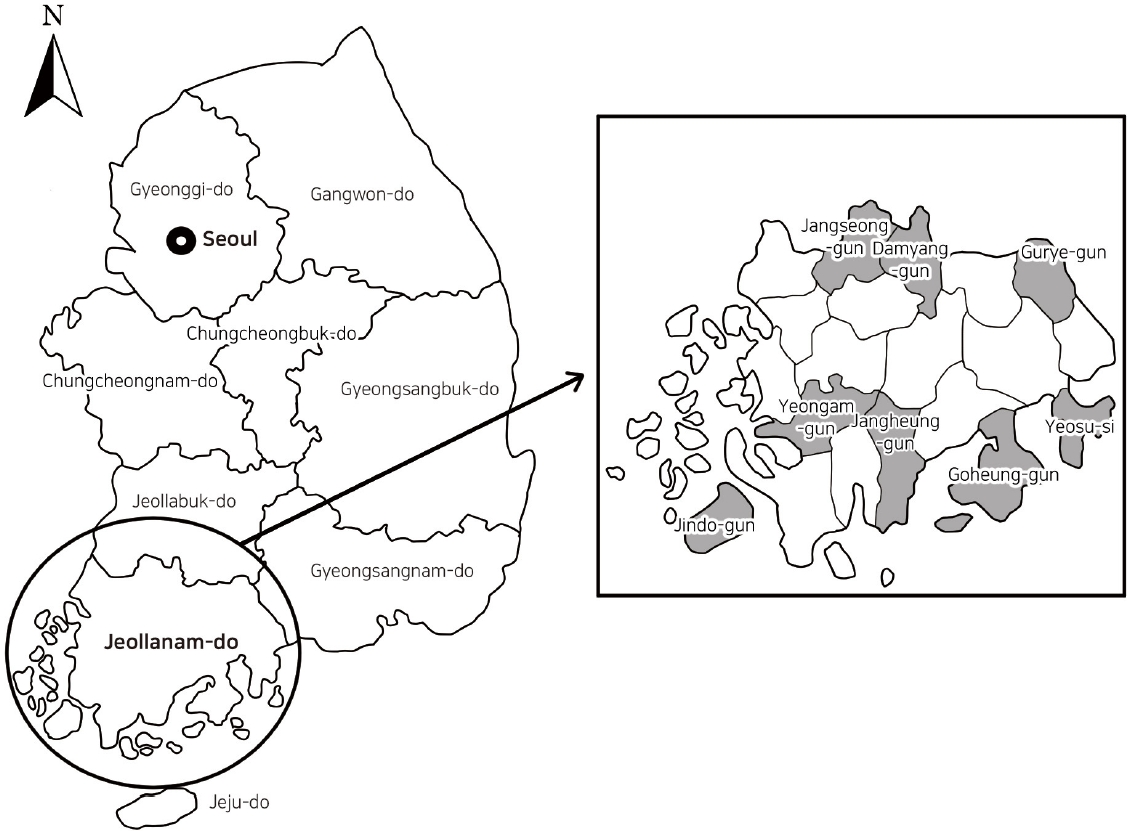
This study was approved by the Chonnam National University Hwasun Hospital Institutional Review Board (approval No. CNUHH-2025-250). The participants were 12,608 preschool children, aged 0–6 years, enrolled in daycare or kindergarten facilities in 8 cities and counties of Jeollanam-do (Yeosu-si, Damyang-gun, Gurye-gun, Goheung-gun, Jangheung-gun, Yeongam-gun, Jangseong-gun, and Jindo-gun) between 2023 and 2025 (
Fig. 1). Cellophane tape samples were collected by caregivers from the perianal region before washing or bathing and submitted to local public health centers. The samples were transferred to the Jeollanam-do Institute of Health and Environment and examined under a light microscope to identify
E. vermicularis eggs based on typical morphological characteristics (asymmetric oval shape, approximately 50–60 μm long and 20–30 μm wide) [
1,
2]. Caregivers of diagnosed children were advised to administer anthelmintic medication provided by the public health center. The ratio of egg-positive results among all tested children was estimated as the infection rate. Statistical analysis was performed using the chi-squared test and the Cochran–Armitage test for linear trend with a significance level of 0.05 using IBM SPSS Statistics version 31.0 (IBM Corp.).
The overall infection rate was 0.22% (28/12,608), and all the infected children (
n=28) tested negative after anthelmintic treatment. The annual infection rate was 0.35% (18/5,077) in 2023, 0.20% (8/3,940) in 2024, and 0.06% (2/3,591) in 2025, reflecting a significant continuous decline over time (trend
P<0.05) (
Table 1). The infection rate was 0.24% (15/6,325) for boys and 0.21% (13/6,283) for girls, with no significant difference (
P>0.05) (
Table 2). By age, no infected children were detected in the 0–3 year age group, whereas the 4–6 year age group showed a significantly higher infection rate of 0.29% (28/9,494,
P<0.05) (
Table 2). By region, the infection rate was highest in Jangheung-gun (0.65%; 7/1,071), followed by Goheung-gun (0.37%; 3/816), Yeongam-gun (0.37%; 4/1,089), Yeosu-si (0.21%; 12/5,815), and Gurye-gun (0.19%; 2/1,057), with significant differences among the regions (
P<0.05). No infected children were detected in Damyang-gun, Jangseong-gun, or Jindo-gun (
Table 2).
The overall infection rate declined in preschool children of Jeollanam-do over the study period, from 0.35% in 2023 to 0.06% in 2025. The rates observed in this study were substantially lower than the previous nationwide infection rate in 2008–2019 (1.6%) [
7], and lower than those reported in some European regions such as eastern Slovakia (3.59%, 2018) [
10] and north-eastern Poland (10.1%, 2013–2015) [
11]. The continuous decline in infection rates from 2023 to 2025 may be partly attributable to the sustained implementation of the test-and-treatment strategy. This is consistent with the decline in infection rates in Yeosu-si, from 5.0% to 1.0% between 2017 and 2021 [
8], and with the long-term decline in infections in Taiwan between 1990 and 2012, from 4.3% to 0.21% [
4]. Although there were no significant differences by sex, some previous studies have reported a higher infection rate among boys [
7,
8,
12-
14]. It is thought that the effects of sex in this study were weakened by the decline in the overall infection rate to a very low level. The significantly higher infection rate observed in the 4–6 year age group may be related to behavioral factors that expose children to infection, such as increased group activities and frequent interpersonal contact [
5]. Finally, although the infection rate varied significantly by region, this variation is thought to be attributable to localized clusters within specific daycare or kindergarten facilities rather than to broader regional characteristics. Indeed, at least 2 such localized clusters were observed in Jangheung-gun and Yeosu-si, partially contributing to the increased infection rates observed in these regions.
This study has several limitations. First, because only one sample was taken from each participant, some infections could have been missed due to the limited sensitivity of a single test, potentially resulting in false-negative results. Although standard diagnostic protocols recommend performing the test at least 3 times to maximize detection sensitivity [
1,
3], this survey was limited to a single sampling due to practical constraints, which is common in large-scale community-based surveys. Therefore, the reported infection rate may underestimate the true rate. In addition, because the samples were taken directly by the caregivers, consistency of the sampling process could not be completely guaranteed.
The
E. vermicularis infection rate observed among preschool children in 8 cities and counties of Jeollanam-do was 0.22%, which is much lower than in previous studies (
Table 3) [
7-
9,
12-
17]. This is thought to be partially due to improvements in personal hygiene habits (such as regular handwashing, nail care, and mask-wearing) and the sustained behavioral changes aimed at infection prevention established during the COVID-19 pandemic. In fact, studies conducted in Korea have reported a significant decrease in the incidence of infectious respiratory diseases [
18] and gastrointestinal infections [
19] during this period. Moreover, the infection rate declined significantly from 0.35% to 0.06% (trend
P<0.05) over the study period (2023–2025). The regular test-and-treatment strategy implemented over this period is thought to have played a role in this decline, which is consistent with previous findings [
7,
8]. In order to maintain this low infection rate, it will be important to conduct continuous monitoring and anthelmintic treatment programs and to gradually expand the survey region. These findings are expected to provide basic data for establishing community-based infection-control policies.
Notes
-
Author contributions
Data curation: Jeon JY. Formal analysis: Jeon JY. Investigation: Lee YJ, Kim HR, Yang HL, Park YJ, Kim HJ. Project administration: Park GN, Park S, An YJ. Resources: Ha TM. Supervision: Hong Y. Writing - original draft: Jeon JY. Writing - review & editing: Kim JY, Hong Y.
-
Conflict of interest
The authors have no conflicts of interest to declare.
-
Acknowledgments
The cellophane tape for E. vermicularis egg testing was provided by the Division of Vectors and Parasitic Diseases at the Korea Disease Control and Prevention Agency (KDCA). The authors would like to extend their deepest gratitude to the public health center workers who cooperated and assisted throughout the research process.
Fig. 1.Surveyed regions for Enterobius vermicularis infection monitoring in Jeollanam-do, Korea.
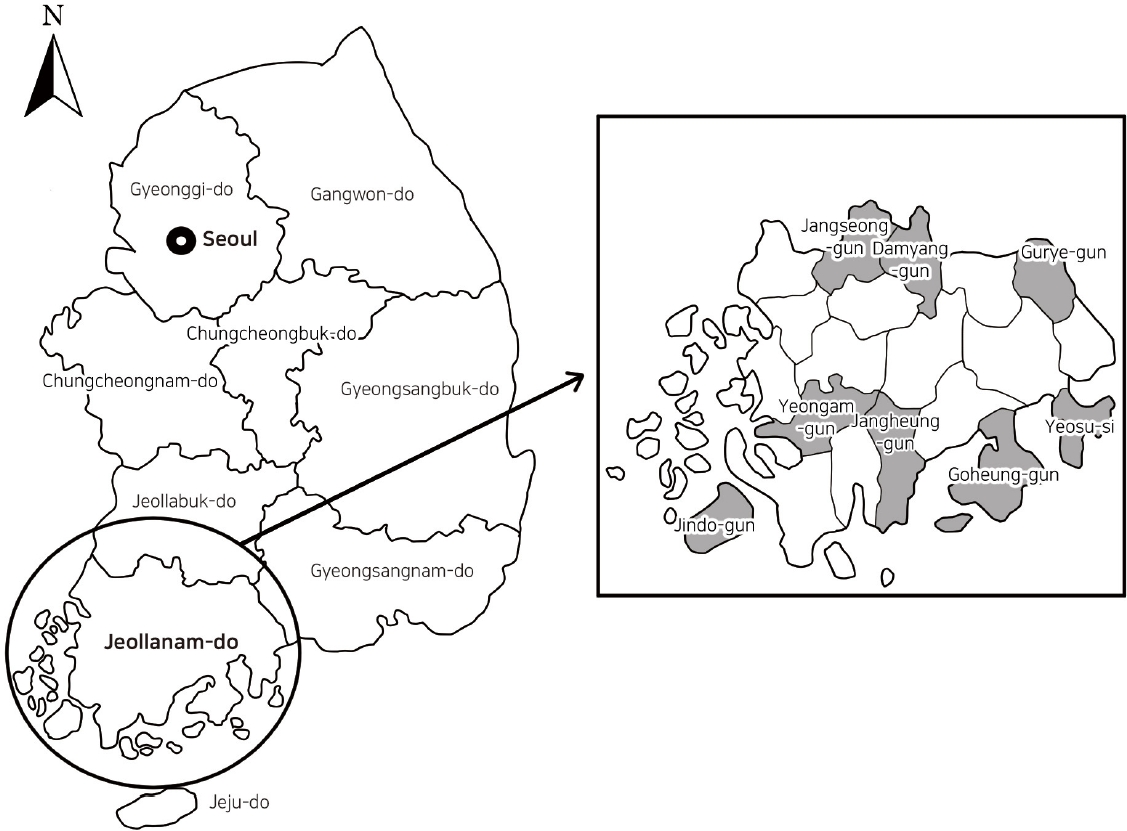
Table 1.Annual infection rates of Enterobius vermicularis among preschool children in Jeollanam-do, 2023–2025
Table 1.
|
Year |
No. positive/No. examined |
Infection rate (%, 95% CIa) |
Trend Pb
|
|
2023 |
18/5,077 |
0.35 (0.22–0.56) |
0.003 |
|
2024 |
8/3,940 |
0.20 (0.10–0.40) |
|
2025 |
2/3,591 |
0.06 (0.02–0.20) |
Table 2.Infection rates of Enterobius vermicularis by sex, age, and region among preschool children in Jeollanam-do, 2023–2025
Table 2.
|
Category |
|
No. positive/No. examined (%) |
|
2023 |
2024 |
2025 |
Total |
P-value |
|
Sex |
Male |
11/2,552 (0.43) |
4/2,000 (0.20) |
0/1,773 (0) |
15/6,325 (0.24) |
0.718 |
|
Female |
7/2,525 (0.28) |
4/1,940 (0.21) |
2/1,818 (0.11) |
13/6,283 (0.21) |
|
Age group (yr) |
0–3 |
0/1,196 (0) |
0/1,065 (0) |
0/853 (0) |
0/3,114 (0) |
0.002 |
|
4–6 |
18/3,881 (0.46) |
8/2,875 (0.28) |
2/2,738 (0.07) |
28/9,494 (0.29) |
|
|
Region |
Yeosu-si |
5/1,781 (0.28) |
5/2,050 (0.24) |
2/1,984 (0.10) |
12/5,815 (0.21) |
0.017 |
|
Damyang-gun |
0/509 (0) |
0/317 (0) |
0/282 (0) |
0/1,108 (0) |
|
|
Gurye-gun |
2/517 (0.39) |
0/282 (0) |
0/258 (0) |
2/1,057 (0.19) |
|
|
Goheung-gun |
2/301 (0.66) |
1/338 (0.30) |
0/177 (0) |
3/816 (0.37) |
|
|
Jangheung-gun |
6/575 (1.04) |
1/179 (0.56) |
0/317 (0) |
7/1,071 (0.65) |
|
|
Yeongam-gun |
3/614 (0.49) |
1/292 (0.34) |
0/183 (0) |
4/1,089 (0.37) |
|
|
Jangseong-gun |
0/345 (0) |
0/160 (0) |
0/129 (0) |
0/634 (0) |
|
|
Jindo-gun |
0/435 (0) |
0/322 (0) |
0/261 (0) |
0/1,018 (0) |
|
|
Overall |
|
|
|
|
28/12,608 (0.22) |
|
Table 3.Recent trends in the infection rates of Enterobius vermicularis among children in Korea
Table 3.
|
Survey period |
Region |
Population (age, yr) |
Sample size (n) |
Infection rate (%)a
|
Reference |
|
2008 |
Gangwon-do (Chuncheon-si, Inje-gun), Gyeonggi-do (Paju-si) |
Preschool children (0–7) |
7,048 |
4.0 |
Hong et al. (2011) [12] |
|
2008–2009 |
Jeollanam-do (Muan-gun) |
Preschool children (0–7) |
2,347 |
4.4 (4.1→4.6) |
Hong et al. (2012) [9] |
|
≤2010b
|
Busan |
Kindergarten children (1–7) |
1,674 |
10.7 |
Kim et al. (2010) [13] |
|
≤2011b
|
Gyeongsangnam-do (Gimhae-si) |
Preschool children (≤7) |
6,921 |
10.5 |
Lee et al. (2011) [14] |
|
2011 |
Southeast region of Korea |
Kindergarten children |
3,422 |
6.0 |
Kim et al. (2013) [15] |
|
2012–2013 |
Industrial, urban, suburban areas |
Primary school children (7–9) |
3,840 |
4.4 |
Kim et al. (2014) [16] |
|
2014 |
Busan, Ulsan |
Orphanage children (4–13) |
117 |
0.85 |
Kim et al. (2015) [17] |
|
2008–2019 |
Nationwide |
Preschool children (1–6) |
638,354 |
1.6 (1.8→0.6) |
Shin et al. (2021) [7] |
|
2017–2021 |
Jeollanam-do (Yeosu-si) |
Preschool children (0–7) |
10,392 |
3.2 (5.0→1.0) |
Lee et al. (2023) [8] |
References
- 1. Chai JY, Hong ST, Choi MH, et al. Clinical parasitology. Seoul National University Press; 2011.
- 2. Joo CY, Chung DI, Kong HH, Ock MS. Human parasitology. Keimyung University Press; 2003.
- 3. Yong TS, Kim GA, Kim GJ, et al. Human parasitology. Jungmunkag; 2022.
- 4. Chen KY, Yen CM, Hwang KP, Wang LC. Enterobius vermicularis infection and its risk factors among pre-school children in Taipei, Taiwan. J Microbiol Immunol Infect 2018;51:559-64. https://doi.org/10.1016/j.jmii.2016.12.013
- 5. Fan CK, Chuang TW, Huang YC, et al. Enterobius vermicularis infection: prevalence and risk factors among preschool children in kindergarten in the capital area, Republic of the Marshall Islands. BMC Infect Dis 2019;19:536. https://doi.org/10.1186/s12879-019-4159-0
- 6. Chhetri S, Al Mamari AH, Al Awfi MM, et al. Enterobius vermicularis related acute appendicitis: a case report and review of the literature. Infect Dis Rep 2023;15:417-24. https://doi.org/10.3390/idr15040042
- 7. Shin H, Jung BK, Ryoo S, et al. Enterobius vermicularis infection among preschool children: a 12-year (2008-2019) survey in large cities and provinces of the Republic of Korea. Korean J Parasitol 2021;59:421-6. https://doi.org/10.3347/kjp.2021.59.4.421
- 8. Lee MR, Shin HE, Back SO, et al. Positive rates for Enterobius vermicularis eggs among preschool children in Yeosu-si, Jeollanam-do, Korea (2017-2021). Parasites Hosts Dis 2023;61:84-8. https://doi.org/10.3347/PHD.22121
- 9. Hong SH, Jeong YI, Lee JH, et al. Prevalence of Enterobius vermicularis among preschool children in Muan-gun, Jeollanam-do, Korea. Korean J Parasitol 2012;50:259-62. https://doi.org/10.3347/kjp.2012.50.3.259
- 10. Dudlová A, Juriš P, Jarčuška P, et al. The incidence of pinworm (Enterobius vermicularis) in pre-school and school aged children in the Eastern Slovakia. Helminthologia 2018;55:275-80. https://doi.org/10.2478/helm-2018-0030
- 11. Kubiak K, Dzika E, Paukszto L. Enterobiasis epidemiology and molecular characterization of Enterobius vermicularis in healthy children in north-eastern Poland. Helminthologia 2017;54:284-91. https://doi.org/10.1515/helm-2017-0042
- 12. Hong SH, Lee SE, Jeong YI, Lee WJ, Cho SH. Comparison of egg positive rates of Enterobius vermicularis among preschool children in three Korean localities. Korean J Parasitol 2011;49:441-3. https://doi.org/10.3347/kjp.2011.49.4.441
- 13. Kim DH, Son HM, Kim JY, et al. Parents’ knowledge about enterobiasis might be one of the most important risk factors for enterobiasis in children. Korean J Parasitol 2010;48:121-6. https://doi.org/10.3347/kjp.2010.48.2.121
- 14. Lee SE, Lee JH, Ju JW, Lee WJ, Cho SH. Prevalence of Enterobius vermicularis among preschool children in Gimhae-si, Gyeongsangnam-do, Korea. Korean J Parasitol 2011;49:183-5. https://doi.org/10.3347/kjp.2011.49.2.183
- 15. Kim DH, Cho MK, Park MK, et al. Environmental factors related to enterobiasis in a southeast region of Korea. Korean J Parasitol 2013;51:139-42. https://doi.org/10.3347/kjp.2013.51.1.139
- 16. Kim DH, Yu HS. Effect of a one-off educational session about enterobiasis on knowledge, preventative practices, and infection rates among schoolchildren in South Korea. PLoS One 2014;9:e112149. https://doi.org/10.1371/journal.pone.0112149
- 17. Kim DH, Son HM, Lee SH, et al. Negligible egg positive rate of Enterobius vermicularis and no detection of head lice among orphanage children in Busan and Ulsan, Korea (2014). Korean J Parasitol 2015;53:497-9. https://doi.org/10.3347/kjp.2015.53.4.497
- 18. Kim DH, Nguyen TM, Kim JH. Infectious respiratory diseases decreased during the COVID-19 pandemic in South Korea. Int J Environ Res Public Health 2021;18:6008. https://doi.org/10.3390/ijerph18116008
- 19. Ahn SY, Park JY, Lim IS, et al. Changes in the occurrence of gastrointestinal infections after COVID-19 in Korea. J Korean Med Sci 2021;36:e180. https://doi.org/10.3346/jkms.2021.36.e180
Citations
Citations to this article as recorded by



 , Yeon-Ju Lee1